
Last updated November 2, 2026
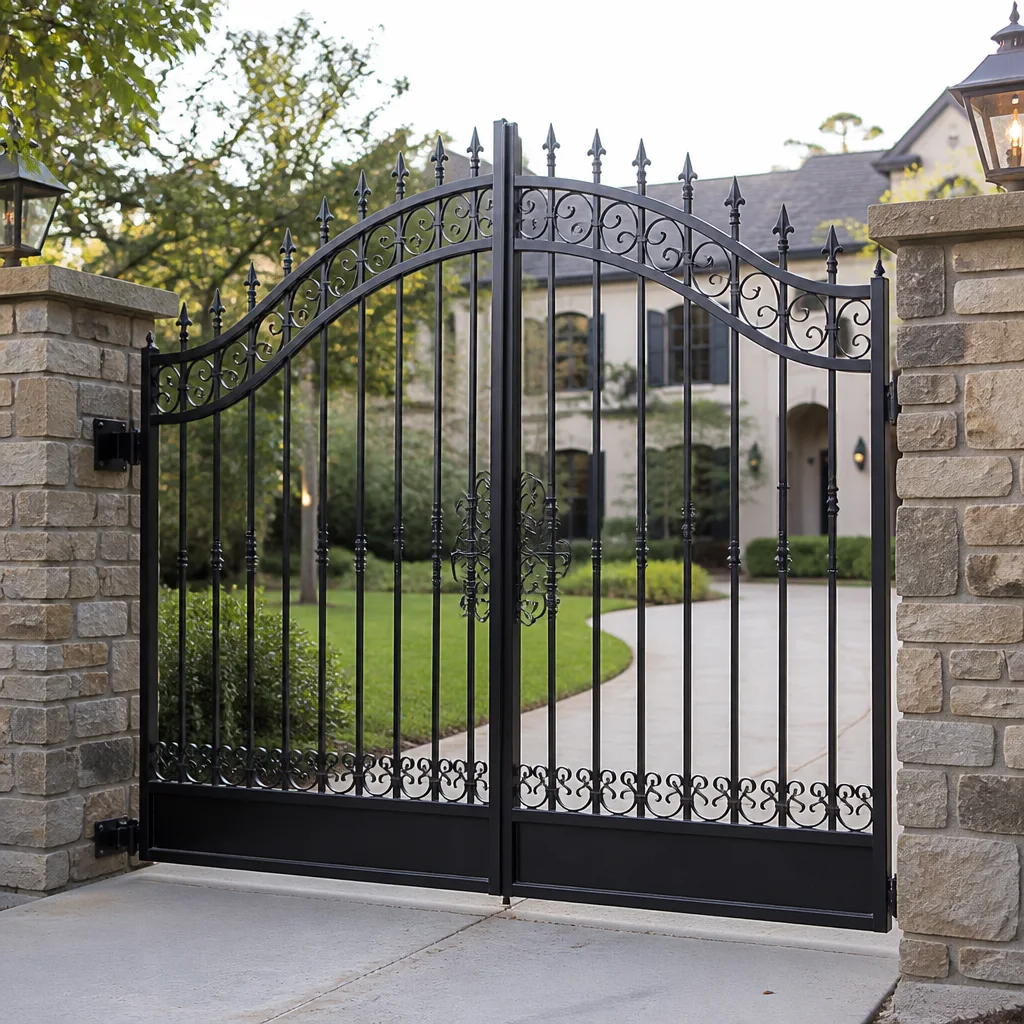 Wrought iron
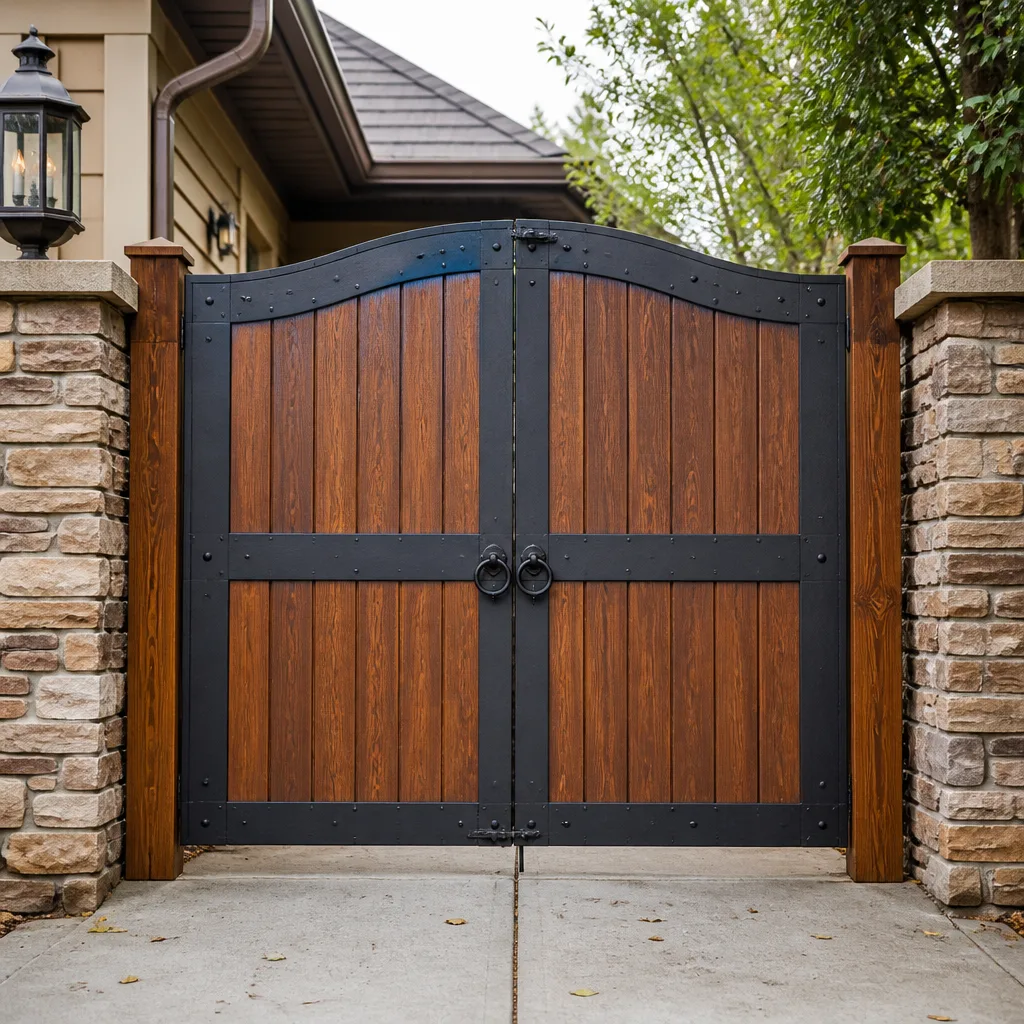 Wood & steel frame
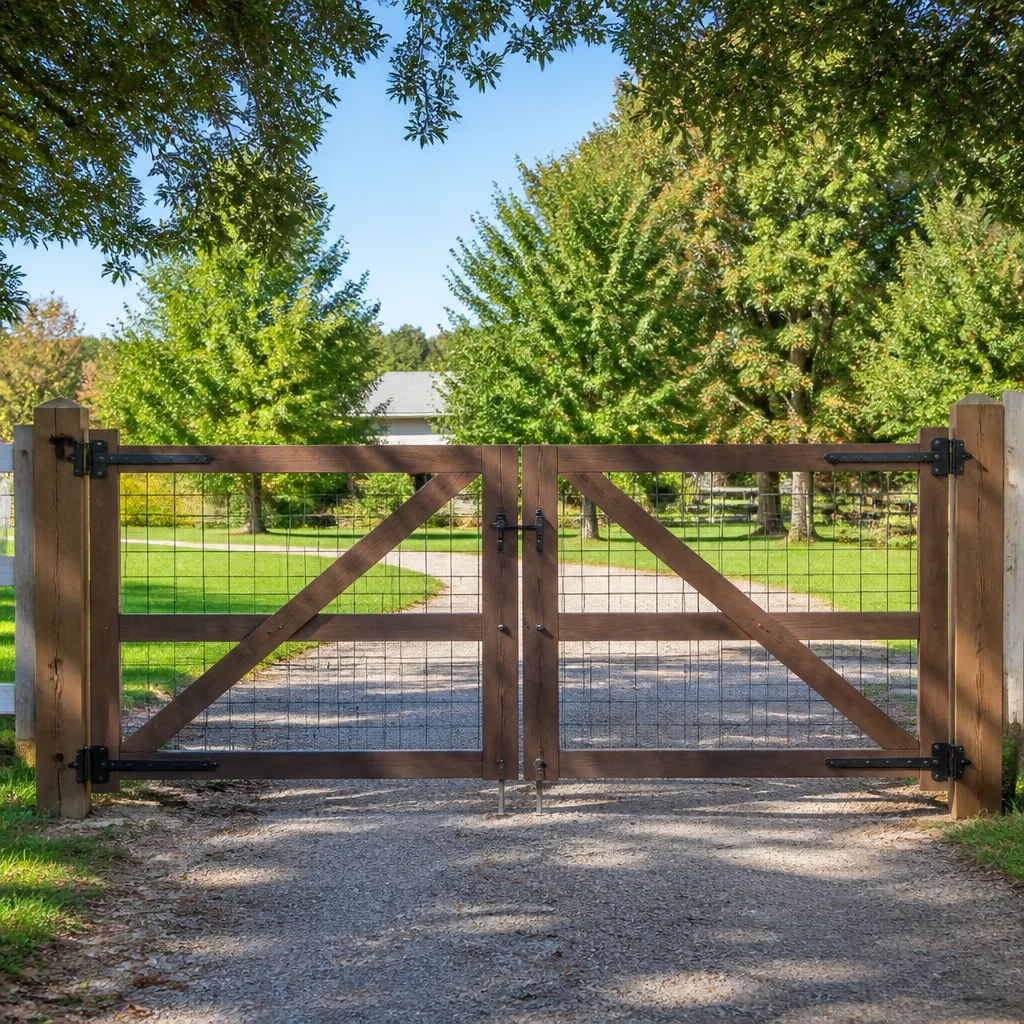 Farm & ranch
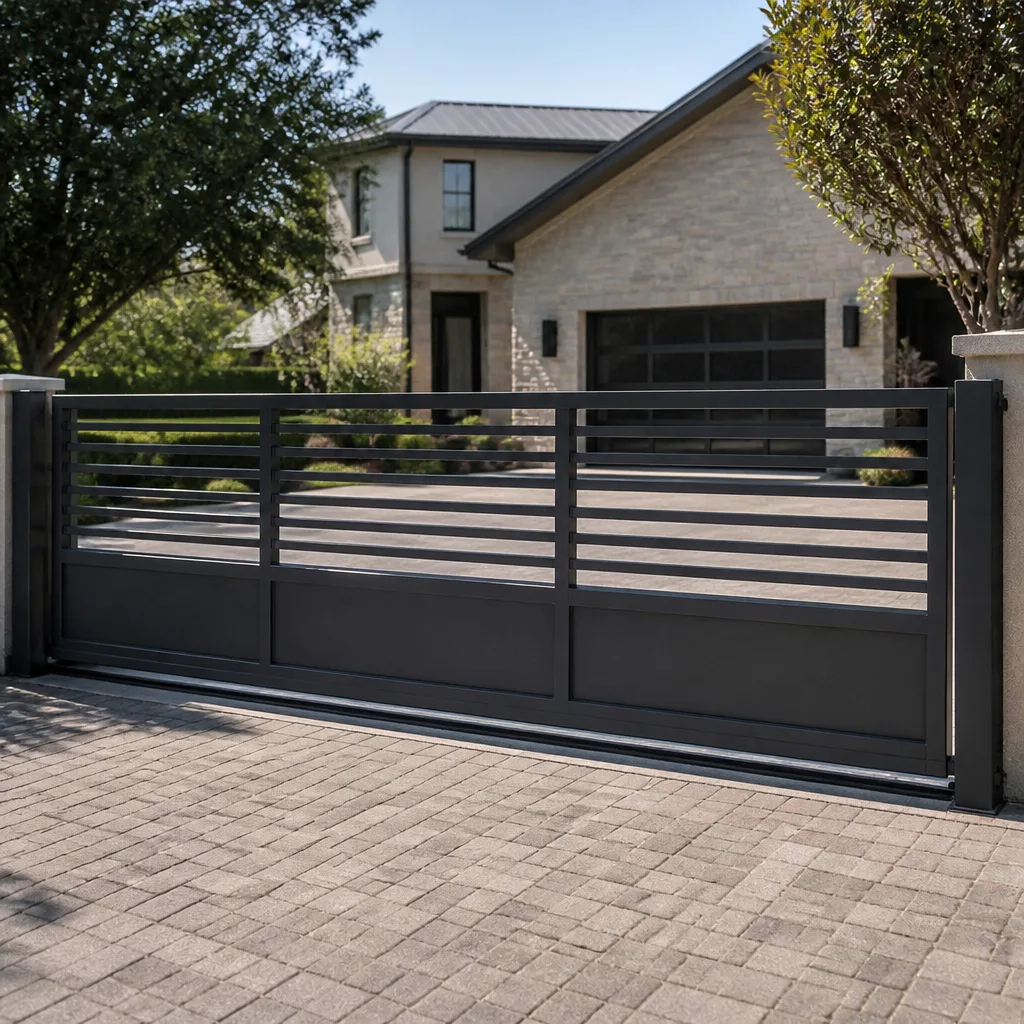 Sliding driveway gates
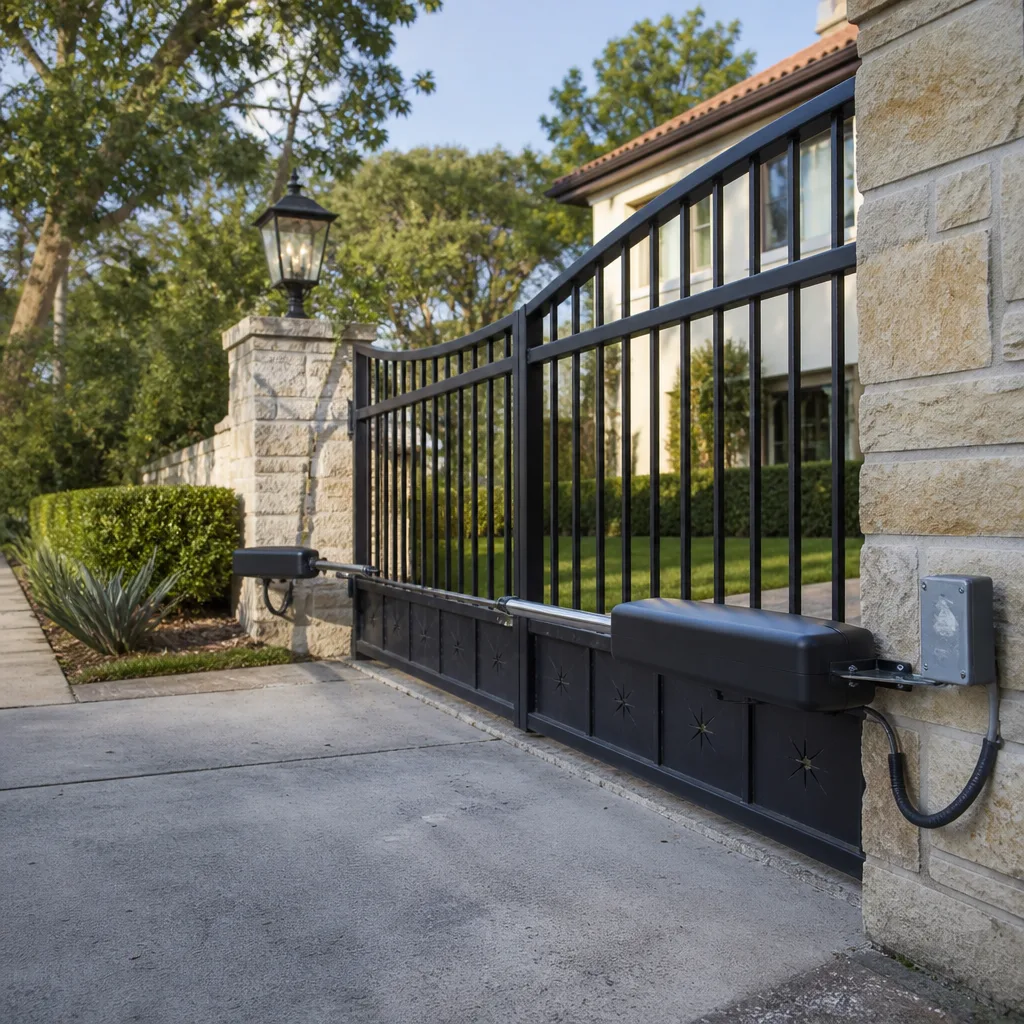 LiftMaster operators
Free on-site gate assessment - hinges, posts, and your LiftMaster or Nice gate operator checked before anything is quoted
The assessment is free and the quote is the invoice.
Get your free estimateGate Repair Emergency Preparedness Guide for Mission Viejo Homes
If your gate fails closed during a wildfire evacuation order, the manual release handle is not optional knowledge. Yet after more than a decade of service calls across Mission Viejo, we’ve found that fewer than half of homeowners who have lived with an automatic gate for more than three years can locate and operate that release without reading the manual first. This guide changes that. It covers the two distinct emergencies Mission Viejo residents face, the first 15 minutes of each, manual release procedures for the three most common operator brands in the area, battery backup verification, and what your gate needs after any emergency before it runs automatically again.
Styles & brands we work with
- Wrought iron
- Wood & steel frame
- Farm & ranch
- Sliding driveway gates
- LiftMaster operators
Quick Answer
Gate emergencies in Mission Viejo fall into two categories with opposite urgency: a gate stuck open is a security crisis requiring temporary access restriction, while a gate stuck closed is a safety crisis requiring immediate manual release. For LiftMaster, FAAC, and Viking operators, the manual release is a mechanical handle or key located on or near the motor housing that disengages the drive so the gate can be pushed by hand. Every homeowner should locate and test their manual release this weekend, confirm battery backup charge, and save their gate technician’s number before an emergency happens.
Table of Contents
- The Two Gate Emergencies Every Mission Viejo Homeowner Faces
- First 15 Minutes: Gate Stuck Open
- First 15 Minutes: Gate Stuck Closed
- Manual Release Procedures for LiftMaster, FAAC, and Viking Operators
- Power Outage Preparedness: Battery Backup Verification
- Emergency Contact Protocol: What to Have Ready Before You Call
- Post-Emergency Checklist: Recalibration After Manual Operation
- Common Mistakes to Avoid
- When to Call a Professional
- Frequently Asked Questions
- The Bottom Line
The Two Gate Emergencies Every Mission Viejo Homeowner Faces
A gate emergency is not one problem. It is two separate problems with different immediate risks, different interim actions, and different repair approaches. In Mission Viejo, where automatic gates guard everything from single-family driveways in Pacific Hills to gated communities near Lake Mission Viejo, both failure modes are common. Understanding which one you are dealing with determines your first move.
A gate stuck open is a security crisis. The barrier that defines your property boundary is gone. Anyone can walk or drive in. This matters more in Mission Viejo than in many Orange County cities because a significant number of homes here use gates specifically to control access to backyards with pools, side yards with equipment, or driveways with vehicles. A gate stuck open at the wrong time is an invitation.
A gate stuck closed is a safety crisis. Your vehicle is trapped inside the property, or first responders cannot get in. During wildfire season, and Mission Viejo sits against open space in multiple directions including the areas bordering O’Neill Regional Park, a gate that will not open under its own power is a genuine hazard. The manual release is your only immediate solution.
Our technicians at Gate Repair Mission Viejo classify every emergency call into one of these two buckets before leaving the shop, because the truck stock, tool loadout, and initial instructions to the homeowner differ. Gate stuck open means securing the property first and fixing the operator second. Gate stuck closed means getting the homeowner mobile first, then diagnosing the operator. The distinction drives everything.
First 15 Minutes: Gate Stuck Open
When your gate will not close, the instinct is to stand there pressing the remote repeatedly. That is not a plan. Here is what actually matters in the first quarter hour, in the order it matters.
- Attempt a close cycle from a different input. Use the wall button or keypad instead of the remote. If the gate closes from one input but not another, you have a peripheral signal problem, not a gate motor problem. That distinction saves you money on the service call.
- Set the operator to manual and pull the gate closed. Disengage the motor using the manual release. Most residential swing and slide gates in Mission Viejo are light enough for one adult to move by hand once the drive is disengaged. A closed gate, even unpowered, restores most of your security.
- Secure the closed position. Use a heavy-duty lock or chain through the gate frame and the post. For slide gates, a padlock through the track or a chain around the gate frame and the catch post works. For swing gates, a chain around the gate leaf and the fixed post. Do not rely on the operator to hold a dead gate closed.
- Power down the operator. Locate the breaker for the gate circuit and turn it off. This prevents the motor from attempting a cycle when you are not watching, and it protects the control board from further damage if the fault was electrical.
- Document what happened. Write down what the gate did before it failed. Did it open and then refuse to close? Did it close halfway and reverse? Did it make a grinding noise? Did a warning light flash on the control board? These details narrow the diagnosis before a technician arrives.
This sequence is the difference between a controlled situation and an open property overnight. For Mission Viejo homeowners with pools, a gate stuck open also becomes a liability concern beyond the security issue, and we have seen insurance carriers ask pointed questions about gate maintenance after an incident. The interim lock matters.
First 15 Minutes: Gate Stuck Closed
A gate that will not open traps your vehicles and blocks emergency access. The first fifteen minutes are about restoring movement by hand, not fixing the motor.
- Confirm the gate is actually not responding. Try the remote, the keypad, and the wall button. Three failed inputs points to operator failure or loss of power. One failed input is a remote battery or keypad wiring issue.
- Locate the manual release. For LiftMaster and Viking residential operators, the release is typically a red or yellow handle or a keyed cylinder on the operator housing or the gate post. For FAAC units, it is usually a lever on the operator or a key release on the motor body. Do not force anything yet.
- Disengage the drive. Operate the release handle or key per the manufacturer’s direction. A quarter turn or a pull is usually all it takes. You should feel a mechanical disengagement inside the operator.
- Move the gate by hand. Swing gates move on hinges; slide gates move on the track. Move it fully open or fully closed, whichever brings your property into the safest configuration. Never leave a gate half-open on an energized operator.
- Lock the gate in the position you chose. Same as the stuck-open scenario: chain and padlock. A gate that has been manually released should be treated as unpowered and unsecured until a professional clears it.
Every step here assumes you can find and operate the manual release without instruction. That is the whole premise of this guide. If you cannot, gate repair in Mission Viejo is what you need on speed dial, and the Emergency Contact Protocol section below tells you exactly what to have ready.
Manual Release Procedures for LiftMaster, FAAC, and Viking Operators
Three operator brands dominate Mission Viejo residential communities. Each manual release works differently, and the differences are not subtle. Here is what you need to know for each.
LiftMaster Residential Swing and Slide Operators
LiftMaster is the most common residential gate operator brand in Mission Viejo. On swing models like the LA400 and LA500, the manual release is a red or yellow handle mounted directly on the operator arm or the post bracket. Pull the handle outward or downward depending on the mounting orientation, and you will feel the internal lock disengage. The gate then swings freely. On slide models like the SL3000, the release is a keyed cylinder on the operator cover. Insert the key, turn it counterclockwise, and the drive gear disengages from the rack, allowing manual pushing. Re-engagement is the reverse action, but you must confirm the gate is in the same position the operator thinks it is in before re-engaging, or the limit settings will be wrong.
FAAC Hydraulic Operators
FAAC operators are common on heavier custom gates across Mission Viejo, including many wrought iron and solid wood swing gates in the custom hillside properties. FAAC models use a hydraulic pump and a manual release that is typically a lever located on the underside of the pump housing or a small keyed release on the operator body. Activating the release opens the hydraulic circuit, allowing the gate to be pushed with modest effort. One detail most homeowners miss: a FAAC hydraulic operator that has been manually released should be re-engaged carefully because the hydraulic system needs a moment to normalize pressure. If the gate feels resistant when re-engaging, do not force it. Call for service.
Viking Slide Gate Operators
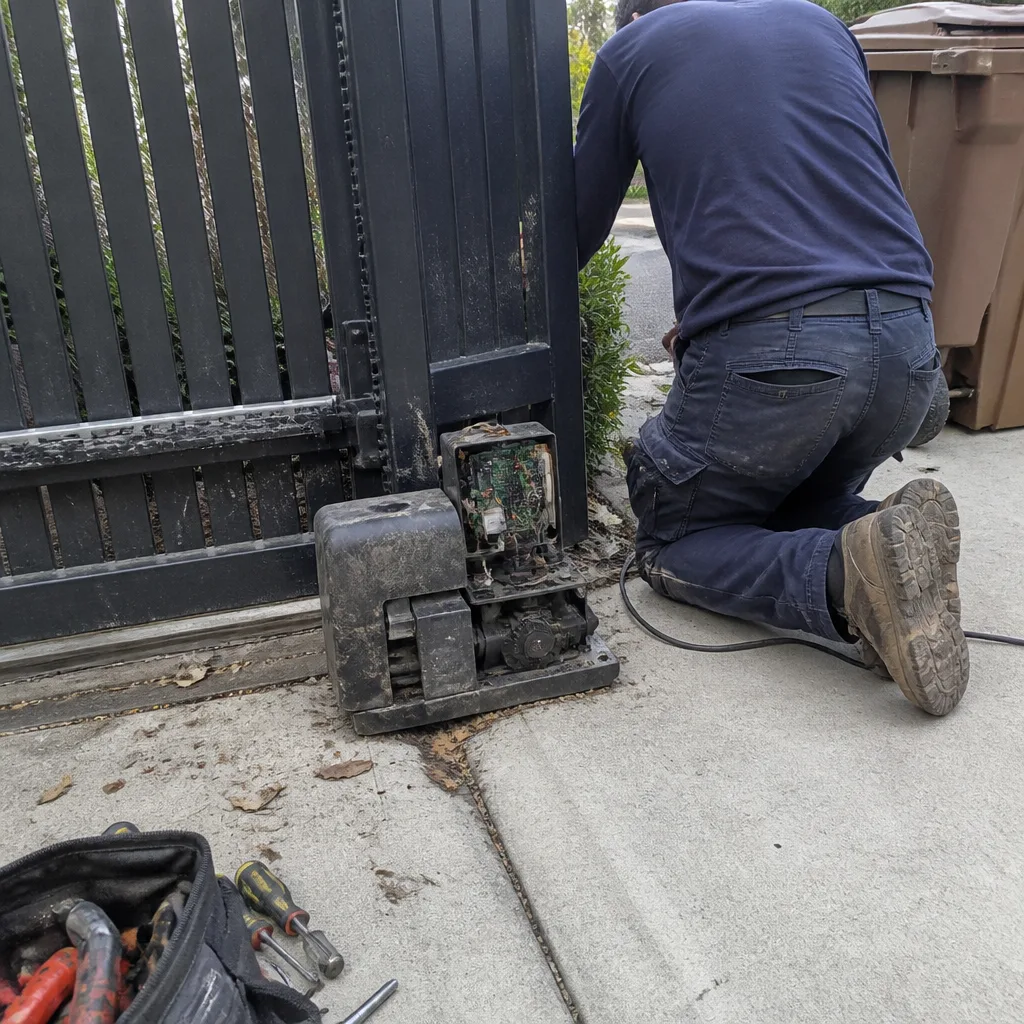
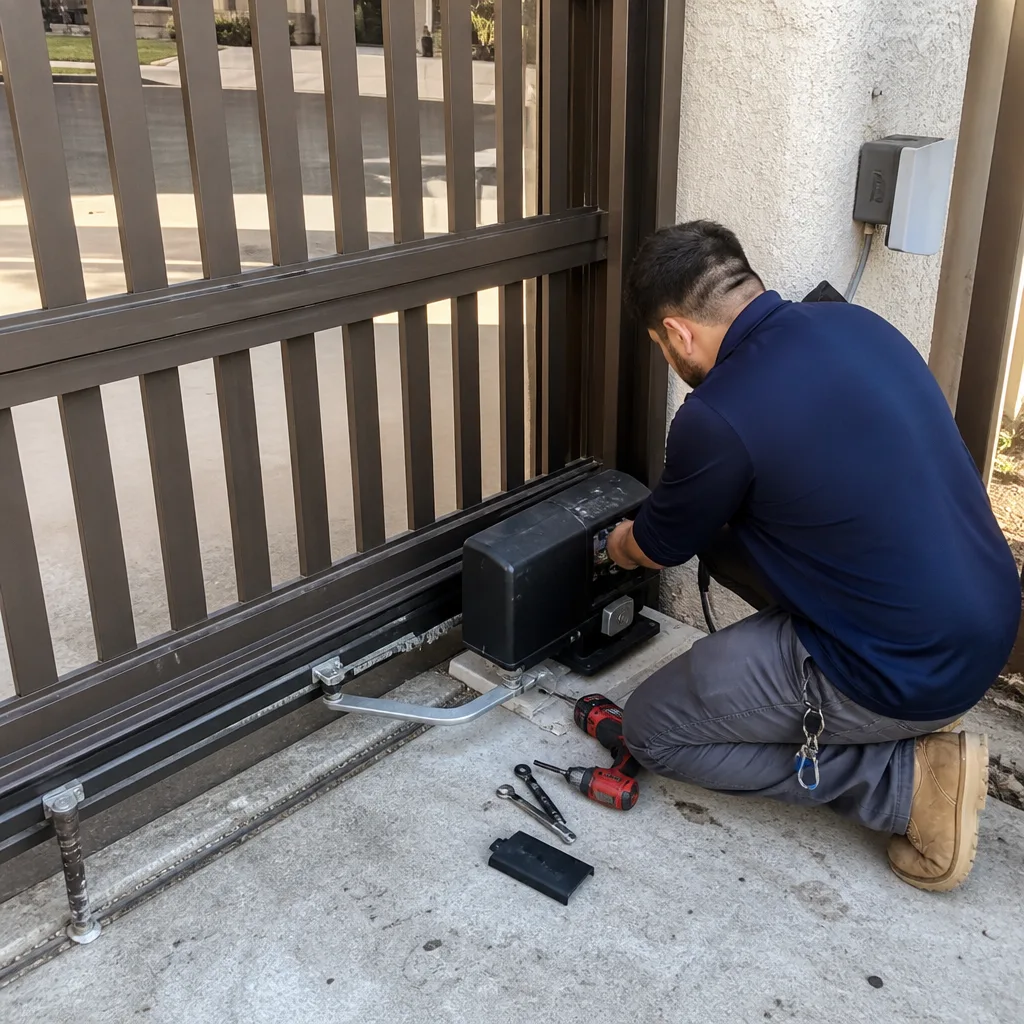
Viking operators appear on many slide gates in Mission Viejo, particularly in equestrian-adjacent properties and larger lots. The manual release on a Viking slide operator is typically a mechanical clutch lever or a keyed disconnect on the side of the motor housing. On newer models, the release lever disengages the drive sprocket from the chain. On older units, a key releases the gearbox. Viking slide gates are heavy by design, and moving one manually takes real effort. Two adults are often needed. The critical difference between a Viking slide release and a swing gate release is that slide gates must be moved along the track, not pushed freely. If the track has debris or the rollers are worn, manual movement may be nearly impossible, and forcing it can derail the gate.
Swing versus slide release: the key difference. A swing gate manual release disengages the motor from the arm, and the gate pivots on its hinges. A slide gate manual release disengages the drive from the rack or chain, and the gate must roll along its track. Swing gates are generally easier to move manually. Slide gates are not. If your Mission Viejo property has a slide gate, practice the release once under normal conditions so you know what kind of physical effort it takes before an emergency.
Power Outage Preparedness: Battery Backup Verification
Mission Viejo power outages are typically short and concentrated, but they happen. Hot Santa Ana wind events put stress on the SCE grid, and hillside neighborhoods lose power more often than flatland communities. If your gate is your only access point, a dead operator during an outage is a real problem. The battery backup system is what keeps your gate functional when the grid goes down, and most homeowners have never verified that the battery is charged or sized correctly.
How to Verify Your Battery Backup Actually Works
- Locate the battery. It is inside the operator housing or in a separate battery enclosure mounted near the operator. Residential LiftMaster, FAAC, and Viking installations all support external battery backup, but the battery location varies.
- Check the battery age. Most gate operator batteries are sealed lead-acid units rated for 3 to 5 years. If the battery has a date sticker older than 3 years, assume it is degraded even if it still holds a surface charge.
- Test under load. Cut power to the gate circuit at the breaker. Then cycle the gate open and closed using the remote. A healthy, correctly sized battery should deliver at least 10 full cycles for a typical residential swing gate and at least 5 cycles for a heavy slide gate. If you get fewer, the battery is weak or undersized.
- Check the charge indicator. Many operators have a battery status light or a diagnostic code that reports battery health. A solid green light indicates a charged battery. A flashing or red light means charge failure or a dead cell.
- Check the cycle count against the battery capacity. A battery that is sized for 10 cycles on a light swing gate will not deliver 10 cycles on a heavy slide gate. We have seen Mission Viejo slide gates with batteries sized for swing-duty applications, and the result is a gate that opens twice and then dies.
If any of these checks fail, electric gate repair in Mission Viejo is a service call, not a DIY project. Battery replacement on an automatic gate operator involves selecting the correct voltage and amp-hour rating, and the wrong battery can damage the control board.
Emergency Contact Protocol: What to Have Ready Before You Call
The single most common wasted emergency call goes like this: a homeowner calls, says the gate is broken, and cannot answer the four questions that would let us dispatch the right truck with the right parts. Here is what to have in front of you before you pick up the phone.
- Operator brand and model. Look at the operator housing or the control board cover. If you know it is a Viking, say Viking. If you know it is an FAAC with a hydraulic pump, say that. Brand-specific knowledge changes the parts we bring.
- Gate type and approximate size. Swing or slide. Single leaf or double leaf. Roughly how heavy the gate looks. A 16-foot steel slide gate and a 6-foot aluminum swing gate are completely different service scenarios.
- Symptom description in sequence. What happened first, what happened next, what the gate is doing now. Not just “it broke.” Write the sequence down before you call.
- Access to the control panel. Is the operator housing unlocked or locked? Is there a separate power disconnect that our technician will need to reach? Can vehicles get to the gate, or is the gate itself blocking the only driveway?
- Any warning signs before the failure. Did the gate slow down recently? Grind? Reverse for no reason? Intermittent failures over weeks are diagnostic gold, and most homeowners forget to mention them.
Having these five answers ready turns a 10-minute diagnostic phone call into a 2-minute one, and it often determines whether the technician can complete the fix on the first visit. For Gate Repair services in Mission Viejo, the goal is always one-visit resolution, and the information you provide before we dispatch is what makes that possible.
Post-Emergency Checklist: Recalibration After Manual Operation
A gate that was forced open or closed manually during an emergency is not ready to return to automatic operation. The operator’s internal position tracking, limit settings, and force calibration do not automatically know what happened while the gate was being pushed by hand. Here is what a proper post-emergency process looks like.
- Do not re-engage the operator until the gate position is confirmed. For slide gates, the gate must be in the exact position the operator expects. Re-engaging with the gate out of position can cause the gate to slam into the end stops at full force.
- Reset and verify limit switches. The open and close limits tell the operator where the gate should stop. After manual movement, these limits must be re-verified and adjusted if necessary. A gate that overruns its close limit will bind and eventually damage the motor.
- Recheck the force settings. Forced manual operation can change the load profile on the drive components. The force sensitivity must be re-calibrated so the gate reverses safely on obstruction instead of applying dangerous pressure.
- Test photo eyes and loop detectors. Safety devices get bumped, disconnected, or misaligned during manual gate movement. A gate that closes on a vehicle because a photo eye is out of alignment is a liability waiting to happen.
- Verify battery health if the outage triggered the release. If the manual operation was caused by a power failure, the battery discharged. Confirm it recharges fully and holds a load, not just a surface voltage.
Each of these steps requires an understanding of the operator’s control system. For Mission Viejo homeowners who just went through an emergency, the temptation is to flip the power back on and hope. We recommend a different approach: call a professional for a post-emergency recalibration. It is a short service call, and it prevents the second breakdown that often follows the first within weeks.
Common Mistakes to Avoid
- Testing the manual release for the first time during an actual emergency. The worst time to learn where the release handle is located is when your vehicle is trapped behind a dead gate. Locate and operate it on a calm Saturday afternoon instead.
- Forcing a gate manually without disengaging the operator first. Pushing against an engaged motor can strip gears, bend arms, and damage the control system. The manual release exists for a reason. Use it.
- Overlooking intermittent failures. A gate that works most of the time and fails occasionally is telling you something specific. Ignoring those intermittent failures is how Mission Viejo homeowners end up with a gate that fails completely at the worst possible moment.
- Assuming the battery backup is fine because it was installed at some point. Batteries age. Batteries get undersized. Batteries fail silently. Test yours under load every six months.
- Re-engaging the operator after manual operation without recalibrating limits and force. This is the most common cause of post-emergency secondary failures we see. The gate worked before the emergency. It does not automatically work correctly after manual operation without adjustment.
- Not writing down the symptom sequence before calling for service. You will forget details during a stressful call. Write down what happened, in order, while it is fresh.
- Keeping the gate technician’s number in a drawer inside the house you can no longer access. Save the number in your phone. Save it in a second place. The day you cannot get into your own property is not the day to start looking for contact information.
When to Call a Professional
Some gate problems are straightforward enough for a careful homeowner to manage temporarily. Others are not. Call a professional when the operator makes grinding or popping sounds, when the control board shows fault codes you do not understand, when the gate moved manually but will not re-engage cleanly, when a slide gate jumps the track, when hydraulic fluid is leaking from an FAAC operator, or when the gate reverses for no reason during automatic operation. These are not patience problems. They are mechanical or electrical failures that get worse with use. Gate Repair Mission Viejo offers free estimates in Mission Viejo. Call (866) 562-1205 and describe the symptom. We will tell you whether it needs a service call or whether interim manual operation is safe while you schedule.
Frequently Asked Questions
Emergency gate repair in Mission Viejo typically ranges from $150 to $450 for common failures like limit switch replacement, remote reprogramming, or minor motor adjustments, while control board replacement on premium operators like FAAC or Viking can run $600 to $1,400 depending on the model. The exact price depends on the operator brand, the component that failed, and whether parts are stocked in the service vehicle or need to be ordered. Call (866) 562-1205 for an exact quote. Estimates are free, and the price is always agreed before work starts.
Yes, same-day service is available for emergency gate repairs in Mission Viejo when the failure is mechanical, electrical, or operator-related, and most residential calls are resolved in a single visit when the homeowner has the operator brand and symptom details ready. Call as early in the day as possible to secure a dispatch window, and have the information from the Emergency Contact Protocol section prepared before you call.
First, use the manual release to disengage the operator and push the gate open by hand so that your vehicles are not trapped. Then check whether the battery backup is installed and functional by testing the gate on battery power. If the battery is dead or missing, the gate will remain manual until grid power returns or a technician installs a fresh battery. Mission Viejo homeowners with battery backups should test them every six months under load, not just check for a green indicator light.
If your gate is your only vehicle access point, a battery backup is strongly recommended for Mission Viejo homes, especially in hillside neighborhoods where power restoration can lag after Santa Ana wind events or infrastructure failures. LiftMaster, FAAC, and Viking operators all support battery backup configurations, and the battery must be sized correctly for your gate’s weight and daily cycle count. A battery that is too small is functionally the same as no battery at all.
We repair all major brands including LiftMaster, FAAC, BFT, Linear, Viking, Ghost Controls, DoorKing, Elite, and Mighty Mule. Our technicians know each brand specifically, including common failure points, replacement parts, and the fixes that actually hold rather than treating every job as a cold start. Whether your Mission Viejo gate runs on a premium commercial operator or a budget residential system, we diagnose the root cause.
Repair is usually the right call when the operator motor, control board, or sensors have failed but the gate frame, hinges, and track are structurally sound. Replacement becomes the better investment when the gate itself is rusted through, the rack or track is worn beyond adjustment, or the operator is old enough that replacement parts are no longer manufactured. For a professional assessment, gate installation in Mission Viejo starts with a free on-site evaluation. Call (866) 562-1205 to schedule.
The Bottom Line
Gate emergencies in Mission Viejo are manageable when the homeowner has three things: knowledge of the manual release, a working battery backup, and a gate specialist’s number saved in their phone. A gate stuck open demands immediate temporary security. A gate stuck closed demands immediate manual release. Both scenarios are preventable from becoming crises by testing the release mechanism ahead of time, verifying the battery under load twice a year, and writing down the symptom sequence before calling for service. The manual release is not optional knowledge in wildfire country. Learn it now, not during an evacuation order. And when the gate does fail, Gate Repair Mission Viejo is one call away at (866) 562-1205. Estimates are free, and the price is quoted and agreed before any work begins.
Written by the team at Gate Repair Mission Viejo, serving Mission Viejo since 2011. Explore more guides & resources.
See the difference
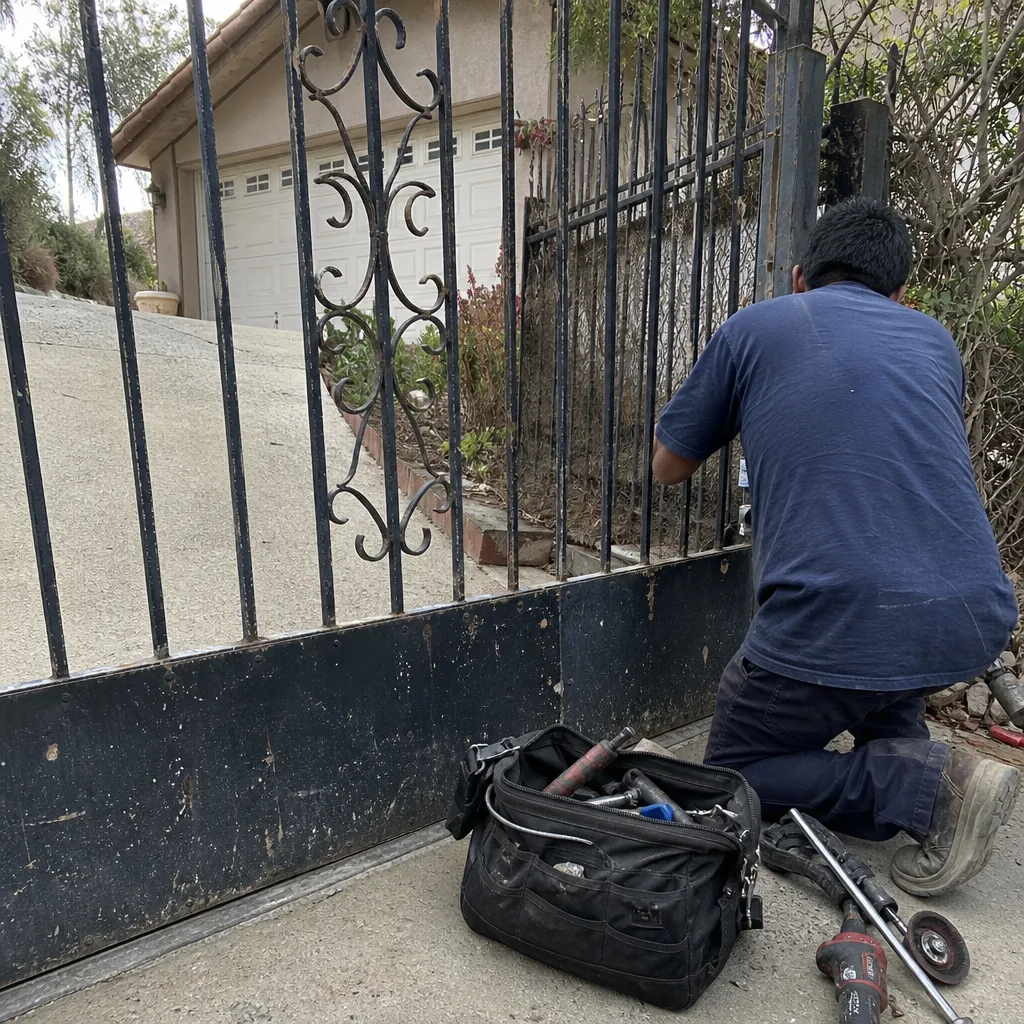 Before
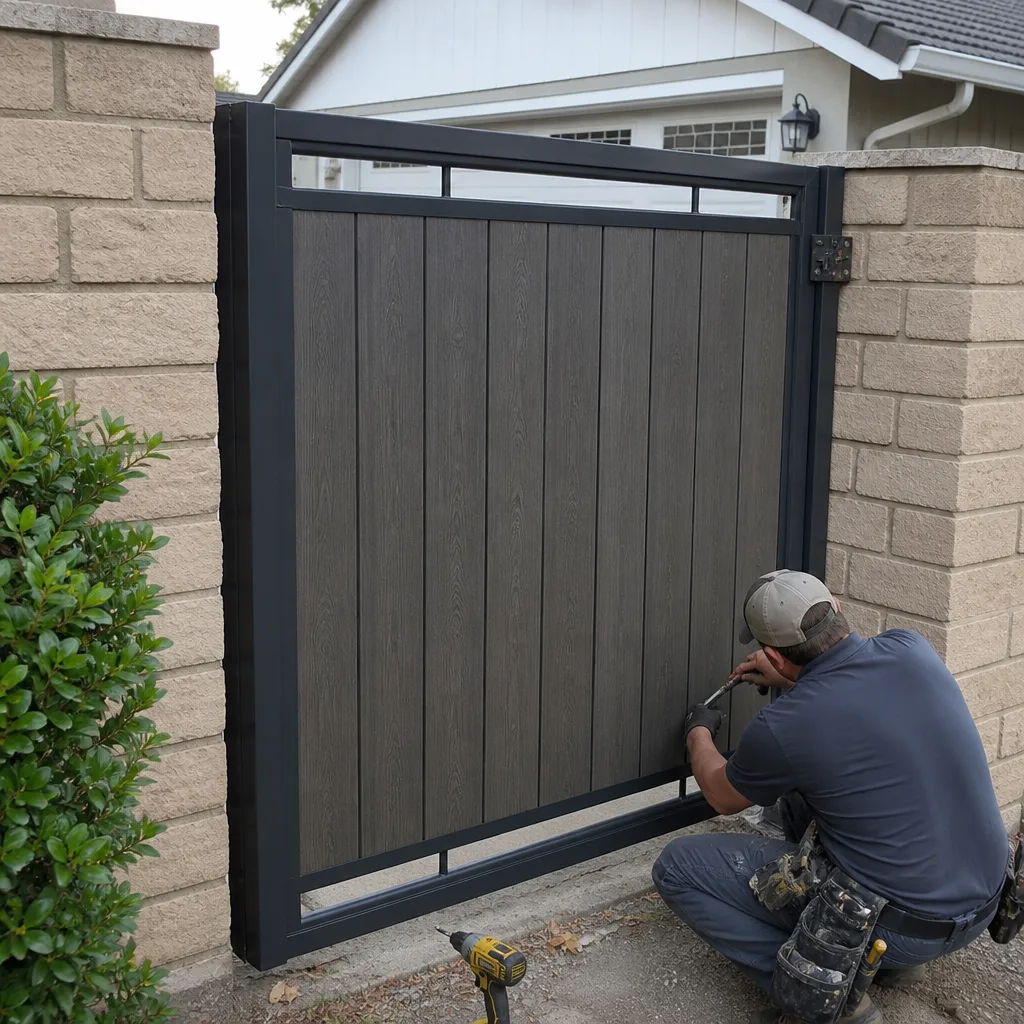 After
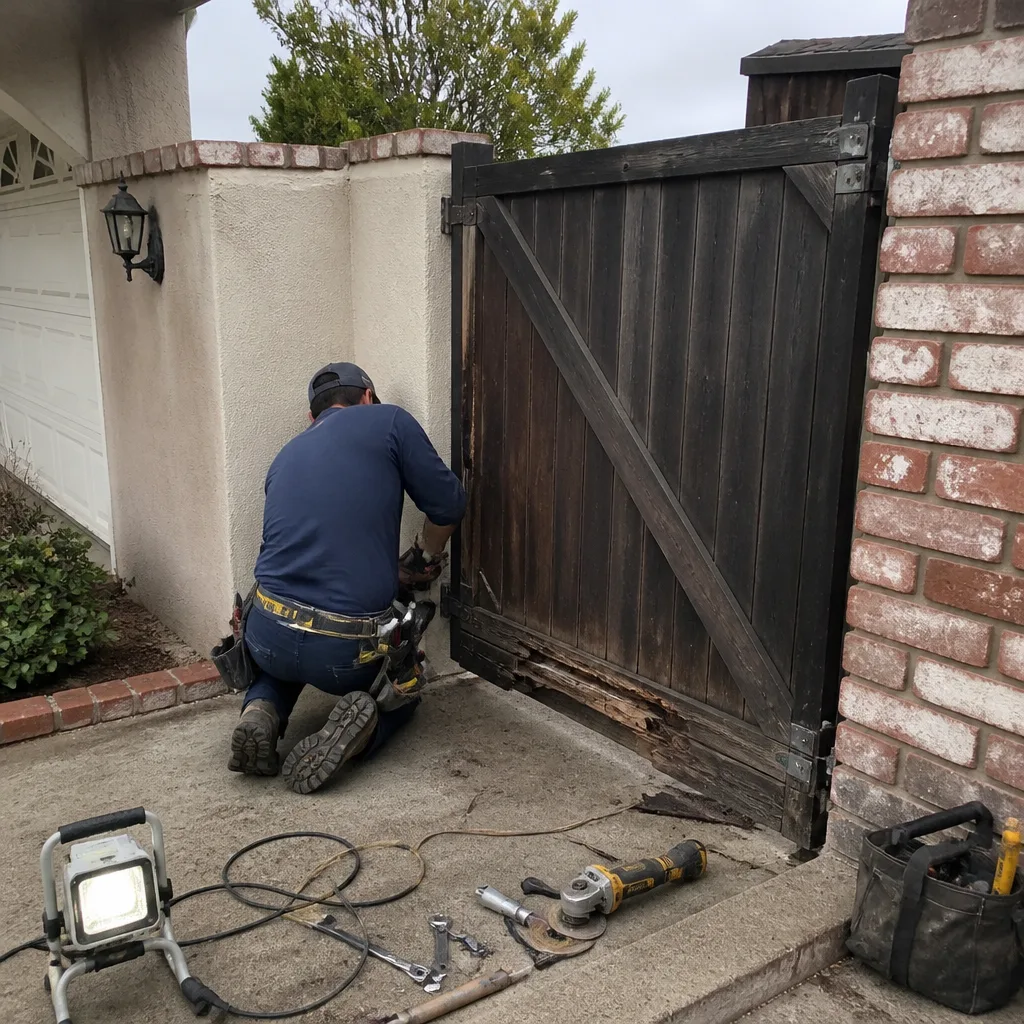 Before
 After
 Before
 After