
Last updated November 2, 2026
 Wrought iron
 Wood & steel frame
 Farm & ranch
 Sliding driveway gates
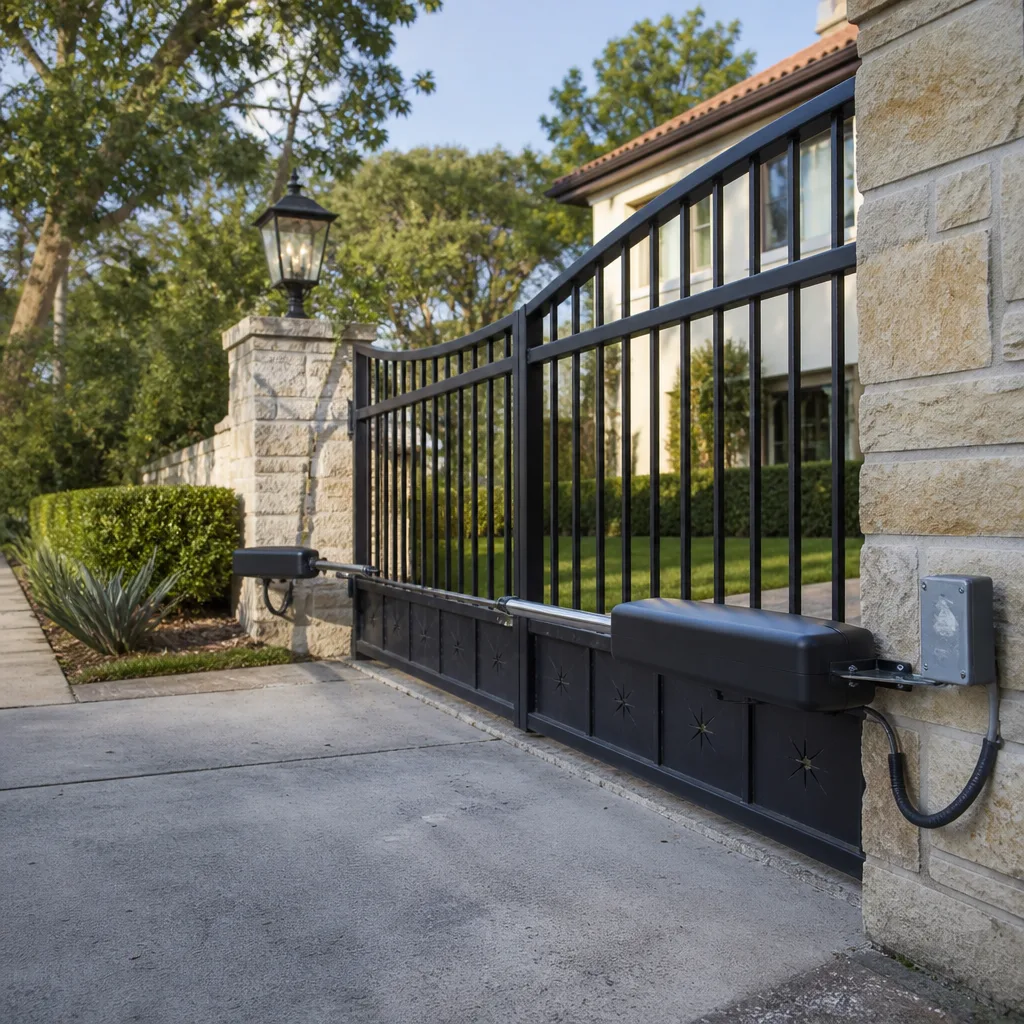 LiftMaster operators
Free on-site gate assessment - hinges, posts, and your LiftMaster or Nice gate operator checked before anything is quoted
The assessment is free and the quote is the invoice.
Get your free estimateDIY vs Professional Gate Repair: The Mission Viejo Homeowner’s Decision Guide
Replacing a photo-eye sensor on an automatic gate is a 20-minute job that most Mission Viejo homeowners can do correctly. But if you swap that sensor and skip recalibrating the secondary entrapment sensing edge, you’ve just created a UL 325 non-compliant gate and a potential personal liability if anyone gets hurt. This guide walks through which gate repairs are genuinely safe to DIY, which ones put you in legal and physical danger, and where the line actually sits under California law. You’ll learn what tools make sense to own regardless of your DIY interest, what Mission Viejo HOA rules can block outright, and what a botched repair really costs when the service truck has to come out anyway.
Styles & brands we work with
- Wrought iron
- Wood & steel frame
- Farm & ranch
- Sliding driveway gates
- LiftMaster operators
Quick Answer
Most Mission Viejo homeowners can safely handle basic gate maintenance like lubricating hinges, replacing remote batteries, and cleaning photo eyes. But any repair involving the operator motor, control board, entrapment sensing devices, or structural welds should go to our Gate Repair services because UL 325 compliance and California liability law make those repairs legally risky when done wrong.
Table of Contents
- The UL 325 Line: Where DIY Gate Repair Becomes a Liability
- Repairs That Are Genuinely Safe to DIY
- The Gray Zone: Repairs That Depend on Your Skill and Tools
- Repairs You Should Never DIY
- The Cost-Benefit Reality Check: What DIY Actually Saves You
- Tools Worth Owing Before You Call Anyone
- HOA Rules in Mission Viejo That Can Block DIY Gate Work
- Common Mistakes to Avoid
- When to Call a Professional
- Frequently Asked Questions
- The Bottom Line
The UL 325 Line: Where DIY Gate Repair Becomes a Liability
UL 325 is the safety standard that governs automatic gate operators in the United States. It exists because automatic gates have killed people, mostly children, by entrapping them against a fence or wall. The standard requires every automatic gate to have at least two independent entrapment protection systems: a primary device like photo eyes or an edge sensor, and a secondary device that backs it up. In Mission Viejo, where automatic driveway gates are standard on thousands of hillside and tract homes, this isn’t abstract regulation. It’s the legal framework that determines who gets sued when a gate closes on someone.
Under California liability law, a homeowner who performs a repair that disables, bypasses, or miscalibrates an entrapment protection device can be held personally responsible for any resulting injury. Your homeowner’s insurance may not cover that liability if the gate was modified outside manufacturer specifications. We’ve seen gates in Mission Viejo neighborhoods where a homeowner disconnected a reversing edge because it was “annoying” and the gate kept stopping. That gate is now a lawsuit waiting for a plaintiff.
The specific UL 325 tasks that require documented professional installation to maintain compliance include:
- Replacing or recalibrating the primary and secondary entrapment sensors (photo eyes, edge sensors, contact strips)
- Programming the operator’s force settings, which determine how much resistance the gate encounters before reversing
- Installing or replacing the operator motor itself, which requires re-verifying all entrapment protections after installation
- Adjusting limit switches that control where the gate stops in both directions
- Any modification to the gate’s control board involving safety circuit wiring
A certified gate technician documents that these calibrations were performed to manufacturer spec. That documentation matters. If an injury occurs, the ability to show that a qualified professional verified entrapment protections shifts liability away from you and toward the service provider’s insurance. When you do it yourself and the paperwork doesn’t exist, you’re standing alone in front of a plaintiff’s attorney.
Repairs That Are Genuinely Safe to DIY
Some gate maintenance tasks don’t touch entrapment protections, don’t involve line voltage, and don’t require calibration. These are the tasks where DIY makes sense for a Mission Viejo homeowner who owns basic tools and wants to avoid a service call. Here’s the category system we use when homeowners ask us what they can handle themselves.
Tier 1: No-Risk Maintenance
- Lubricating hinges and the gate track. Use a silicone or lithium spray on pivot points, hinges, and the track every 3 to 6 months. Mission Viejo’s dry, dusty climate settles grit into hinge pins, and a dry hinge forces the operator to work harder, which shortens motor life.
- Replacing remote batteries. If your gate opener remote works intermittently or only at close range, swap the battery before suspecting the receiver. This is a 2-minute fix that costs under $5.
- Cleaning photo eyes. Dust, spider webs, and irrigation overspray cloud the lenses. Wipe both photo eyes with a dry microfiber cloth. If your gate reverses immediately or won’t close, dirty photo eyes are the most common Mission Viejo culprit.
- Tightening visible hardware. Gate brackets, hinge bolts, and operator mount bolts vibrate loose over time. A socket set and 15 minutes prevent bigger problems.
- Trimming vegetation around the gate path. Overgrown bougainvillea or ice plant that touches a photo eye beam can trigger false reverses. Cut it back and keep the sensor line clear.
None of these tasks involve electrical work, safety circuits, or structural changes. If you do them wrong, the worst outcome is a squeaky hinge or a remote that still doesn’t work.
The Gray Zone: Repairs That Depend on Your Skill and Tools
Between safe maintenance and genuinely dangerous work sits a group of repairs that are mechanically simple but legally gray. These are the tasks where a confident DIYer with a multimeter and manufacturer documentation can succeed, but where mistakes create hidden problems that don’t show up until the gate fails catastrophically or hurts someone.
Replacing a Mighty Mule or Ghost Controls Remote Receiver
Swapping a receiver board on a Ghost Controls or Mighty Mule system is mostly plug-and-play if you’re using the exact replacement part. The risk isn’t electrical, it’s compatibility. A homeowner buys a “universal” receiver on Amazon, wires it into the control board, and creates a short that fries the board. We see this regularly in Mission Viejo. If you have the exact part number and basic wiring skills, this is doable. If you’re guessing, you’re gambling a $300 control board to save a $150 service call.
Replacing a Gate Wheel or Roller
A sliding gate with a worn or seized wheel is a common repair on Mission Viejo properties with long driveways. Replacing a wheel is straightforward: unbolt the old one, bolt on the new one. But the gate must be safely supported while the wheel is off, and if the gate is motorized, you need to know whether the operator has an internal brake that will hold the gate. A sliding gate that rolls downhill during a wheel swap can do serious damage to anyone in its path.
Replacing a Keypad or Access Control Keypad
If your DoorKing or Linear keypad is weather-worn and unresponsive, replacing the keypad housing is often a direct swap. But if the keypad connects to a telephone entry system or integrates with an access control panel, the wiring is low-voltage but the programming isn’t intuitive. One wrong setting and the gate opens for every code entered, which defeats the purpose of having a gate.
Adjusting Gate Alignment on a Swing Gate
A sagging swing gate that drags on the driveway can sometimes be corrected by adjusting the hinge bolts. But a gate that has sagged significantly may have hinge post fatigue, which is structural, not cosmetic. Tightening bolts on a failing post gives you a temporary fix that fails again, usually at the worst possible moment.
The gray-zone rule: if you’re confident in the exact repair, have the exact parts, and the task doesn’t touch entrapment sensors or force settings, go ahead. If you’re unsure about any of those three things, the return service call will cost more than doing it right the first time.
Repairs You Should Never DIY
Some gate repairs carry risk that no homeowner should accept. These fall into three categories: electrical hazard, structural hazard, and entrapment liability. Here’s the definitive list.
1. Operator Board Replacement or Repair
The control board is the brain of your gate system. On a DoorKing or Elite commercial-grade operator, the board manages limit settings, force sensitivity, entrapment protection, and accessory integration all at once. Installing a new board requires programming it to match your specific gate’s weight, travel distance, and safety setup. A programming error can cause the gate to close with full force on an obstruction. This is not a plug-and-play component, regardless of what YouTube suggests. Our technicians know Ghost Controls, DoorKing, Elite, and Mighty Mule systems specifically: common failure points, replacement parts, and the fixes that actually hold. A board swap on a door you’ve never worked on is a cold start; for us it’s a 90-minute job because we know the programming sequence by heart.
2. Entrapment Device Calibration
Photo eyes, edge sensors, and contact strips are the components that keep your gate from hurting someone. Calibrating them requires a gate force gauge and the manufacturer’s exact procedure. If a photo eye is positioned 6 inches too high, a small child can slip under the beam undetected. If the reversing edge isn’t sensitive enough, the gate won’t reverse when it contacts an obstruction. Every one of these calibration points has a documented specification, and the documentation of who performed the calibration is your liability shield.
3. Structural Weld Repair
A cracked weld on a steel gate frame or hinge post is a structural failure in progress. Grinding and re-welding a gate while it’s still hanging is dangerous, and a bad weld on a 400-pound gate can fail suddenly. This is not a task for a homeowner with a Harbor Freight welder and determination. A properly repaired gate weld requires the gate to be removed or supported, the joint prepped correctly, and the weld inspected before the gate goes back into service.
4. Operator Motor Replacement
Swapping a gate operator motor involves line voltage, capacitor discharge risk, and post-installation re-verification of every safety system. On a LiftMaster or BFT system, the motor replacement procedure varies by model and generation. Getting it wrong can fry a new motor instantly or leave the gate operating with incorrect force settings. After any motor replacement, the entire entrapment protection system must be re-tested to UL 325 standards.
5. Underground Loop Detector Installation or Repair
Loop detectors are the wire loops buried under the driveway that tell the gate when a car is present. Installing one requires cutting asphalt or concrete, laying wire at a specific depth and configuration, and tuning the detector to the operator. Done wrong, the gate closes on cars or refuses to open. This is a specialized job on a specialized component, not a weekend project.
The Cost-Benefit Reality Check: What DIY Actually Saves You
The financial math on DIY gate repair looks good until you factor in the second visit. For a detailed look at pricing, see our Gate Repair Cost Breakdown: The Mission Viejo Homeowner’s Reference for 2026. Here’s a realistic breakdown based on what we see in Mission Viejo.
| Repair | DIY Cost | Professional Cost | What You Actually Save |
|---|---|---|---|
| Lubricate hinges and track | $10 for spray | $75 – $125 | $65 – $115 (worth it) |
| Replace remote battery | $5 | $60 – $90 service call | $55 – $85 (worth it) |
| Clean photo eyes | $0 and 10 minutes | $75 – $125 | $75 – $125 (worth it) |
| Replace receiver board | $80 – $150 for part | $250 – $400 total | $100 – $250 (maybe worth it, high risk if wrong part) |
| Replace operator motor | $400 – $800 for part | $800 – $1,400 total | $400 – $600 saved, but one programming error burns the new motor |
| Replace control board | $200 – $500 for part | $500 – $900 total | $200 – $400 saved, but incorrect programming = second board and service call |
The pattern is clear. The savings on mechanical maintenance are real and worth doing yourself. The savings on electronic and safety components shrink fast when you factor in the probability of a mistake, the cost of buying a second part, and the service call that eventually becomes necessary. We’ve had Mission Viejo homeowners bring us a DIY-installed control board that “just wouldn’t work” and we’ve had to replace the board they already replaced because the incorrect programming burned it out. Their total cost ended up $200 higher than if they’d called us first.
There’s also the time factor. Our electric gate repair in Mission Viejo service handles what a homeowner spends an entire weekend troubleshooting. For urgent situations, check our Gate Repair Emergency Preparedness Guide for Mission Viejo Homes. Your Saturday has value. If the DIY repair takes you 6 hours across two weekends and it still doesn’t work right, you’ve paid for the service call in time alone. Every repair we quote has the price agreed before any work starts, so the invoice matches the quote. That’s not a promise most DIY projects can make.
Tools Worth Owning Before You Call Anyone
Whether or not you plan to repair your gate yourself, owning a few diagnostic tools changes the conversation when you do call a professional. A homeowner who can say “the motor hums but the gate doesn’t move” or “I’m getting 24 volts at the keypad but no response” gives us a head start on diagnosis. Here’s what we recommend.
- Multimeter. A basic digital multimeter ($30 – $60) lets you test whether power is reaching the operator, keypad, and receiver. Most intermittent gate failures in Mission Viejo are power or low-voltage wiring issues, and a multimeter confirms or eliminates that in 5 minutes.
- Gate force gauge. This is a specialized tool most homeowners won’t buy, but if you’re serious about gate maintenance, a basic force gauge ($150 – $250) lets you verify that your gate’s reversing force is within spec. This is the tool that tells you whether your entrapment protection is actually working, not just whether the gate moves.
- Limit switch tester or continuity tester. Limit switches tell the operator when the gate has reached its open or closed position. A simple continuity test confirms whether a limit switch is functioning or failed, which is a common source of “gate stops halfway” complaints.
- Socket and wrench set. Gate hardware uses standard and metric fasteners. A complete set with extensions lets you reach the hinge bolts and operator mount brackets that are awkward to access.
- Non-contact voltage tester. Before you open an operator housing, confirm there’s no live AC present. This is non-negotiable safety equipment for any electrical work.
With these tools, you can diagnose the most common gate failures before calling us. That’s genuinely useful. A homeowner who tells us “the operator has power, the limit switch tests good, but the motor doesn’t turn” has narrowed the problem to the motor or capacitor, which saves diagnostic time and gets your gate fixed faster. For gate repair in Mission Viejo, that means a more efficient visit and a better outcome for everyone.
HOA Rules in Mission Viejo That Can Block DIY Gate Work
Mission Viejo is a master-planned community with hundreds of HOAs governing everything from exterior paint colors to gate styles. When your gate is on a common area or shared access point, the HOA likely has explicit rules about who can perform repairs, and those rules often prohibit owner-performed work entirely.
Here’s what we see across Mission Viejo communities:
- Common-area gates are off-limits to residents. If the gate serves a neighborhood entrance, a community pool, or a shared parking area, it’s an HOA asset. The HOA’s insurance requires that repairs be performed by licensed, insured contractors. A homeowner who “fixes” a common-area gate creates a liability nightmare for the entire association.
- Shared driveway gates require HOA approval. If your driveway gate intersects a neighbor’s easement or a shared access point, the HOA may require pre-approval of any repair, including who performs it. Some CC&Rs specify that gate work must be done by a vendor with proof of insurance.
- Architectural review for gate replacement. Replacing a gate, even on your own property, often triggers architectural review if the new gate changes the appearance from the street. This isn’t a repair issue, but it matters if your “repair” becomes a replacement. Our gate installation in Mission Viejo service includes helping homeowners navigate the HOA approval process for replacement gates.
- Electric gate work on HOA property requires a licensed contractor. California law already creates a strong case for professional electric gate work, but HOA rules often make it explicit. If your HOA’s CC&Rs require licensed contractors for any gate work, DIY repairs violate your agreement with the association.
Before you start any gate repair, check your HOA’s rules. The 10 minutes it takes to review your CC&Rs or call the management company beats finding out afterward that you’ve violated your association agreement and need to pay a professional to undo and redo the work.
Common Mistakes to Avoid
- Replacing an operator board with a “universal” or mismatched board. We see this all the time in Mission Viejo. A homeowner buys a $80 board online for a $500 DoorKing system, wires it in, and the gate either doesn’t respond or operates erratically. Match the board to the exact operator model or don’t touch it.
- Disconnecting the reversing edge instead of replacing it. The edge sensor is annoying when it fails and makes the gate reverse over nothing. Homeowners frequently disconnect the sensor to “fix” the false reverses, which disables a primary entrapment protection device. In Mission Viejo’s family neighborhoods, this is the single most dangerous DIY mistake.
- Adjusting force settings without a force gauge. Force settings determine how hard the gate pushes before reversing. Setting them too high makes the gate close with dangerous force; too low makes the gate stall on a slight incline. Without a gauge, you’re guessing at a safety parameter.
- Lubricating the operator motor with WD-40. WD-40 is a solvent, not a lubricant. Spraying it into a gate operator washes away the factory grease and accelerates wear. Use a silicone or lithium product made for gate hinges and tracks.
- Ignoring a gate that “works fine” but makes a new noise. New grinding, squealing, or clicking from your gate operator is an early warning. Fixing the problem when it’s small costs less than waiting for the full failure. Mission Viejo’s summer heat pushes marginal components to failure in August, not in November when it’s comfortable.
- Installing a replacement gate opener without re-verifying all safety systems. A new operator on an old gate still needs fresh calibration of every entrapment sensor. Skipping this step is a UL 325 violation and a personal liability risk.
- Doing structural welding without removing the gate from the hinges. Welding a gate while it hangs puts the gate at risk of falling during the repair and produces a weaker weld because of the load stress. A structural repair requires a supported gate in a controlled position.
When to Call a Professional
Call a gate specialist when your repair involves the operator motor, control board, entrapment sensors, force settings, limit switches, or any structural component. Call when your HOA requires licensed contractors. Call when you’ve already tried the DIY fix and the gate still doesn’t work correctly. Call when the gate makes a sound you’ve never heard before and you don’t know what it means. And call when the repair involves line voltage, because electrical shock is not a learning experience anyone wants. We specialize exclusively in gates: it’s the only trade we work in. From a broken hinge to a failed control board, we handle repairs across the full gate system. Our technicians know Ghost Controls, DoorKing, Elite, and Mighty Mule systems specifically, carrying parts and knowing failure patterns for each brand rather than treating every job as a cold start. If you’re in Mission Viejo, Gate Repair Mission Viejo offers free estimates for repair and installation work. Call (866) 562-1205 and tell us what your gate is doing: we’ll give you an honest read on whether it’s a DIY job or a service call before you spend a dollar.
Frequently Asked Questions
Gate repair in Mission Viejo typically ranges from $125 for basic maintenance like hinge lubrication and photo eye cleaning to $1,400 for a full operator motor replacement with calibration. Control board replacement usually runs $500 – $900 depending on the brand and model. The exact quote depends on your gate’s brand, age, and condition, and every price is quoted and agreed before any work starts. Call (866) 562-1205 for a free estimate on your specific gate.
Yes, you can legally perform your own gate maintenance and some repairs in California, but you assume full personal liability for any injury caused by incorrect entrapment protection calibration or force settings. UL 325 compliance is the legal standard, and without documentation that entrapment devices were properly calibrated by a qualified professional, your homeowner’s insurance may deny coverage in an injury lawsuit. Basic tasks like lubrication and battery replacement are safe; anything touching safety systems should go to a licensed gate professional.
A homeowner can safely lubricate hinges, replace remote batteries, clean photo eyes, tighten visible hardware, and trim vegetation around the gate path using basic household tools. These tasks don’t involve electrical wiring, entrapment sensors, or structural components. Anything involving the control board, motor, force settings, or limit switches requires specialized tools and calibration equipment to do safely.
False reversing on a Mission Viejo gate is usually caused by dirty photo eyes, an overgrown plant crossing the photo eye beam, or a failing reversing edge sensor. Clean the photo eye lenses first and trim vegetation around the gate path. If the false reverses continue, the entrapment sensing edge is likely worn out and needs replacement, which is a professional repair because the new sensor requires calibration under UL 325 standards.
Many Mission Viejo HOAs require licensed, insured contractors for any gate work on common areas or shared access points, and some require prior approval even for repairs on your own property. Check your CC&Rs before starting any gate repair project. If your gate serves a community entrance or shared driveway, the HOA almost certainly prohibits owner-performed repairs due to insurance and liability requirements. Our electric gate repair in Mission Viejo team is equipped to document professional calibration for HOA compliance.
Most gate repairs we handle in Mission Viejo are completed in a single visit, typically 1 to 2 hours for component replacement like a receiver board or keypad, and 2 to 3 hours for operator motor replacement with full safety verification. More complex jobs like underground loop detector installation or structural weld repair may require a second visit. Call (866) 562-1205 and describe your gate’s symptoms for a realistic timeframe on your specific repair.
The Bottom Line
The DIY-vs-professional gate repair decision comes down to liability, not skill. Basic maintenance like lubrication, battery replacement, and photo eye cleaning is safe, worthwhile DIY work that saves real money. But the moment a repair touches entrapment protections, force calibration, control boards, or structural integrity, the legal exposure under California’s UL 325 framework outweighs any savings. Use your own tools to diagnose and communicate what’s wrong. Leave the safety-critical work to technicians who carry the right parts, know your specific brand’s failure patterns, and can document that the repair was done to manufacturer spec. If your gate is in Mission Viejo and you’re not sure which category your repair falls into, call (866) 562-1205 and ask. We’ll tell you straight whether it’s worth doing yourself.
Written by the team at Gate Repair Mission Viejo, serving Mission Viejo since 2011.
See the difference
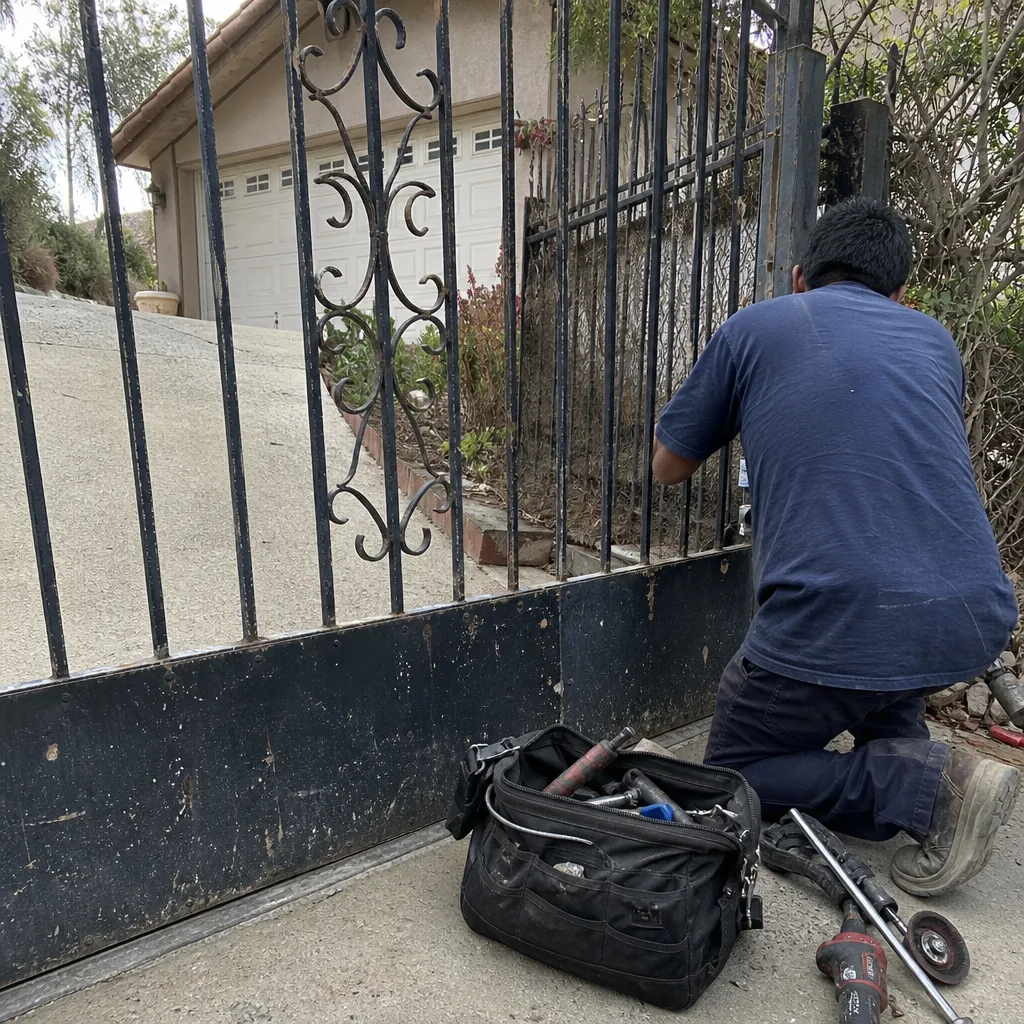 Before
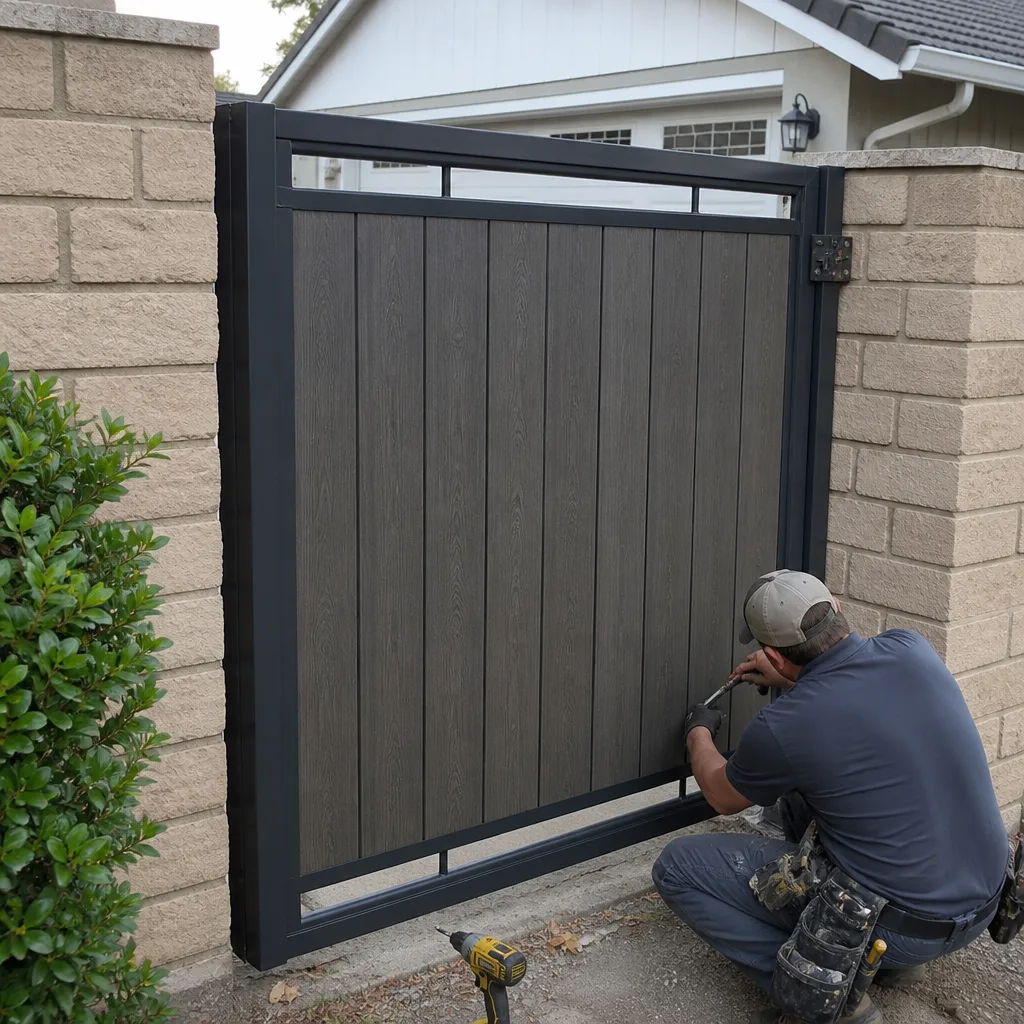 After
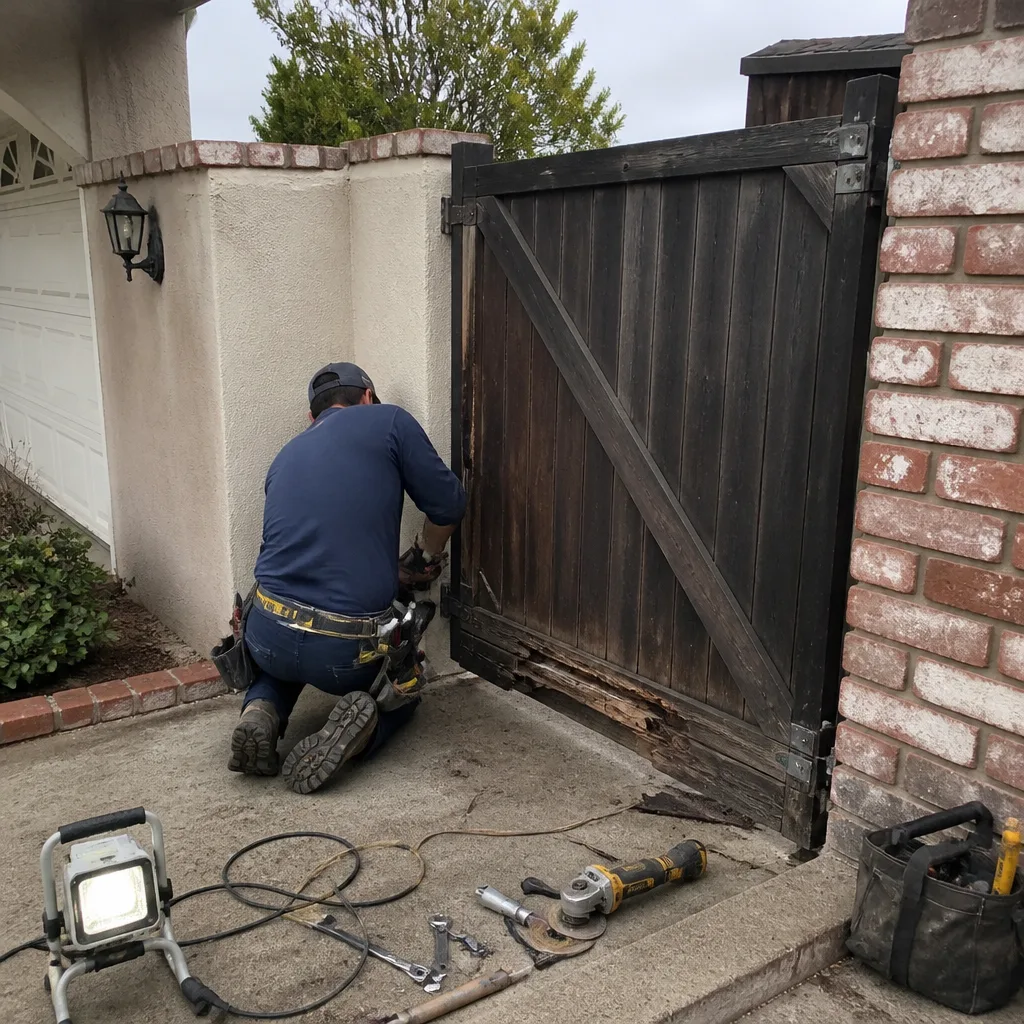 Before
 After
 Before
 After