
Last updated November 2, 2026
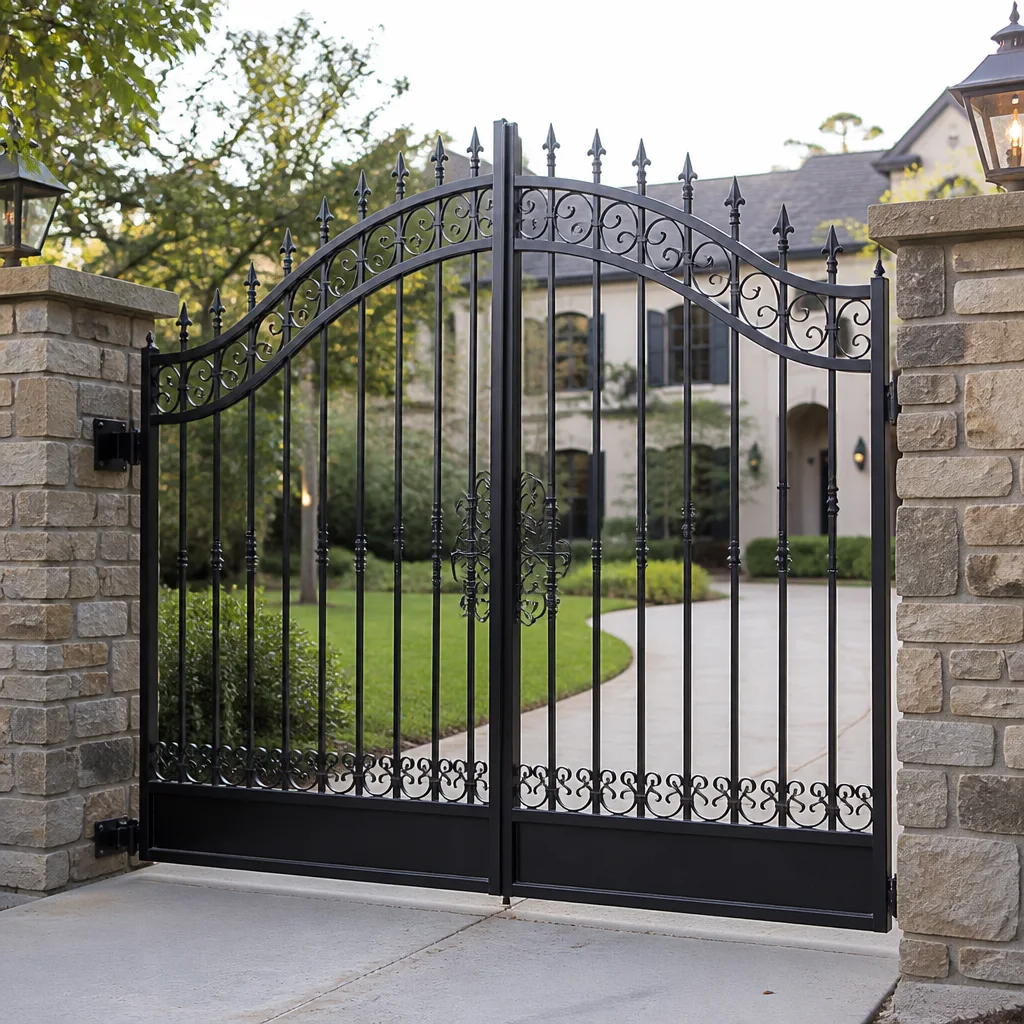 Wrought iron
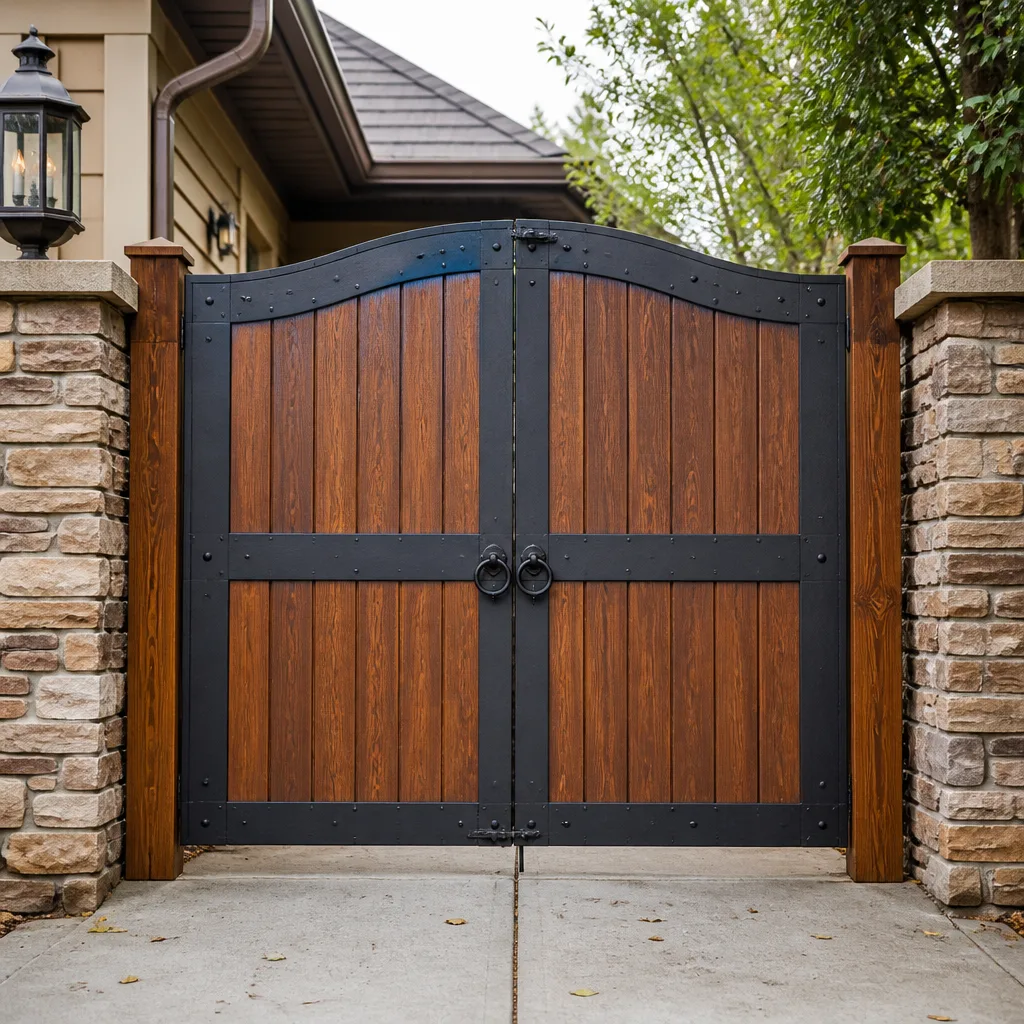 Wood & steel frame
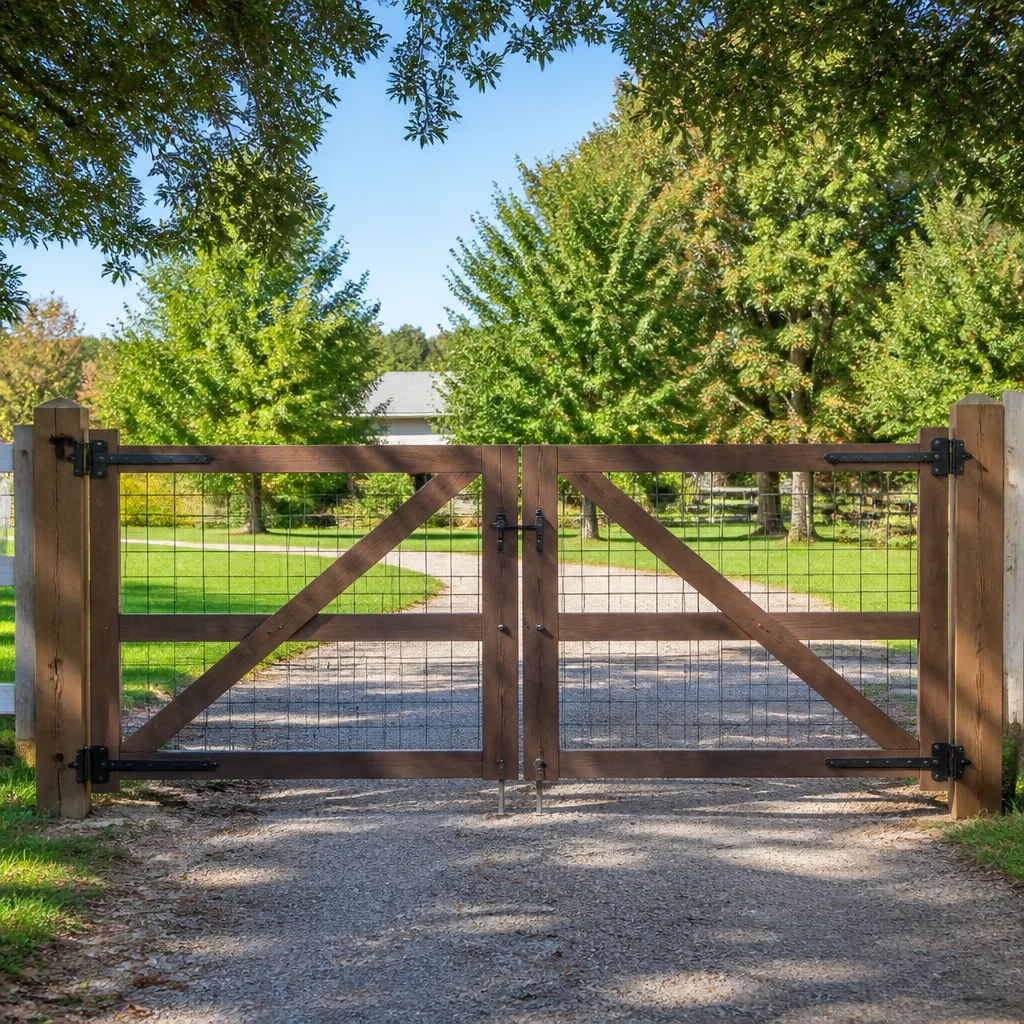 Farm & ranch
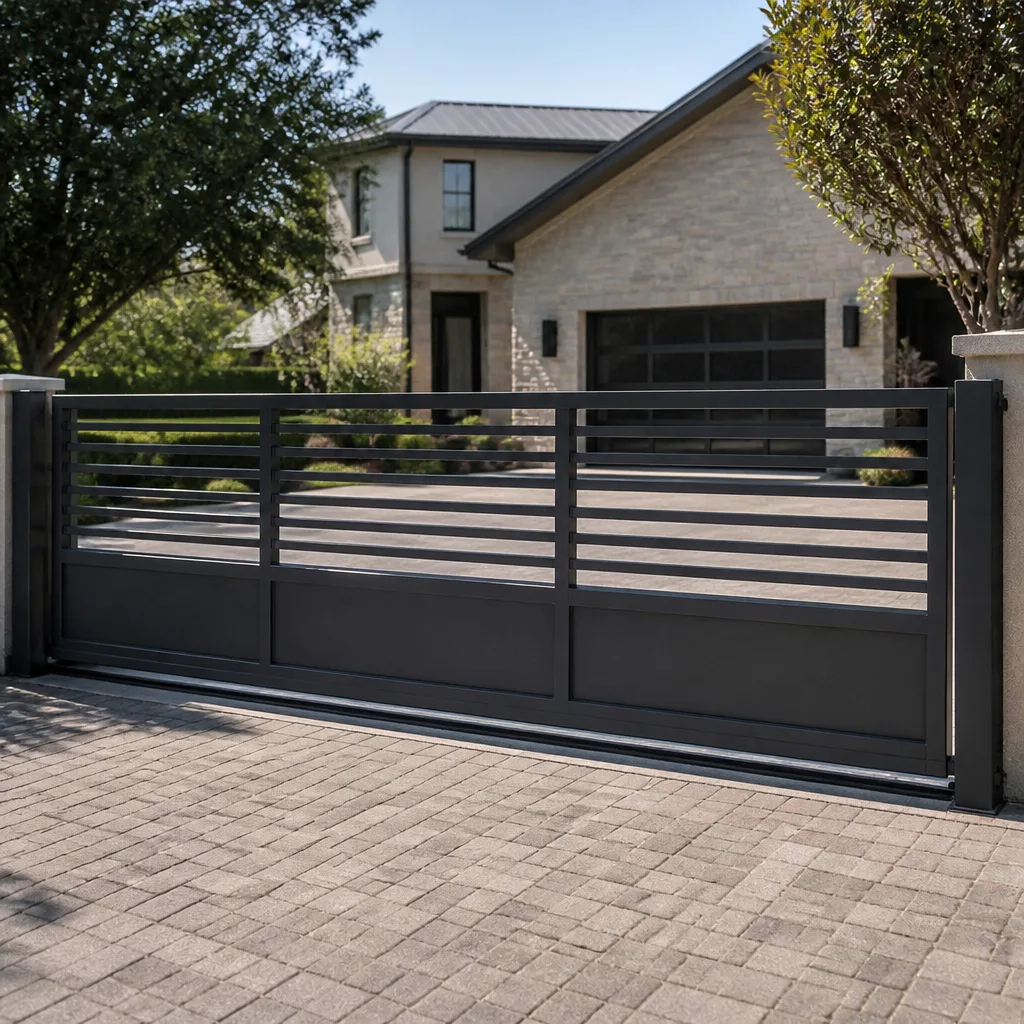 Sliding driveway gates
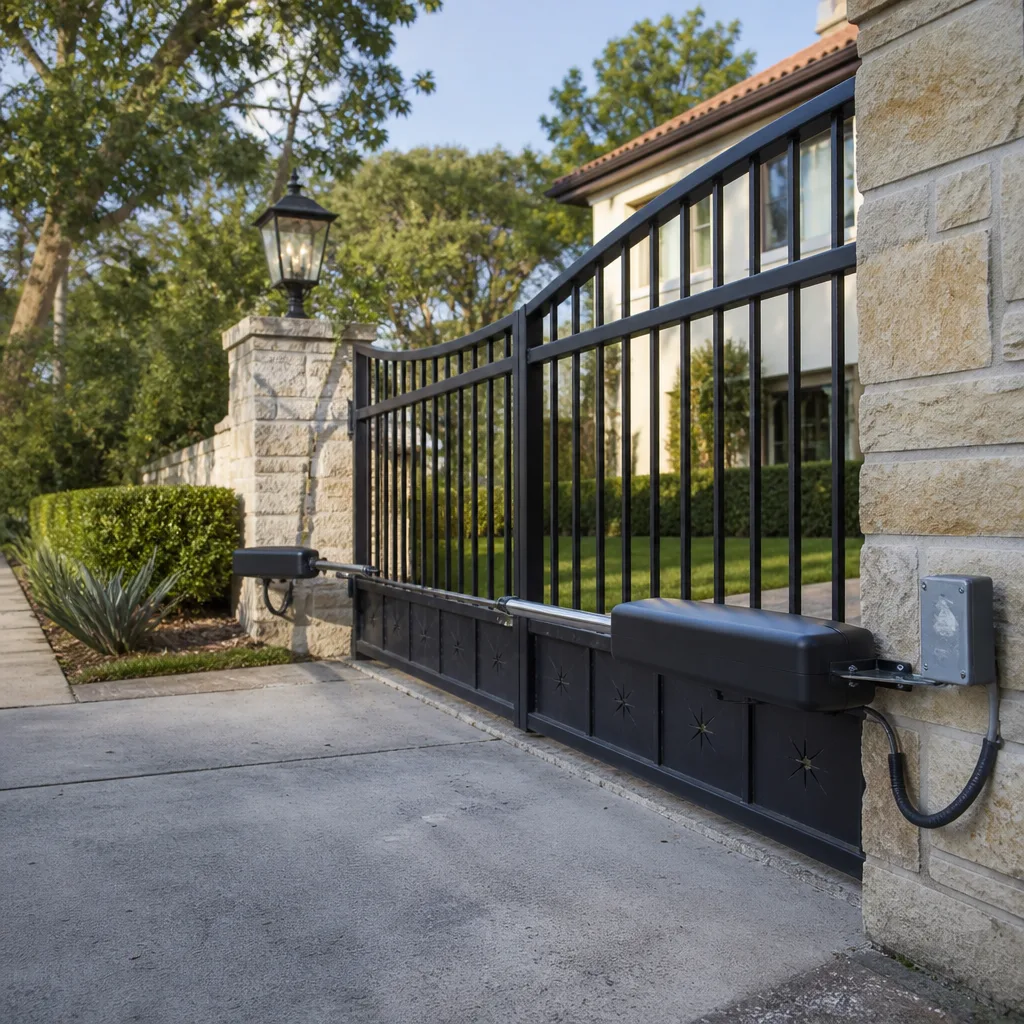 LiftMaster operators
Free on-site gate assessment - hinges, posts, and your LiftMaster or Nice gate operator checked before anything is quoted
The assessment is free and the quote is the invoice.
Get your free estimateGate Repair Permits, Codes & Inspections in CA: What You Need to Know
If your automatic gate lacks a functioning secondary entrapment protection device – a separate requirement from the primary photo eye – it isn’t UL 325 compliant under California law, and your homeowner’s insurance may not cover an injury claim. That’s not a hypothetical. We see gates every week in Mission Viejo that were installed by contractors who treated the safety standard as optional, and the homeowner has no idea until something goes wrong. This guide covers the permit triggers, the four entrapment zones, HOA liability, the paperwork trail, and ADA obligations you actually need to understand in Orange County.
Styles & brands we work with
- Wrought iron
- Wood & steel frame
- Farm & ranch
- Sliding driveway gates
- LiftMaster operators
Quick Answer
Most gate repairs in California do not require a building permit – replacing an operator, control board, or hinge on an existing gate is typically exempt. What requires a permit is structural work: moving or replacing a gate post, pouring a new foundation, or altering the electrical feed to the operator. What every automatic gate must have, regardless of permit status, is UL 325-compliant entrapment protection covering all four zones, plus adherence to any HOA CC&Rs that apply to your Mission Viejo community.
Table of Contents
- When a Gate Repair Actually Triggers a Permit in Orange County
- UL 325 and the Four Entrapment Protection Zones
- HOA-Governed Communities in Mission Viejo: CC&Rs and Liability
- The Paperwork Trail: What a Legitimate Contractor Provides
- ADA Requirements for Commercial and Community Gates
- What Happens During a Compliance Inspection
- What Compliance Work Costs in Mission Viejo
- Common Mistakes to Avoid
- When to Call a Professional
- Frequently Asked Questions
- The Bottom Line
When a Gate Repair Actually Triggers a Permit in Orange County
Here’s the distinction most contractors won’t explain clearly: a gate repair permit is tied to what you’re changing, not to the fact that the gate broke. Replace a LiftMaster operator on an existing mounting post, swap out a worn hinge, or install a new Mighty Mule control board, and no permit is required in Mission Viejo or anywhere else in Orange County. The gate is being restored to its existing function on its existing structural base.
What does require a permit:
- Moving or replacing a gate post. Even if the new post goes in the same general location, you’re now doing structural work. A post that sustains a vehicle-impact gate on an eight-foot steel leaf is carrying thousands of pounds of lateral force. The city wants an engineer’s stamp on the anchorage.
- Pouring a new foundation or extending the concrete pad. A gate operator that pulls a post out of the ground is a catastrophic failure. Orange County building officials treat gate foundations as structural elements, not landscape features.
- Adding a new electrical circuit or upgrading the panel. Running a dedicated 20-amp circuit for a commercial-grade FAAC or DoorKing operator is an electrical permit item. Tapping into an existing outlet with a weatherproof disconnect might not be, depending on the city inspector’s interpretation.
- Converting a manual gate to an automatic gate. This is technically an installation, not a repair, and it almost always requires permits plus a UL 325 compliance sign-off. The gate was never designed for motorized operation, so the city treats it as new construction.
In Mission Viejo specifically, we’ve found that repairs to the operator, arms, sensors, and hinges almost never pull a permit. It’s the structural and electrical work that triggers the requirement. If you’re unsure, ask the contractor whether the job involves the post, the foundation, or the panel. Those are the three words that change the answer from “no permit” to “yes permit.”
UL 325 and the Four Entrapment Protection Zones
UL 325 is the safety benchmark for automated gates and doors in the United States. California enforces a version of it through Title 24 and local building codes, but the key fact most Mission Viejo homeowners miss is that California enforcement has historically been stricter than the federal baseline on secondary entrapment protection. The federal standard allows for primary and secondary devices in certain configurations; California inspectors in Orange County frequently require both plus a pressure-sensing edge, particularly on gates serving residential communities with shared access.
UL 325 defines four entrapment zones around any automatic gate. Every zone must be protected, and no single device covers all four:
- Leading edge zone. The moving edge of the gate leaf as it opens. This is the most common entrapment point. The required protection is either a pressure-sensing edge strip along the full length of the gate or a monitored photo eye positioned to detect obstruction before contact.
- Trailing edge zone. The edge that swings toward the fence or wall as the gate opens. Fingers and hands get caught here, especially with kids. Protection is typically a gap guard, mesh panel, or positioned sensor that prevents a pinch point.
- Post zone. Where the gate meets the fixed post when fully open or fully closed. A child’s arm can fit through a four-inch gap and get crushed. Protection can be a rubber buffer, gap guard, or a secondary sensor.
- Pinch point at the hinge. The pivot area where the gate leaf rotates. Gate hinges can crush fingers even on manual gates. On automatic gates, this zone requires a guard or a design that eliminates the pinch geometry.
What we see in Mission Viejo, particularly on older automatic gates installed before 2016, is that only the primary photo eye was installed. For Gate Repair Warning Signs: A Mission Viejo Homeowner’s Reference Guide, check our blog. The house had a gate that looked compliant. The owner had no reason to suspect otherwise. But under current UL 325 interpretation and California enforcement expectations, that gate was non-compliant, and the insurance exposure was real. A single primary device does not satisfy the multi-zone requirement. If your gate was installed more than eight years ago and you’ve never had a compliance check, the odds are better than even that it’s missing at least one required protection device.
HOA-Governed Communities in Mission Viejo: CC&Rs and Liability
Mission Viejo has a dense concentration of HOA-governed communities. Lake Mission Viejo, Canyon Crest, Pacific Hills, and dozens of smaller associations all maintain common-area access gates, and many individual homeowners live in gated enclaves where a second layer of rules applies on top of city building codes. CC&Rs (Covenants, Conditions, and Restrictions) can be more restrictive than municipal code, but they can never be less restrictive, and they create a separate liability channel.
Here’s what that means in practice:
- If the HOA owns the gate: The association, not the individual homeowner, is typically responsible for maintenance and compliance. But that responsibility creates liability if the gate malfunctions and injures someone. HOAs in Mission Viejo have been named in personal injury suits when a gate closed on a resident, a vehicle, or a delivery driver. The association’s defense in those cases depends on whether it can demonstrate a documented inspection and repair history. No paperwork, no defense.
- If the homeowner owns the gate and the HOA governs appearance: The HOA’s authority is typically limited to design review – material, color, height, style. But structural changes to the gate, including installing a new post or foundation, may require HOA architectural committee approval in addition to a city permit. Skipping the HOA process is a separate violation that can trigger fines and a forced remediation order.
- Shared driveway gates: When one gate serves two or more homes, ownership and liability get murky. The gate may be jointly owned by the adjacent homeowners, managed by an informal agreement, or technically owned by the HOA even if it sits on private property. We’ve seen several Mission Viejo shared-driveway gates where no one knew who was responsible for the operator, and the gate simply stopped getting maintained. When it failed, the repair needed was three times what it would have been with routine service.
The lesson: know who owns the gate before you hire anyone to fix it. That single fact determines who files the permit, who holds the liability, and who pays the invoice. If you’re in a Mission Viejo HOA and you’re not sure, pull your CC&Rs and look for the gate maintenance clause. It’s usually in the section covering common areas or exclusive-use easements.
The Paperwork Trail: What a Legitimate Contractor Provides
A compliant gate installation or repair leaves a paperwork trail. A non-compliant one leaves a receipt and a handshake. For Gate Repair Troubleshooting: Common Problems and How to Fix Them, see our detailed walkthrough. The difference matters because if your gate causes an injury, your insurance company is going to ask for documentation, and “the gate guy fixed it last year” is not a document.
Here’s what a legitimate contractor should provide after any automatic gate job in Mission Viejo:
- An itemized invoice. Not just “gate repair – $2,400.” You need the operator model, the control board part number, the sensor type, the labor breakdown. If a future claim requires proving that a specific UL 325-compliant device was installed, the invoice is exhibit one.
- A UL 325 compliance checklist. This is a simple document listing the four entrapment zones and the protection device installed at each. Any contractor who works on automatic gates should be able to produce this in ten minutes. If they can’t, they don’t understand the standard they’re supposed to be working to.
- Permit documentation (when applicable). If structural work was done, you should have a copy of the permit application, the approval, and the final inspection sign-off. If the contractor says “we’ll handle the permit” and never provides proof, assume it wasn’t filed.
- Photos of the work. This is a simple step that almost no one does. Photos of the post anchorage, the foundation pour, the sensor placement, and the operator mounting provide a visual record that can resolve disputes years later.
- A written warranty on parts and labor. Not a verbal promise. A written warranty with a clear scope and term.
For a straightforward operator replacement on a single-family gate in Mission Viejo, the paperwork is simpler: itemized invoice, compliance checklist, warranty. That’s the minimum. For a commercial or HOA gate, add the permit documentation and photos. If any contractor pushes back on providing these, that’s a signal about how they’ll handle the next problem that comes up.
ADA Requirements for Commercial and Community Gates
The Americans with Disabilities Act applies to gates in two situations in Mission Viejo: commercial properties and residential communities where common-area amenities are open to the public or where the gate controls access to services. A single-family home’s private driveway gate is generally exempt from ADA requirements, but the moment that gate serves a community pool, a clubhouse, or any facility where guests are invited, Title III can apply.
The core ADA requirements for automatic gates:
- Opening force limit. The gate must not require more than 15 pounds of force to operate manually if the automatic system fails. This is a real measurement, not a guess. We’ve tested gates that were rated for automation but required 30 or 40 pounds of manual force because the hinges had seized or the leaf had sagged.
- Closing speed limit. A powered gate must close slowly enough that a person using a mobility device can clear the path. The standard is measured in feet per second of travel at the leading edge. A gate that slams shut even slightly too fast is an ADA violation waiting to be enforced.
- Accessible controls. If the gate has a keypad or card reader, the reader height and reach range must accommodate wheelchair users. This is frequently missed on retrofit installations where the original keypad was mounted at standing height.
- Clear opening width. The gate opening must be wide enough for a wheelchair or scooter to pass through. Minimum clear width is 32 inches; 36 to 42 inches is the practical target for community gates in Mission Viejo.
For residential communities with common-area gates, the test is whether the gate is part of a “public accommodation” or blocks access to one. A gate that controls vehicle entry to a private residential street where only residents and invited guests enter is usually not a Title III issue. A gate that controls entry to a parking area serving a leasing office, a pool, or a community center is. If you’re a property manager in Mission Viejo, the safest approach is to treat any community gate as if ADA applies, because the cost of a compliance audit is far less than the cost of defending a discrimination complaint.
What Happens During a Compliance Inspection
If structural work triggered a permit, Orange County will schedule a final inspection after the work is complete. The inspector is checking for three things: structural integrity, electrical safety, and UL 325 compliance. Understanding what they’re looking for will tell you whether the contractor you hired actually knows what they’re doing.
The inspection process typically follows this sequence:
- Structural check. The inspector verifies that the gate post is anchored to the engineered specification, the foundation is the correct size and depth, and the gate hangs square and plumb. They’ll check the post anchorage bolts, the concrete dimensions, and the gate’s range of motion.
- Electrical check. The operator must be on a dedicated circuit with a weatherproof disconnect. Wiring must be in conduit where exposed. Grounding must be proper. The inspector will look at the panel connection and may test the disconnect.
- UL 325 verification. The inspector will test the primary entrapment protection (typically the photo eye) by blocking the beam and confirming the gate reverses or stops. They’ll also verify that secondary protection is installed, whether that’s a pressure edge, a second sensor, or a design that eliminates the pinch point.
- Warning signage. UL 325 requires specific warning signs on automatic gates, and California inspectors do check for this. If the sign is missing or the wrong type, the inspection fails.
- Documentation review. The inspector may ask to see the operator’s installation manual to verify that the settings match the manufacturer’s specifications. This is where working with a contractor who knows the specific brand – DoorKing, Elite, LiftMaster – matters, because the settings differ between manufacturers.
If the inspection fails, the contractor comes back, fixes the issue, and schedules a re-inspection. That’s normal. What’s not normal is a contractor who doesn’t know whether their work will pass. If you ask “will this pass inspection?” and the answer is anything other than an immediate, confident yes, that’s a problem.
What Compliance Work Costs in Mission Viejo
Adding UL 325 compliance to an existing automatic gate typically costs between $450 and $1,200 in Mission Viejo, depending on what’s missing. If the gate already has a primary photo eye and you only need a pressure-sensing edge strip, you’re at the lower end. If the gate needs new sensors, a gap guard, signage, and operator reprogramming, you’re at the higher end.
Full compliance work on a gate that has no safety devices at all:
| Item | Typical Range in Mission Viejo |
|---|---|
| Primary photo eye (monitored) | $180 – $320 |
| Pressure-sensing edge strip | $220 – $400 |
| Gap guard or pinch-point protection | $90 – $180 |
| UL 325 warning signage | $25 – $60 |
| Operator reprogramming and testing | $120 – $250 |
| Total | $635 – $1,210 |
These are installed prices from a licensed gate contractor. A handyman or general contractor might quote lower, but the risk is that the devices aren’t properly monitored, wired, or tested. A non-monitored photo eye that fails silently is a liability, not a safety device. For HOA and commercial gates in Mission Viejo, compliance costs run higher because the gates are larger, the operators are heavier-duty, and the documentation requirements are more demanding. Budget $1,500 to $3,000 for a commercial gate compliance retrofit.
Common Mistakes to Avoid
- Assuming the photo eye is enough. UL 325 requires protection at all four entrapment zones. A single primary photo eye covers only the leading edge zone. We see this misunderstanding on roughly half the older automatic gates we inspect in Mission Viejo.
- Hiring a general contractor for gate structural work. A contractor who pours foundations and frames walls doesn’t necessarily understand gate dynamics. Gate posts carry loads that general concrete work doesn’t account for, and an under-anchored post is a failure waiting to happen.
- Skipping the HOA architectural review. In Mission Viejo, most gate changes that require a city permit also require HOA approval. Skipping either one creates a separate enforcement problem, and HOAs have fine authority that cities don’t.
- Accepting a verbal warranty. If the warranty isn’t written, it doesn’t exist. Get it in writing with a clear scope and duration, and make sure the invoice lists the specific parts that were installed.
- Not asking for the UL 325 compliance checklist. Any contractor who installs or repairs automatic gates should be able to provide this document instantly. If they act confused, they don’t know the standard.
- Installing a gate operator without a dedicated circuit. Tapping into a shared circuit that also powers landscape lighting or an outdoor outlet is an electrical code violation in Orange County and can cause the operator to trip breakers or run under-voltage.
When to Call a Professional
If your gate involves a structural post, a foundation, an electrical connection to the panel, or a commercial operator like a DoorKing or FAAC unit, this is not a DIY project and not a handyman job. Automatic gate systems contain high-tension springs, heavy steel leaves, and electrical components that can cause serious injury if handled incorrectly. A gate leaf that weighs 600 pounds can crush a person against a post. An improperly wired control board can energize the gate unexpectedly. If you’re not trained on gate-specific systems, the risk isn’t worth the saved labor cost.
If you’re in Mission Viejo and you’re not sure whether your gate is compliant, or whether a repair needs a permit, call (866) 562-1205. Gate Repair Mission Viejo offers free estimates in Mission Viejo, and we can tell you over the phone whether your situation is a repair, a compliance retrofit, or a full gate installation in Mission Viejo. No obligation, no pressure.
Frequently Asked Questions
Most gate repairs do not require a permit in Mission Viejo. Replacing an operator, control board, sensor, or hinge on an existing gate is considered maintenance, not construction. A permit is required when the repair involves structural changes to the gate post, foundation, or the electrical circuit feeding the operator.
Call (866) 562-1205 for a free estimate on any gate repair in Mission Viejo.
UL 325 is the federal safety standard for automated gates and doors, and it applies to every automatic gate in California, including residential gates. The standard requires entrapment protection at four zones: leading edge, trailing edge, post zone, and hinge pinch point. Most older gates fail this requirement because they only have a primary photo eye.
A UL 325 compliance retrofit for an existing automatic gate in Mission Viejo typically costs between $450 and $1,200, depending on which protection devices are missing. A gate with no safety devices at all falls in the $635 to $1,210 range. The exact quote depends on the gate size, operator brand, and what’s already installed.
Liability depends on who owns and maintains the gate. If the HOA owns the gate, the HOA is typically liable, and its defense depends on documented maintenance and inspection records. If an individual homeowner owns the gate and the gate was non-compliant with UL 325, that homeowner’s insurance may deny the claim. If a contractor performed non-compliant work, they may share liability.
For routine repairs like operator replacement, HOA approval is typically not required. For structural changes – new posts, new foundations, gate replacement – most Mission Viejo HOAs require architectural committee approval in addition to any city permit. Check your CC&Rs for the gate maintenance and modification clause. Skipping HOA approval can trigger fines.
A legitimate gate contractor should provide an itemized invoice, a UL 325 compliance checklist covering all four entrapment zones, permit documentation when structural work was performed, photos of the work, and a written warranty. If any of these are missing, the paperwork trail is incomplete, which creates exposure if an injury claim is filed later.
The Bottom Line
California’s UL 325 standard and Orange County building codes create a compliance obligation that most gate repair companies in Mission Viejo don’t discuss, and many don’t even understand. The key facts: repairs to existing operators, control boards, and hinges don’t need permits. Structural work does. Every automatic gate must protect all four entrapment zones, not just the primary photo eye. HOAs add a separate layer of rules and liability, and the paperwork trail is what protects you when something goes wrong. If your gate is more than eight years old and you’ve never had a compliance check, the single most valuable thing you can do is have one. Start with a phone call. We’ll tell you what you’re looking at and whether the work even needs a permit. That conversation costs nothing. For more guides & resources, visit our blog.
For a free estimate on gate repair, electric gate repair, or gate installation in Mission Viejo, call Gate Repair Mission Viejo at (866) 562-1205. We specialize exclusively in gates – it’s the only trade we work in. Our technicians know LiftMaster, FAAC, BFT, Linear, Viking, Ghost Controls, DoorKing, Elite, and Mighty Mule systems specifically: common failure points, replacement parts, and the fixes that actually hold. Whether your gate won’t open, won’t close, or won’t respond at all, we diagnose the root cause – not just the symptom. Visit our Gate Repair Mission Viejo home page or call us for gate repair in Mission Viejo and electric gate repair in Mission Viejo.
Written by the team at Gate Repair Mission Viejo, serving Mission Viejo since 2011.
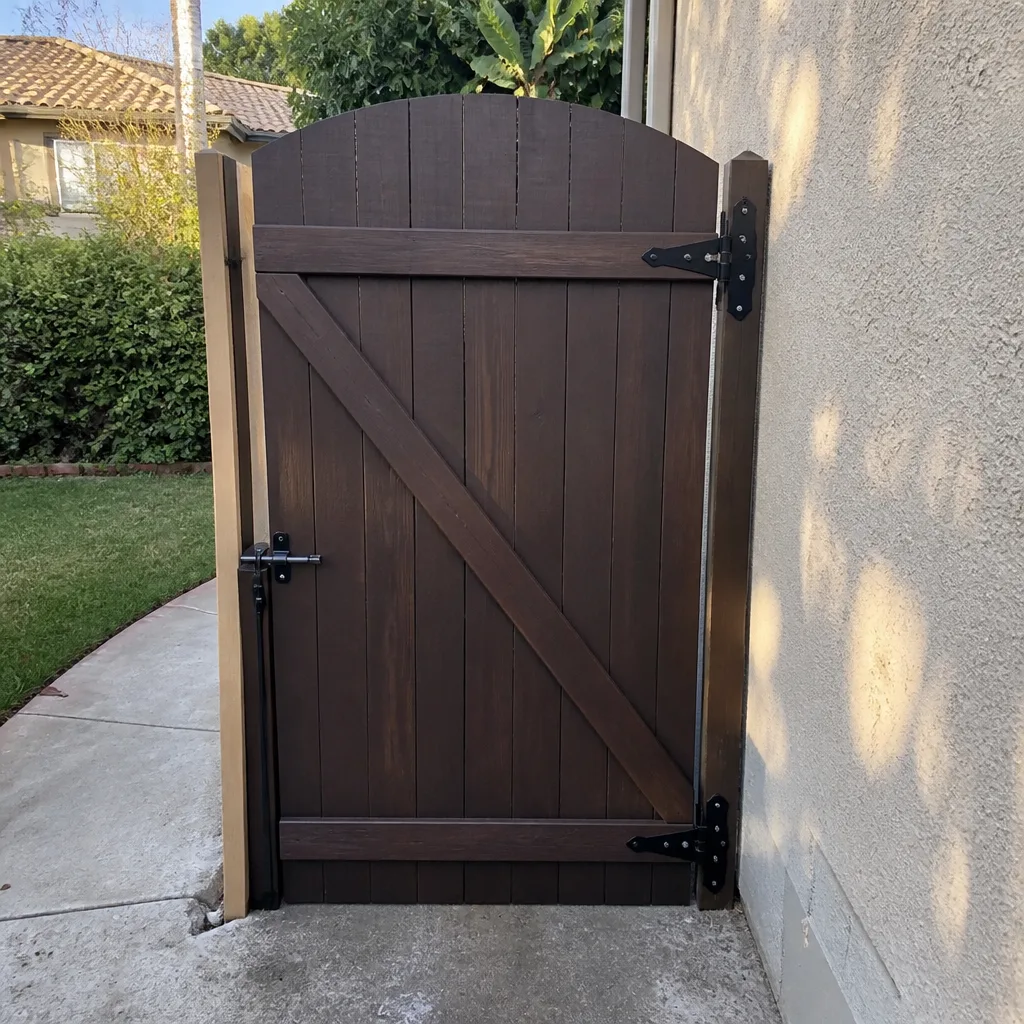
See the difference
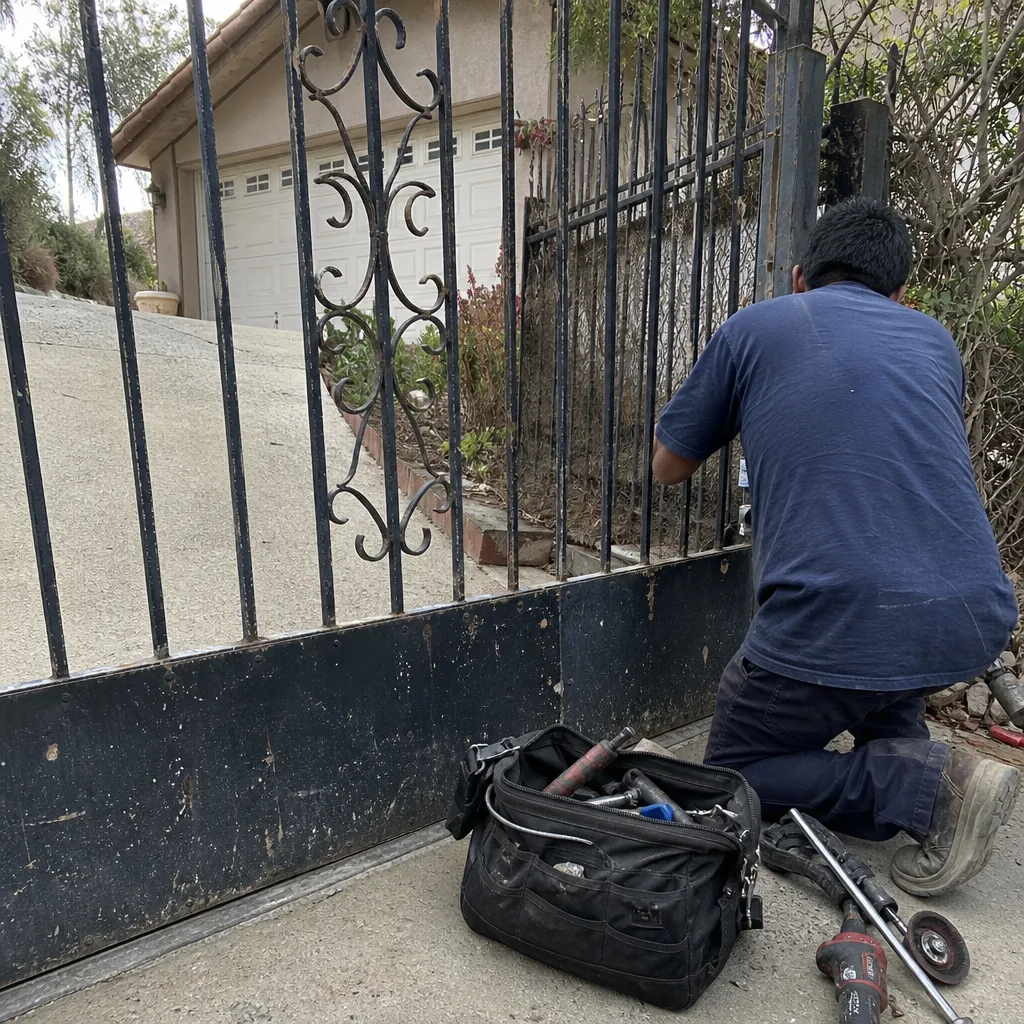 Before
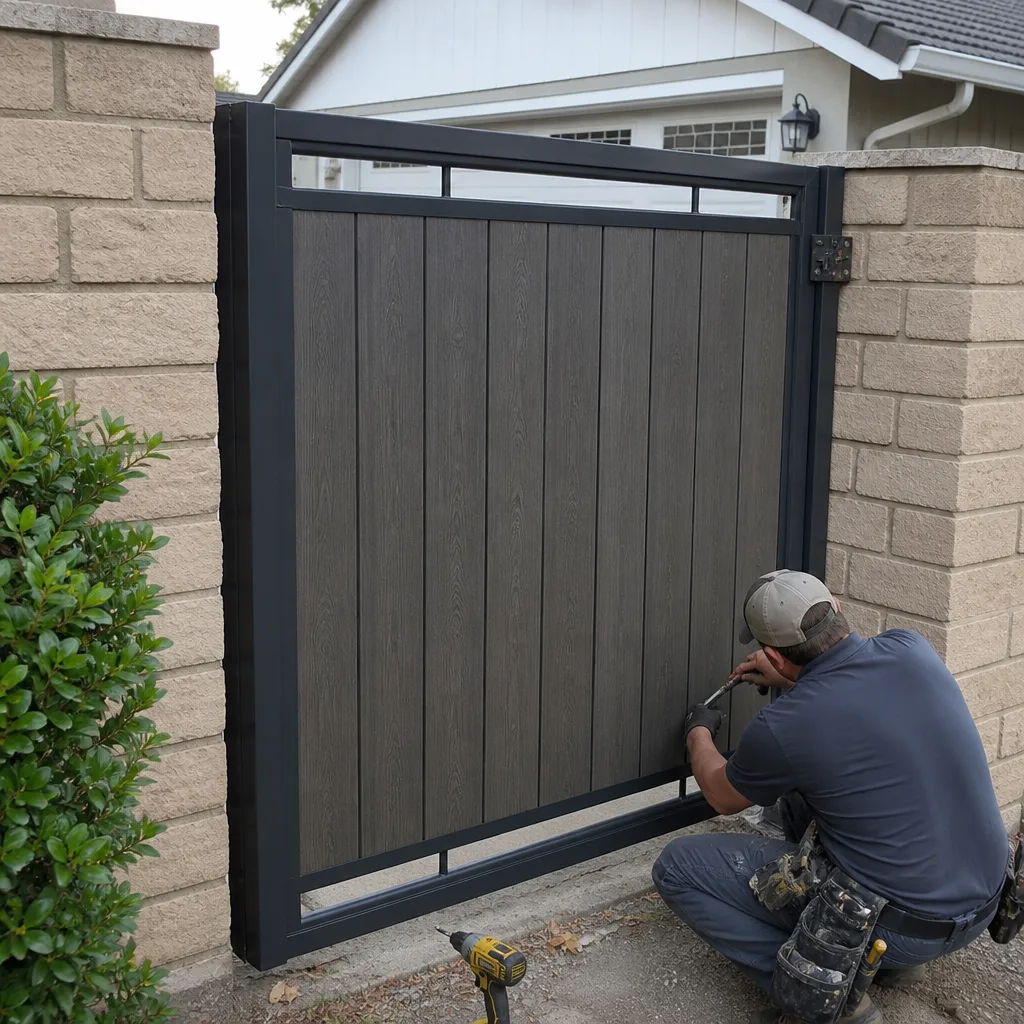 After
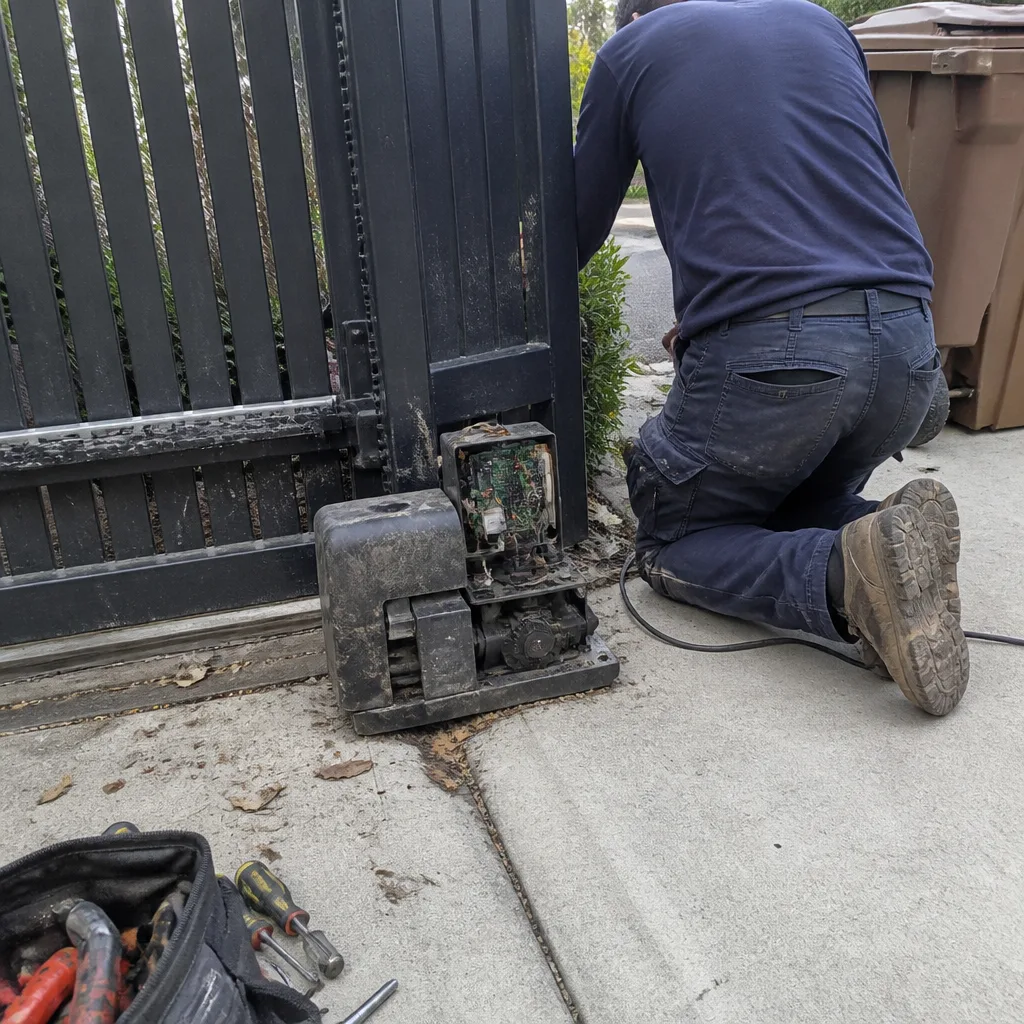
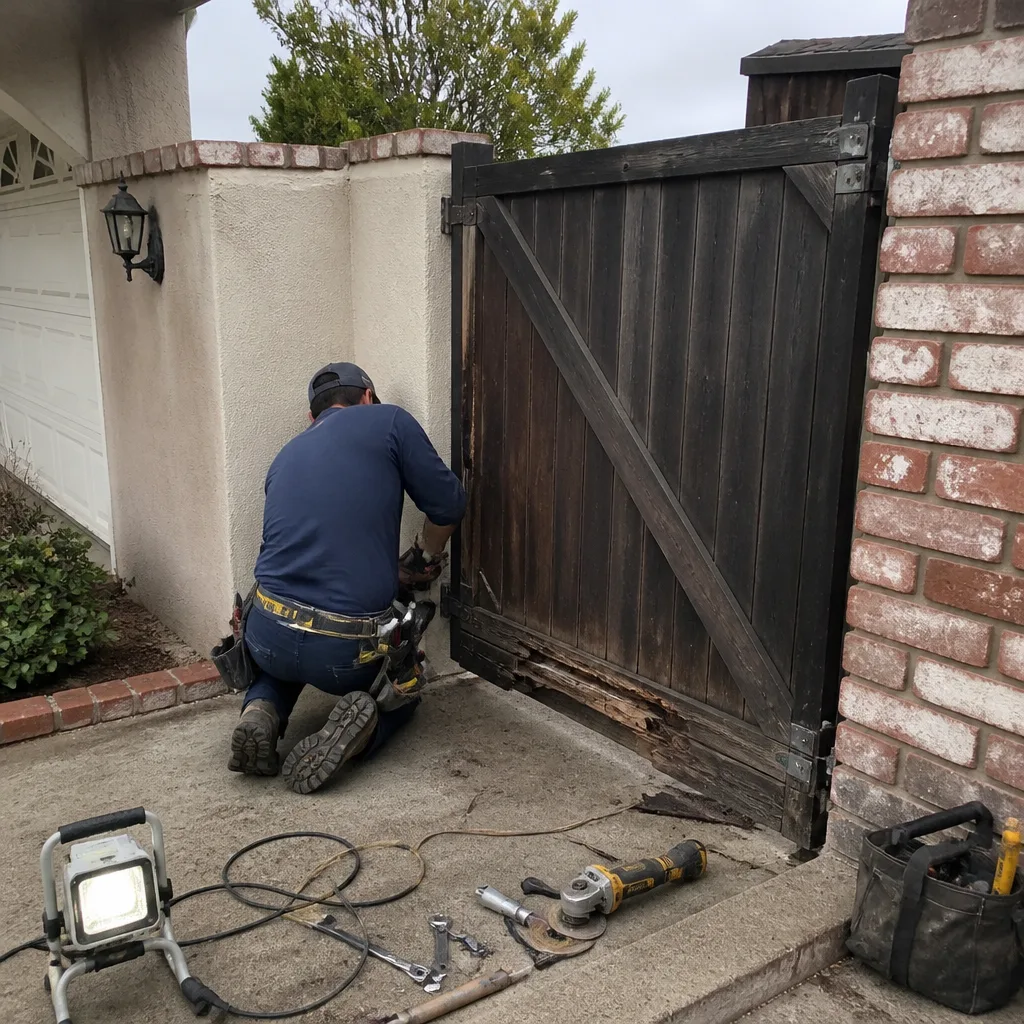 Before
 After
 Before
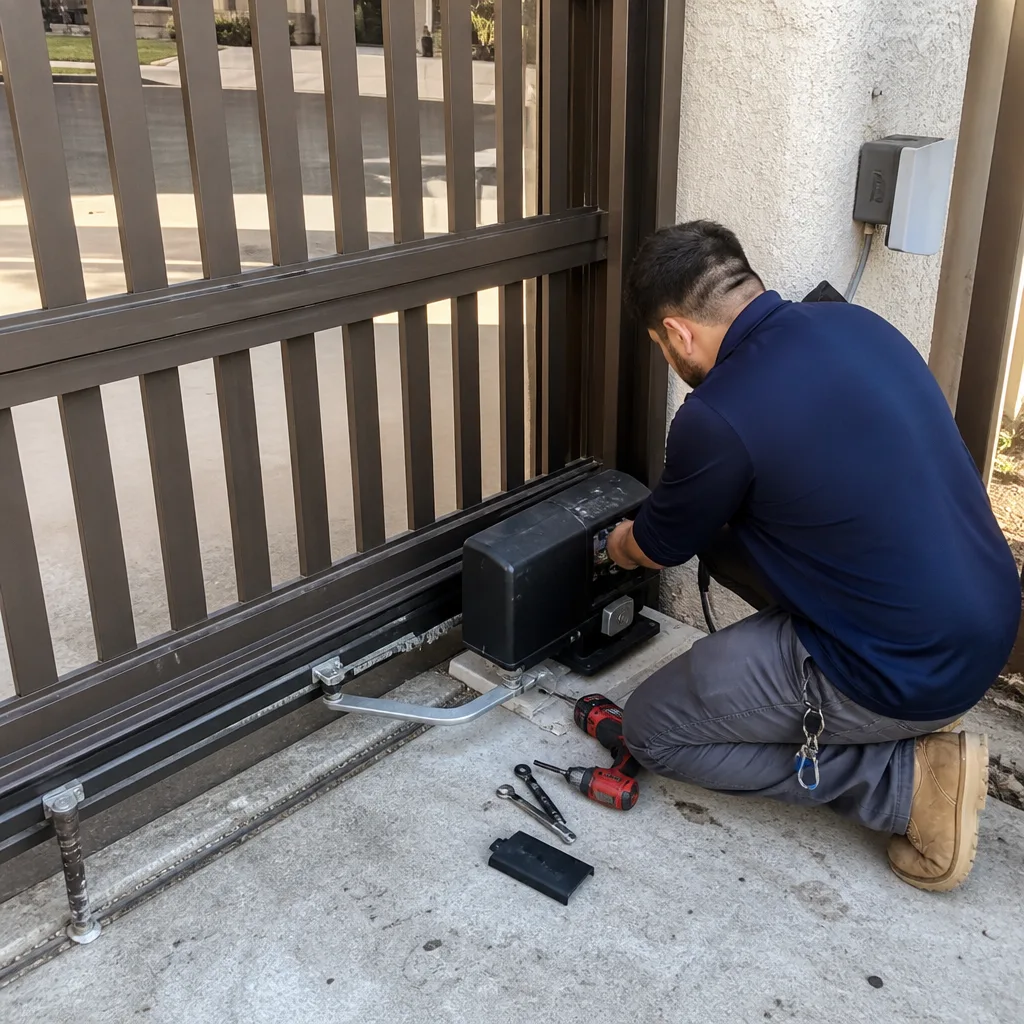 After