
Last updated November 3, 2026
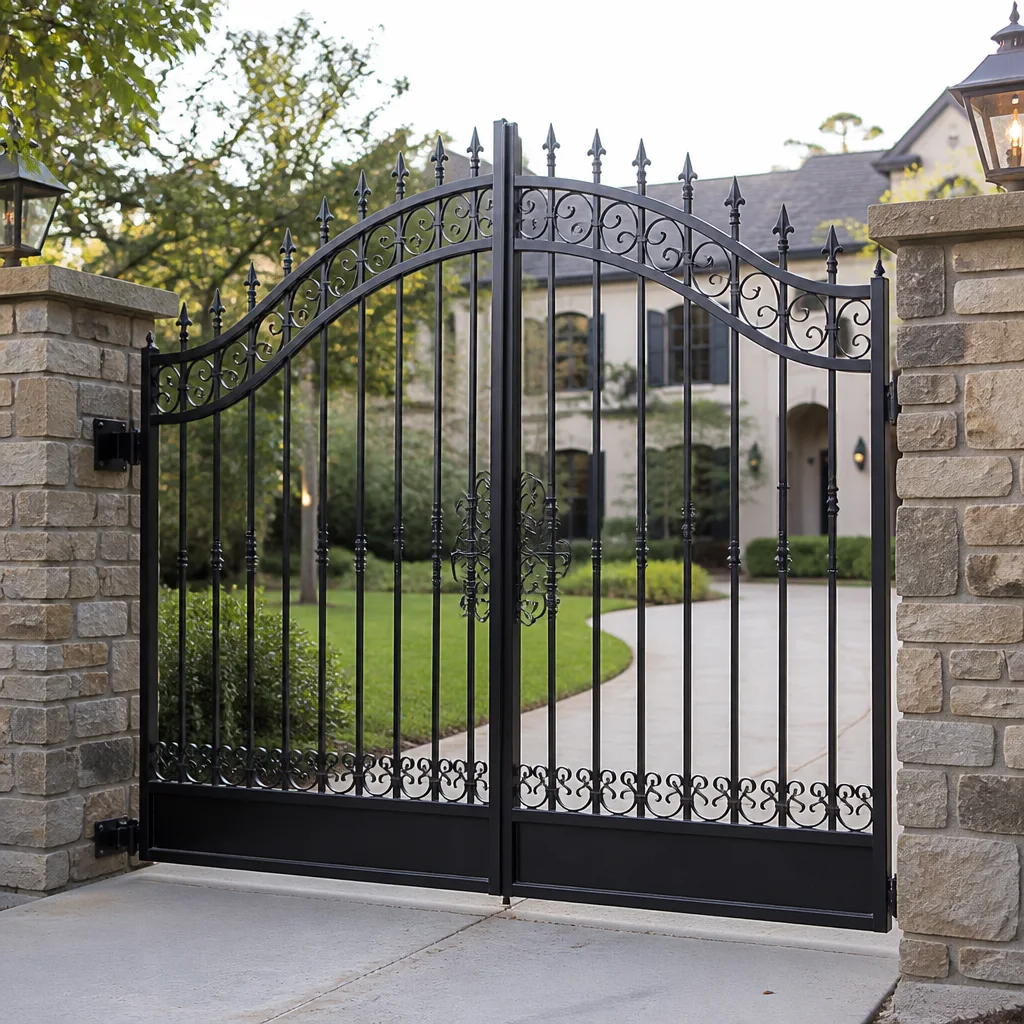 Wrought iron
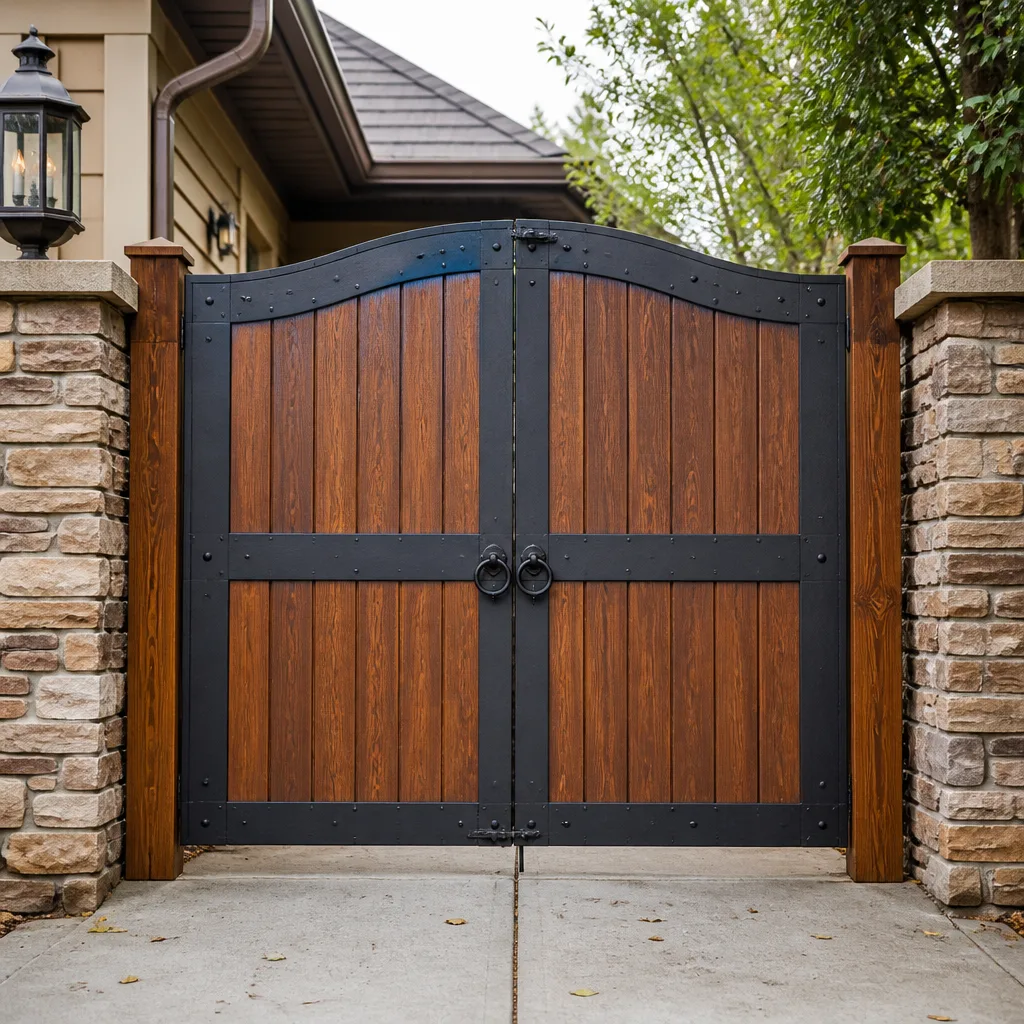 Wood & steel frame
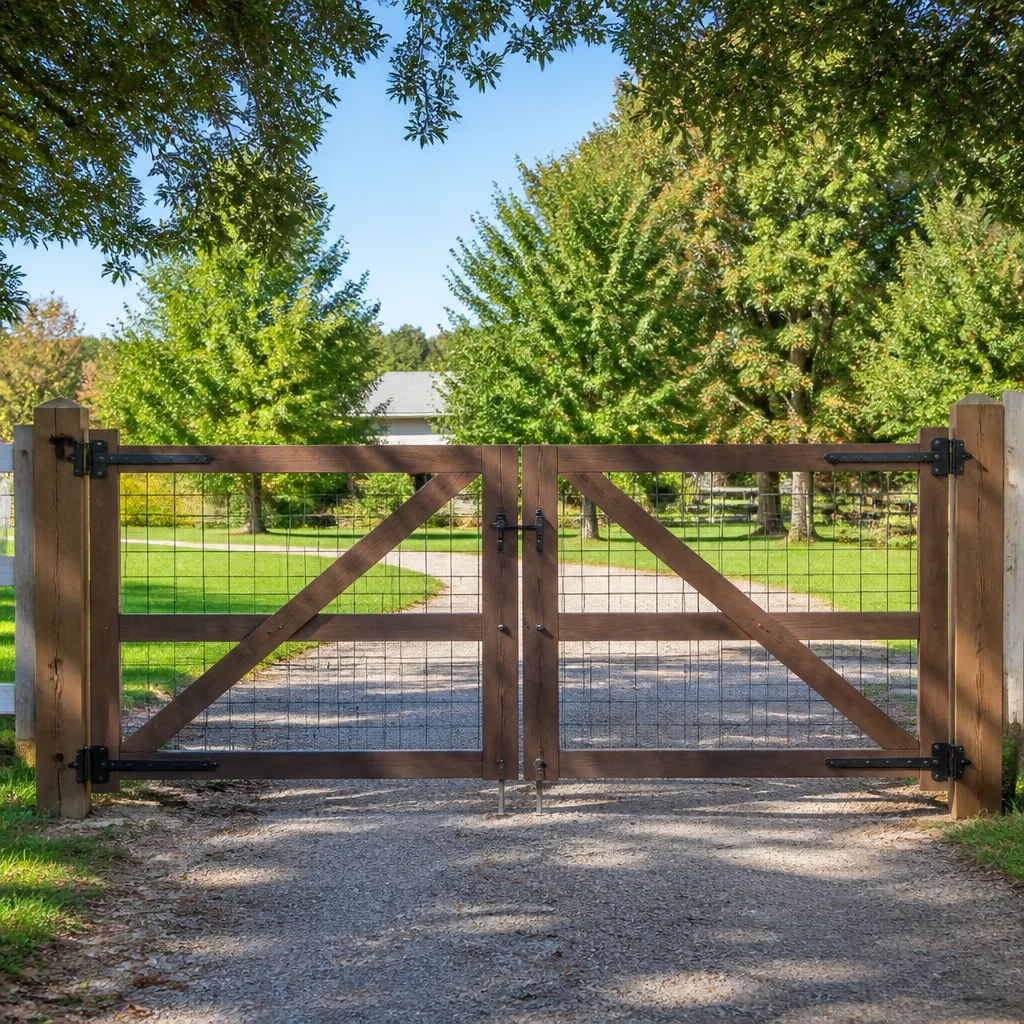 Farm & ranch
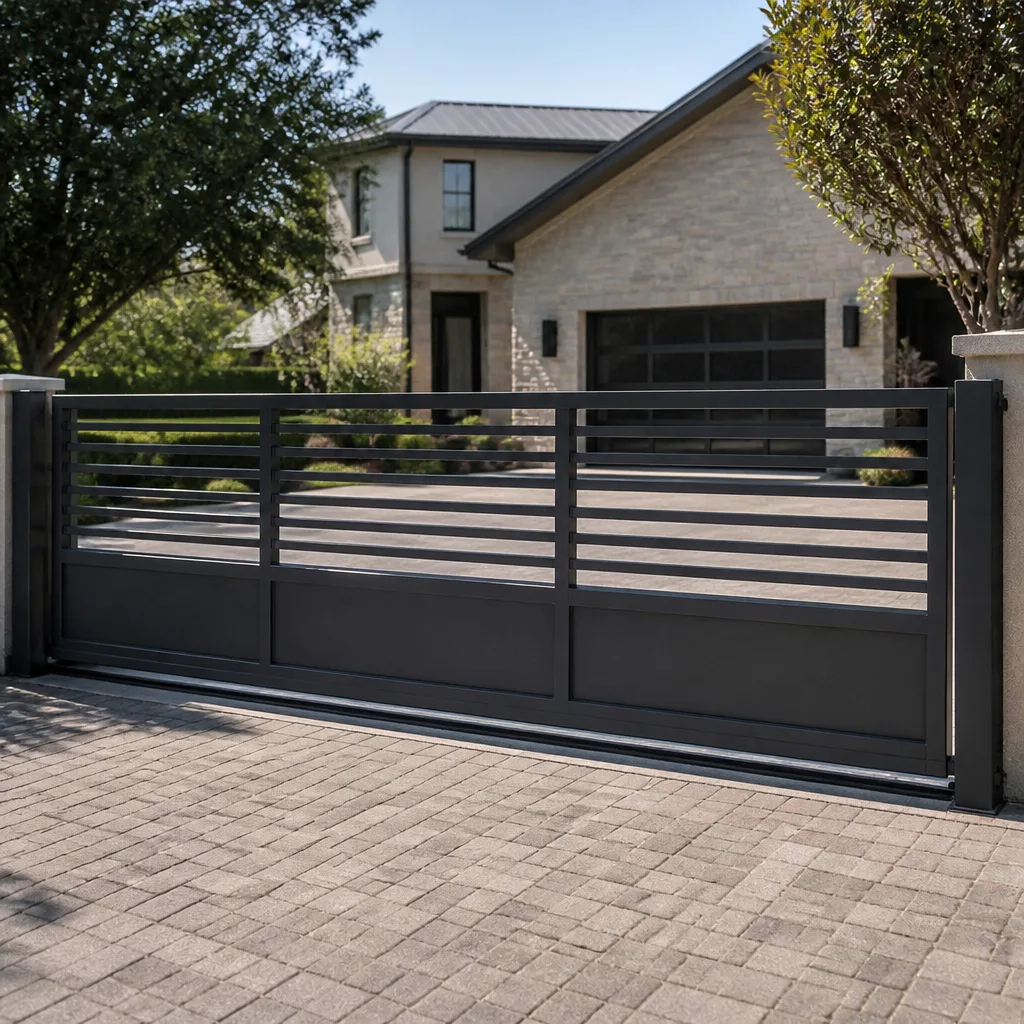 Sliding driveway gates
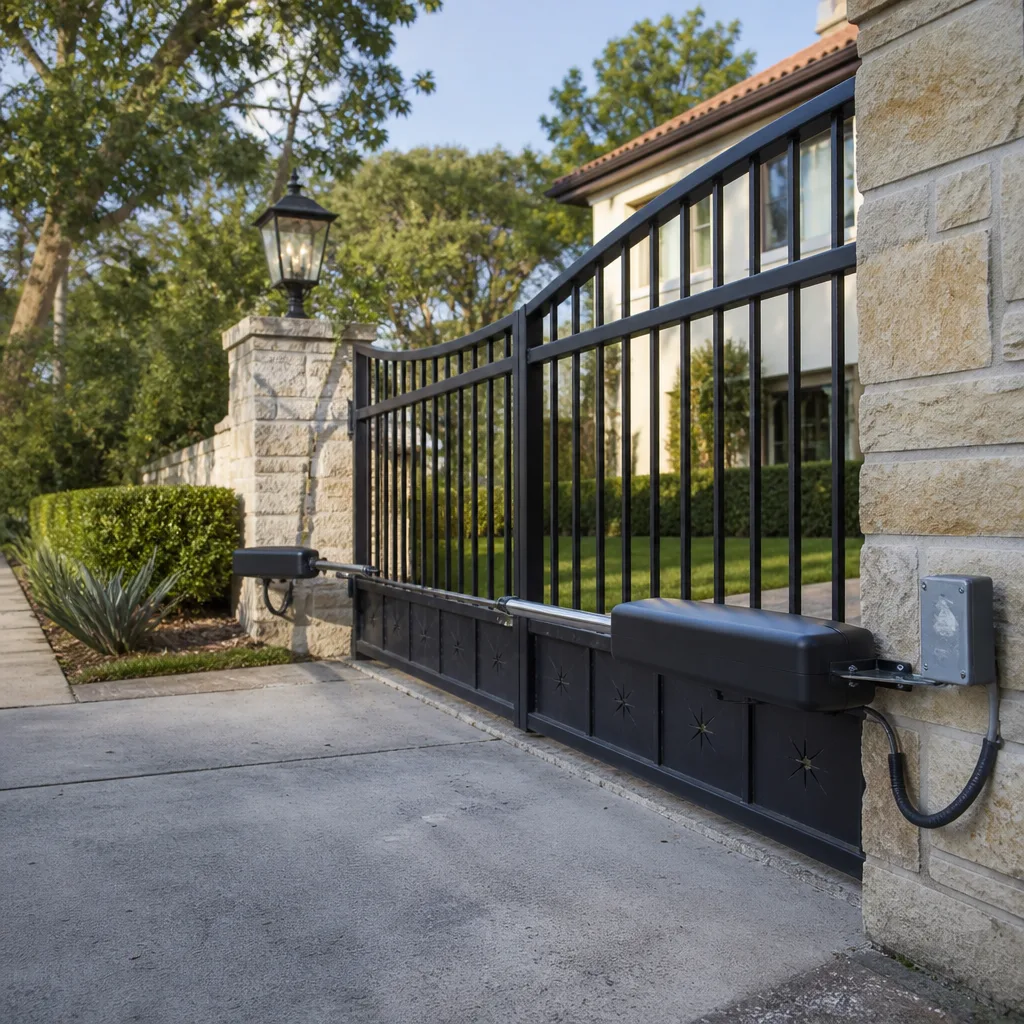 LiftMaster operators
Free on-site gate assessment - hinges, posts, and your LiftMaster or Nice gate operator checked before anything is quoted
The assessment is free and the quote is the invoice.
Get your free estimateThe Complete Gate Repair Guide for Mission Viejo Homeowners
A gate that’s been “repaired” four times in two years hasn’t been repaired once. It’s been patched. The same hinge gets replaced, the same motor gets reset, the same sensor gets realigned, and four months later the gate sags, groans, or stops responding again. Homeowners in Mission Viejo end up paying for the same repair over and over because the root cause was never addressed. This guide explains what’s actually happening to your gate, why Mission Viejo’s specific environment accelerates certain failures, and how to tell the difference between a repair that will hold and a patch that won’t last the season. For The Complete Guide to Gate Repair in Mission Viejo, see our detailed resource.
Quick Answer
Gate repair in Mission Viejo typically means diagnosing one of three root causes: salt-air corrosion on motor components, soil settlement shifting gate posts and hinges, or HOA finish requirements trapping moisture against metal. The fix that holds is the one that accounts for the local factor behind the failure, not just the symptom you can see, which is why our Gate Repair services focus on diagnosing root causes rather than applying temporary patches. Most residential gate repairs run from a simple hinge or limit switch adjustment to a full control board replacement, and the right specialist can usually tell which one you need within 30 minutes of arrival.
Styles & brands we work with
- Wrought iron
- Wood & steel frame
- Farm & ranch
- Sliding driveway gates
- LiftMaster operators
Table of Contents
- Why Mission Viejo’s Marine Layer Destroys Gate Operators Faster Than Inland Heat
- Hillside Lots, Clay Soil, and the Hinge Wear You Can’t See Until the Post Cracks
- HOA Finish Requirements and Which Gate Materials Survive UV Plus Salt
- The Part-by-Part Inspection Checklist: What Fails First and What It Looks Like
- Repair or Replace: When Cumulative Damage Makes Replacement the Cheaper Option
- Brand-Specific Failure Patterns: What We See on Viking, Ghost Controls, DoorKing, and Elite
- Electric Gate Repair: Motors, Control Boards, Loop Detectors, and Access Integration
- Common Mistakes to Avoid
Why Mission Viejo’s Marine Layer Destroys Gate Operators Faster Than Inland Heat
Mission Viejo sits close enough to the coast that marine-layer humidity rolls through most mornings, especially in lower-elevation neighborhoods near Oso Creek and along the western edges of the city. That humidity carries salt, and salt is corrosive to the exposed metal components inside automatic gate operators. A LiftMaster or Viking operator installed in Lake Forest or Laguna Hills can run for a decade with minimal corrosion. The same unit in Mission Viejo, particularly on a property within a mile or two of the coastal influence, can show visible oxidation on motor terminals, limit switch contacts, and control board connections within three to five years.
What we see in practice: the failure isn’t the motor burning out. The failure is a corroded connection that increases resistance, heats up, and eventually drops voltage to the point where the board errors out or the motor stalls. Homeowners notice the gate running slower than it used to, then intermittent operation, then nothing. By the time the gate stops responding, the corrosion has usually been building for months.
Mission Viejo-specific consequences:
- Limit switch drift: Corrosion on limit switch contacts causes the gate to think it’s traveled farther than it has. The gate stops short, reverses early, or slams into the open stop.
- Control board overheating: Salt-corroded relay contacts create resistance. Resistance creates heat. Heat kills boards. If your operator’s enclosure feels warm when the gate hasn’t run in hours, the board is working against its own connections.
- Motor terminal failure: The wires at the motor terminals get green or white crust. The motor still works when tested directly, but the degraded connection means it won’t run under load.
- Sensor false triggers: Photo eyes and safety edges with corroded internal wiring send phantom obstruction signals. The gate reverses for no reason, or refuses to close at all.
Prevention is straightforward: open the operator enclosure twice a year, look for crust on any connection, and clean terminals before they fail. The catch is that most homeowners don’t know their operator has an enclosure that opens, let alone what a healthy connection looks like. That’s the argument for a specialist: a trained eye catches oxidation before it becomes a no-start. Our team works exclusively on gates, which means we’ve seen the full corrosion timeline on every brand from electric gate repair jobs across Mission Viejo, from starter homes near Trabuco Road to custom properties in the hills.
Hillside Lots, Clay Soil, and the Hinge Wear You Can’t See Until the Post Cracks
Mission Viejo was built on rolling hills, and many neighborhoods, particularly Casta del Sol and the slopes around Lake Mission Viejo, sit on clay-heavy soil that expands and contracts with moisture. Clay soil shrinks in dry weather and swells in wet weather. A gate post set in that soil moves a few millimeters each season. A few millimeters doesn’t sound like much, but the gate leaf is six feet long. A few millimeters of movement at the post becomes a quarter inch at the latch edge, and a quarter inch of sag means the gate drags on the ground at the latch side.
Here’s what matters: the wear shows up at the hinge first, but the root cause is the post moving in the ground, not the hinge failing. Replacing the hinge without addressing the post movement means the new hinge starts wearing the day it’s installed. In severe cases, the post eventually cracks because the gate’s weight is now cantilevered against a post that isn’t plumb anymore, and every cycle of the gate flexes the post at the soil line.
Signs of grade-settlement hinge wear before the post cracks:
- Uneven gap at the latch side: The gap is wider at the bottom than the top, or the gate leaf visibly sags toward the latch post when open.
- Scraping on the ground: The gate leaves a mark or drags in the gravel or concrete near the latch side, even if the hinges look fine from above.
- Hinge bolts working loose repeatedly: If you’ve tightened the hinge bolts twice in a year, the post is moving. Bolts don’t loosen themselves on a stable post.
- Gaps around the post base: A visible ring of cracked soil or a gap wider than a quarter inch around the post base means the post has shifted in its footing.
- Gate binds mid-swing: The gate swings freely for part of the arc, then rubs or binds. The post is out of plumb, not the hinge.
The fix for a shifting post isn’t a shim, and it isn’t a bigger hinge. The post needs to be pulled, the footing inspected, and the post reset with proper depth and concrete that’s appropriate for expansive soil. In some Mission Viejo situations, the post is fine but the hinge was improperly specified for a sloped driveway, which creates lateral load the hinge was never rated for. Either way, a proper diagnosis requires looking at the whole system, not just the part that’s making noise. For a full breakdown of what’s involved, see our Gate Repair in Mission Viejo page.
HOA Finish Requirements and Which Gate Materials Survive UV Plus Salt
Most Mission Viejo communities fall under HOA governance with specific architectural guidelines covering gate style, color, and hardware finish. Lake Mission Viejo Association rules, for example, restrict exterior colors and require certain materials for gates visible from the street. Those rules exist for aesthetic consistency, but they have a hidden mechanical consequence: the finish that matches the HOA palette isn’t always the finish that lasts longest in this specific environment.
What actually performs in Mission Viejo’s climate:
- Powder-coated steel and aluminum: Powder coat holds up better than liquid paint under UV, and the thicker film provides more sacrificial protection against salt. The weak point is any place the coating gets scratched, where oxidation starts and creeps under the film. A scratched powder-coated gate in Mission Viejo will show rust at the scratch within one winter.
- Wrought iron with oil-based primer: Real wrought iron, properly primed and painted with an oil-based system, resists corrosion better than hollow steel. But most “wrought iron” gates in residential Mission Viejo are actually mild steel made to look like iron, and the finish performance depends entirely on the prep work.
- Galvanized steel: Hot-dip galvanizing is the most salt-resistant steel finish available, but it has a distinct spangled look that most HOAs won’t approve for residential streetscape. If your HOA allows it, a galvanized frame with a powder top coat is the longest-lived combination you can install.
- Aluminum frames: Aluminum doesn’t rust, but untreated aluminum oxidizes to a dull chalky white, and in salt air it pits. Anodized aluminum holds up well if the color fits the HOA spec.
The repair implication: when a gate installation is being planned, the finish choice determines whether the gate needs major refinishing every two years or every eight. A repair that involves welding, grinding, or cutting also damages the existing finish, and repainting a repaired section to match an HOA-approved color takes more than a rattle can. We’ve had Mission Viejo residents ask us to replace a single broken spindle on a gate, only to discover the HOA requires a finish that can’t be matched locally without a custom color match. That’s when a simple spindle swap becomes a refinish discussion.
The Part-by-Part Inspection Checklist: What Fails First and What It Looks Like
This is the inspection sequence we follow on every Mission Viejo gate repair call. You don’t need to be a technician to walk through it, and it will tell you where your gate is in its failure timeline.
- Rollers and wheels (if sliding gate): Look for flat spots, wobble, or a wheel that doesn’t spin freely. A wheel that’s worn on one side means the gate is tracking crooked. A wheel with a flat spot means the gate sat motionless for months with full weight on that wheel. Replace before the flat spot turns into a chattering vibration that shakes the motor loose.
- Hinges (if swing gate): Look for rust at the pin, gaps between the leaf and the post when the gate is open, and any movement when the gate is lifted by hand. A hinge with visible rust at the pin has lost its grease and is now grinding metal on metal. A hinge that lets the gate lift a quarter inch is a hinge that’s already failed.
- Limit switches: On most operators, these are small micro-switches inside the enclosure that tell the motor when to stop. Corrosion from Mission Viejo’s salt air is the number one cause of limit switch failure here. The symptom is a gate that stops six inches short or travels six inches too far.
- Safety loops (ground loops): The loops cut into the driveway detect vehicle presence. A failed loop means the gate won’t hold open for a car, or closes on a car that’s sitting on the loop. Loop failures are often invisible because the loop itself is buried, and the failure is in the splice or in the detector board.
- Control board: Look for swollen capacitors, burnt trace marks, or a burned smell inside the enclosure. A board that’s been running hot for months will show discoloration along the traces before it fully dies. Swollen capacitor tops are the clearest warning sign.
- Motor and gearbox: Listen for a change in pitch or a grinding sound that wasn’t there six months ago. A motor that labors under load is either fighting a misaligned gate or losing its own bearings. Gearbox oil leaks show up as a dark stain under the operator.
- Safety edges and photo eyes: Test by blocking the beam while the gate is closing. If the gate doesn’t reverse, the safety edge has already failed. On electric gates, the safety edge is the component that prevents the gate from closing on a child or a pet. It’s not optional, and in Mission Viejo, salt corrosion in the edge wiring is the most common reason it fails.
This checklist works for any brand, from a Mighty Mule on a backyard gate to a FAAC on a commercial driveway. What changes from brand to brand is the likelihood of each failure. More on that below.
Repair or Replace: When Cumulative Damage Makes Replacement the Cheaper Option
A hinge replacement costs less than a gate replacement. That’s true. But it’s true only when the hinge is the sole failure. What we see on gates that have been patched multiple times is a cascade: a sagging gate bends one hinge, which overloads the next hinge, which shifts load to the post, which cracks the weld at the frame corner. If you’re weighing your options, read our DIY vs Professional Gate Repair: The Mission Viejo Homeowner’s Decision Guide before deciding. By the time the homeowner calls for the third repair, the gate has three separate simultaneous failures, and the cost to fix all three exceeds the cost of a new gate.
The decision rule we use: if repair costs are over 50% of replacement, and the gate is over 15 years old, replacement is usually the financially responsible move, especially when the gate shows more than one of these cumulative-damage signs:
- Weld cracks at frame corners or around hinge plates
- Post movement of more than a quarter inch at the base
- Two or more hinge replacements in three years
- Visible rust-through on any tubular frame member
- An operator that’s been repaired twice and is failing a different way each time
Mission Viejo’s soil and salt mean the bar for “beyond repair” gets reached faster here than inland. A gate in Riverside with light surface rust might be cleanable and repaintable. The same gate in a Mission Viejo neighborhood with daily marine-layer moisture will oxidize through the tube wall in half the time. When the metal is rusted through, welding a patch is a temporary fix, not a repair.
We’d rather tell a homeowner the gate is worth replacing than take another repair call in eight months. That’s the difference between a patch and a repair. Our Gate Repair Mission Viejo home page outlines how we approach that conversation honestly.
Brand-Specific Failure Patterns: What We See on Viking, Ghost Controls, DoorKing, and Elite
Every gate brand has a fingerprint. The failure a Viking operator develops in Mission Viejo is different from what a Ghost Controls unit develops, and a technician who knows the difference gets the diagnosis right on the first visit instead of the second.
Viking
Viking makes solid commercial-grade operators, and the residential units share the same design philosophy. What we see on Viking units in Mission Viejo is limit switch corrosion and relay failure. The enclosure seals well, but once moisture gets in, it doesn’t dry out, and the limit switches sit right where condensation pools. The symptom is a gate that travels erratically or stops at random points. The fix is usually a limit switch replacement, not a board replacement, and knowing that saves the homeowner several hundred dollars.
Ghost Controls
Ghost Controls is common on residential swing gates, especially Mighty Mule upgrades and barn-style gates. The failure pattern here is battery and remote receiver issues. The control board itself is generally reliable, but the receiver gets flaky in Mission Viejo because the marine-layer moisture gets into the antenna connection and degrades signal. Homeowners report that the remote only works from ten feet away, or only after pressing the button three times. The gateway fix is usually a receiver replacement or antenna relocation, not a full board swap.
DoorKing
DoorKing is one of the most common operators on residential and light commercial gates in Mission Viejo, especially in HOA communities with entry systems. DoorKing failures we see most often are loop detector problems and capacitor aging. The loop detector drifts out of tune, and the gate stops recognizing vehicles. The capacitors dry out after five to seven years in Mission Viejo’s warm, humid climate, which causes intermittent start failures. Both are straightforward repairs if the technician knows to test the loop first and the capacitors second.
Elite
Elite operators are less common in residential Mission Viejo but do show up on larger properties and some commercial gates. The pattern on Elite units is gear wear and motor coupling failure. The operator is strong enough that when the gate starts binding due to post settlement, the operator keeps pulling until something gives. That something is usually the coupling or the gear train. The repair is straightforward if caught early, but the underlying gate alignment has to be corrected or the new parts fail the same way.
What this means for a Mission Viejo homeowner: when the technician arrives, the first question should be “what brand do you work on most?” and the second should be “what usually fails on this unit?” A specialist who works across these four brands and the other five we service, LiftMaster, FAAC, BFT, Linear, and Mighty Mule, knows the answer without opening a manual.
Electric Gate Repair: Motors, Control Boards, Loop Detectors, and Access Integration
Automatic gates have the same mechanical failure modes as manual gates, but they add a layer of electrical complexity that creates failures of its own. In Mission Viejo, the electrical layer is where salt air does its worst damage.
Motors: The motor itself rarely fails suddenly. Usually it’s a gradual buildup of resistance in the connections feeding the motor, or bearing wear that makes the motor pull more current than the board can supply. A motor that runs hot to the touch after one cycle is nearing failure. The honest diagnosis: if the motor still spins but the gate moves slowly, the problem is likely upstream, not the motor itself.
Control boards: These are the brains of the operator, and they’re the component most likely to be replaced unnecessarily. A board that appears dead is often alive but stuck in a fault condition or not receiving a signal from a bad loop detector or safety sensor. A skilled technician tests the inputs before the board, and only condemns the board when the inputs are confirmed good. Replacing a board on a guess is a $400 mistake we see other companies make because they’re not comfortable with the diagnostics.
Loop detectors: These are the buried sensors that detect cars at automatic gates. In Mission Viejo, the loops themselves don’t fail from corrosion because they’re underground. But the detector module in the operator enclosure fails from the same heat and humidity that kills other electronics. Loop detector failures are the most misdiagnosed fault in the industry because the gate still works manually, and the homeowner only notices a problem when the gate closes on a car or won’t open for a visitor.
Access control integration: Many Mission Viejo properties use keypads, card readers, or phone-based entry systems tied to the gate operator. When the access system and the operator came from different manufacturers, integration problems are common. We diagnose these as part of a complete electric gate repair, not as a separate service call. The goal is one system that works, not two systems that work sometimes.
Common Mistakes to Avoid
- Replacing the operator when the gate itself is the problem: A misaligned gate overloads the operator. The new operator fails the same way. This is the most expensive mistake in Mission Viejo, and it happens constantly.
- Ignoring post movement: If the post is moving, every hinge you install is a temporary hinge. Stabilize the post first, or accept that you’ll pay for the repair twice.
- Using galvanized hardware on a powder-coated gate: Galvanized bolts against a powder-coated surface creates galvanic corrosion in salt air. Use stainless hardware, and the connection lasts years longer.
- Painting over rust: Paint over rust is paint over rust. It looks fine for six months, then the rust comes through worse. Rust has to be removed, not covered.
- Buying a replacement part without checking the brand and model: A Viking limit switch doesn’t fit a DoorKing. A Ghost Controls remote doesn’t pair with a FAAC board. Ordering the wrong part delays the repair by days.
- Putting off a squeaky hinge: A squeak is metal-on-metal contact. The metal is wearing. By the time the gate won’t move, the hinge is destroyed and the post may be damaged too.
- Assuming the safety edge is optional: It isn’t. A gate without a working safety edge can seriously injure a child or a pet. If the edge fails, the gate should be taken out of automatic mode until it’s replaced.
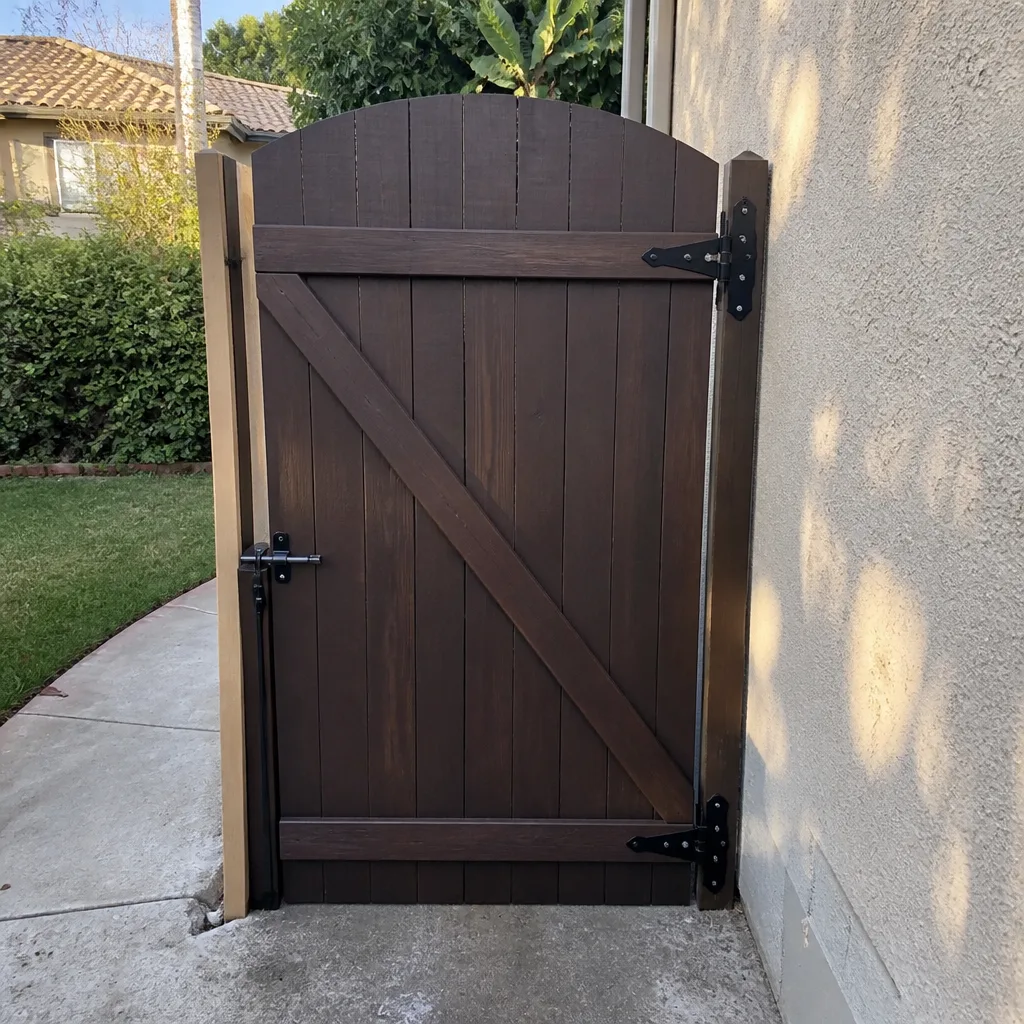
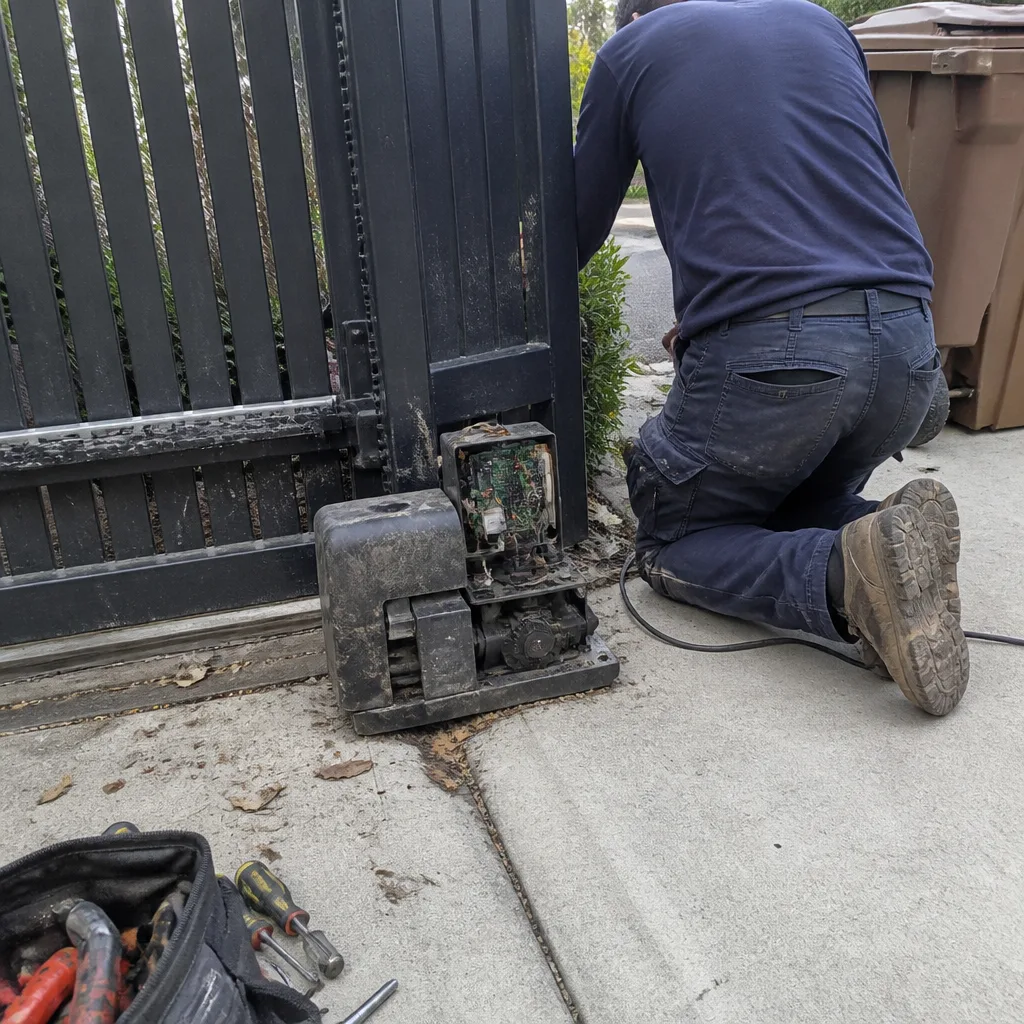
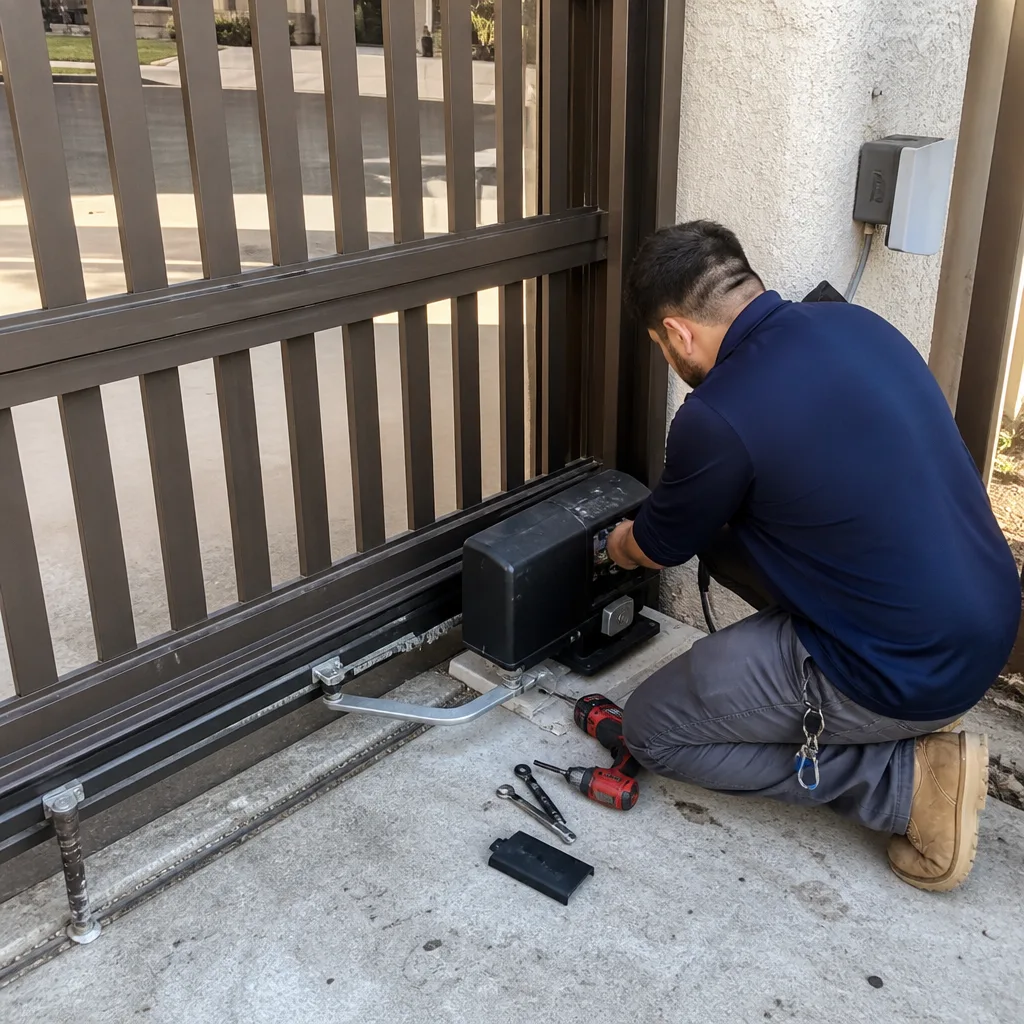
See the difference
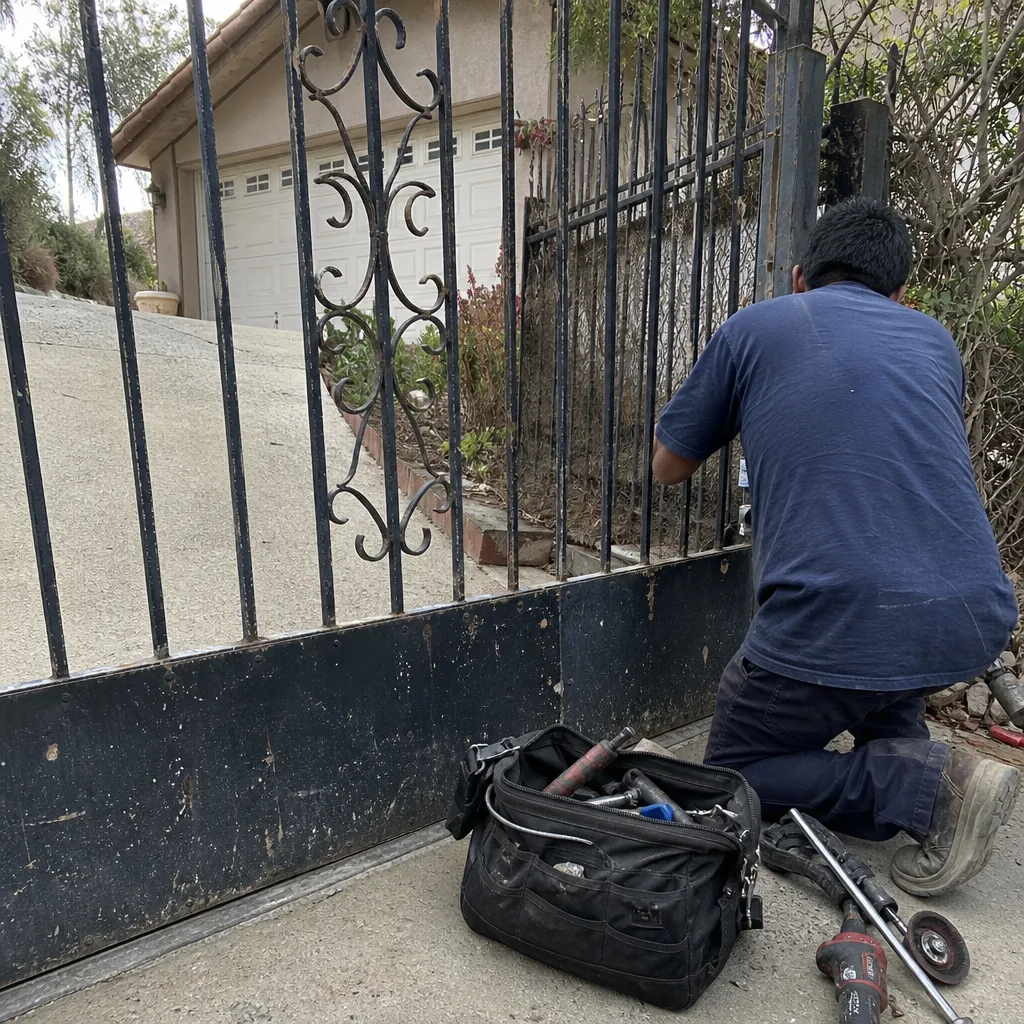 Before
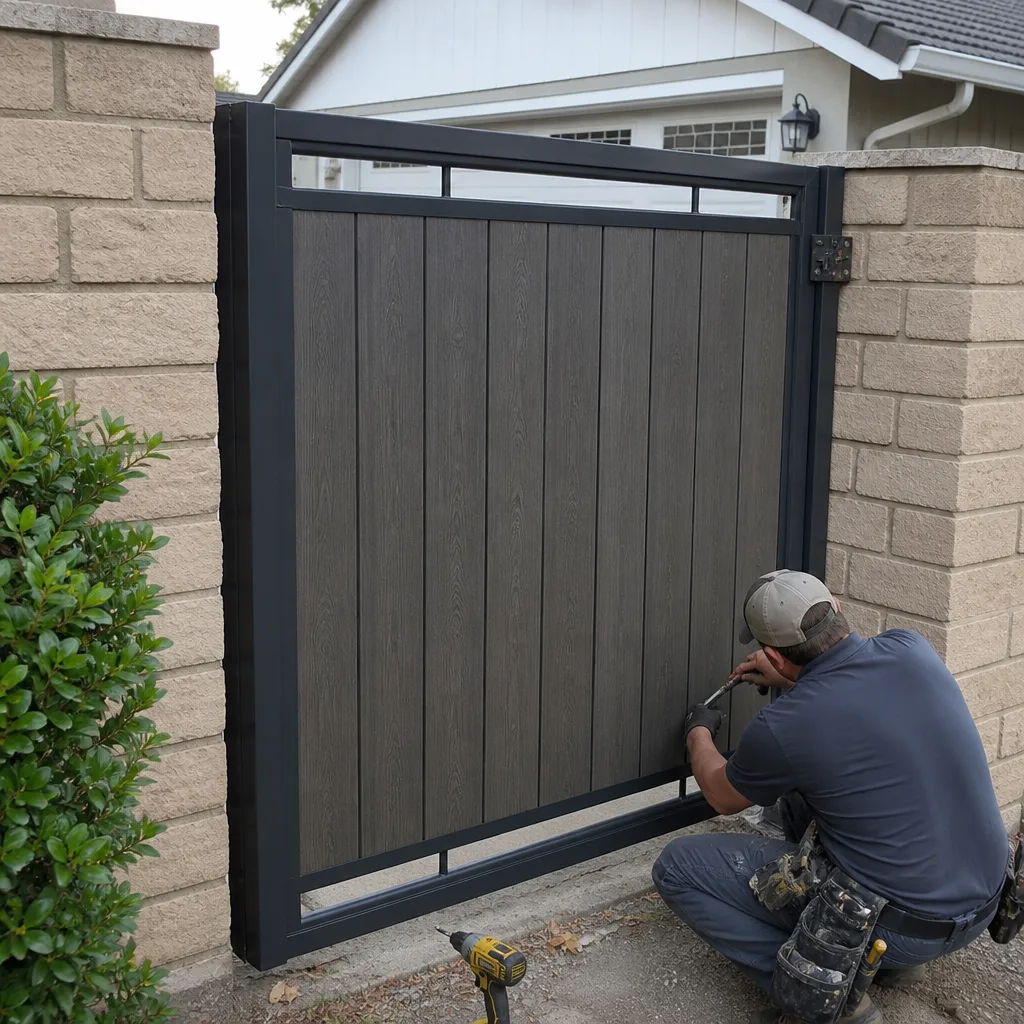 After
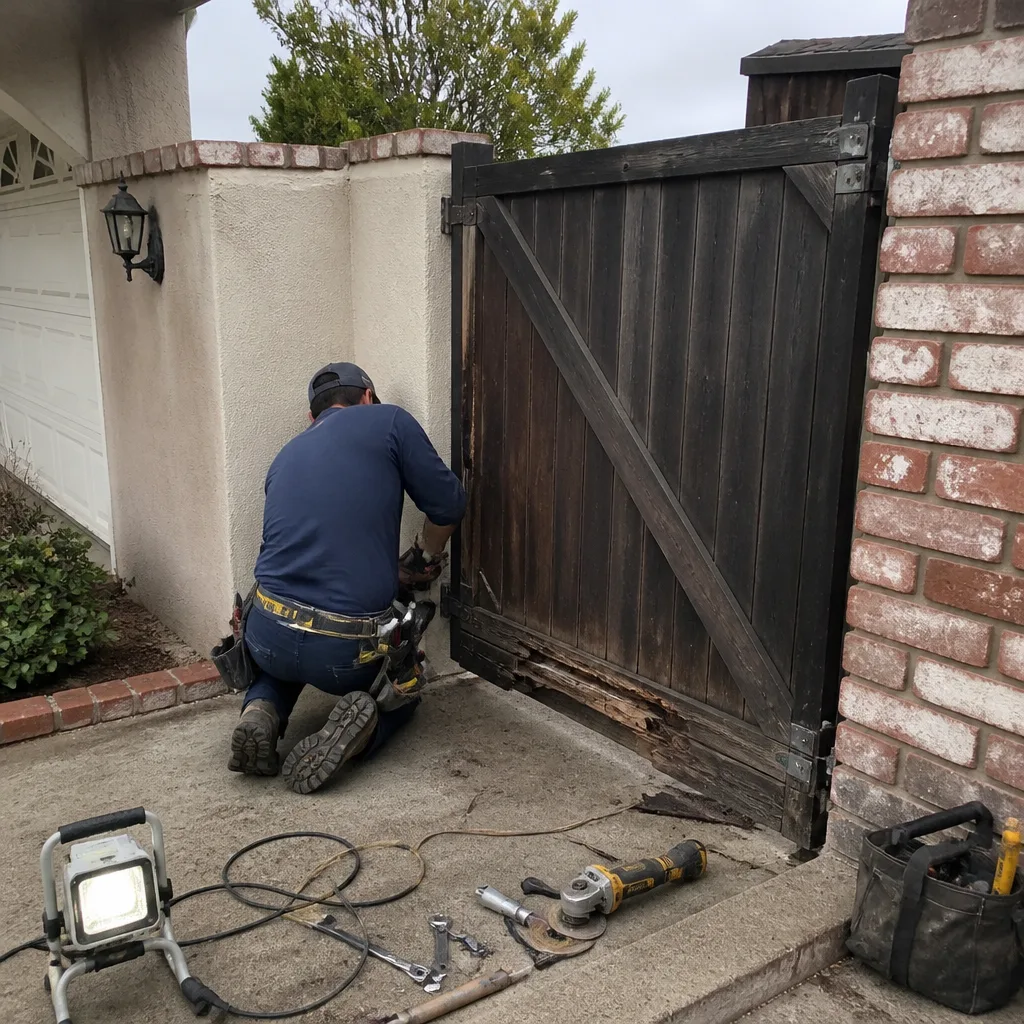 Before
 After
 Before
 After
When to Call a Professional
Call a gate specialist when the gate makes a sound it never made before, when it moves slower than it did last month, when it stops at the wrong point, or when it won’t respond to the remote consistently. Call the same day if the gate is stuck open or stuck closed, because a stuck-open gate is a security problem and a stuck-closed gate blocks your driveway. Electric gate failures involving springs, cables, or high-tension components should always be handled by a trained professional. These parts store enough energy to cause serious injury, and the repair is not a DIY project. Gate Repair Mission Viejo offers free estimates in Mission Viejo. Call (866) 562-1205 and we’ll diagnose the problem, give you an upfront price, and fix it right the first time.
Frequently Asked Questions
Gate repair costs in Mission Viejo vary widely depending on the part that failed and the brand of the operator. A limit switch replacement or hinge adjustment typically runs on the lower end, while a control board replacement or motor rebuild lands on the higher end. Most repairs fall between a simple mechanical fix and a full board swap, and the exact quote depends on what the inspection finds. Call (866) 562-1205 for an exact quote. Estimates are free, and the price is quoted and agreed before any work starts.
Grinding usually means metal-on-metal contact somewhere in the drive system, often a worn gear inside the operator or a wheel or hinge that’s run dry. If the grinding comes from the operator enclosure, it’s a gearbox or bearing issue that will get worse if the gate keeps running. Stop the gate, take it out of automatic mode, and have it inspected before the grinding becomes a mechanical failure.
Many gate repairs are same-day jobs when the replacement part is already on the service vehicle. For emergency calls where the gate is stuck and a common component has failed, we’re often able to get the gate running before we leave. For rare or brand-specific parts, the repair may take a day or two while the part is sourced. Tell us the brand and model when you call, and we’ll let you know if we carry the part on the truck.
Replace it if the frame is rusted through, the post is moving, or multiple components have failed in sequence over the last two years. Repair it if the problem is isolated to one component and the frame and posts are still solid. A less than honest contractor will always lean toward replacement because it’s more money. We give you a straight answer because repeat customers keep us busy, not repeat repairs.
Intermittent operation is almost always an electrical issue, often a corroded connection that expands and loses contact as the temperature changes through the day. In Mission Viejo, the daily marine-layer cycle means connections are cool and contracted in the morning and warm and expanded by the afternoon. The gate works in the morning, fails in the afternoon, and works again at night. That pattern is a corrosion fingerprint, and it needs to be traced before it becomes a permanent failure.
Yes, most gate operators can be integrated with access control systems, phone-based entry, intercoms, and broader security platforms. The integration is straightforward if the operator has the right output board and the access system is compatible. We diagnose integration problems as part of the electric gate repair, not as a separate call. Call (866) 562-1205 with the make and model of both systems and we’ll tell you what’s possible.
The Bottom Line
Gate repair in Mission Viejo is a different craft than gate repair inland. The marine layer corrodes operator components, the clay soil shifts gate posts, and the HOA finish rules restrict material choices. A repair that addresses only the visible symptom will fail again within a season. A repair that accounts for the local environment will hold. The fastest way to a lasting fix is a specialist who knows your specific brand, has seen its failure patterns in Mission Viejo, and gives you an honest answer on whether to repair or replace. Call (866) 562-1205 for a free estimate. The price is quoted before any work begins, and the quote is the price you pay.
Written by the team at Gate Repair Mission Viejo, serving Mission Viejo since 2011.