
Last updated November 2, 2026
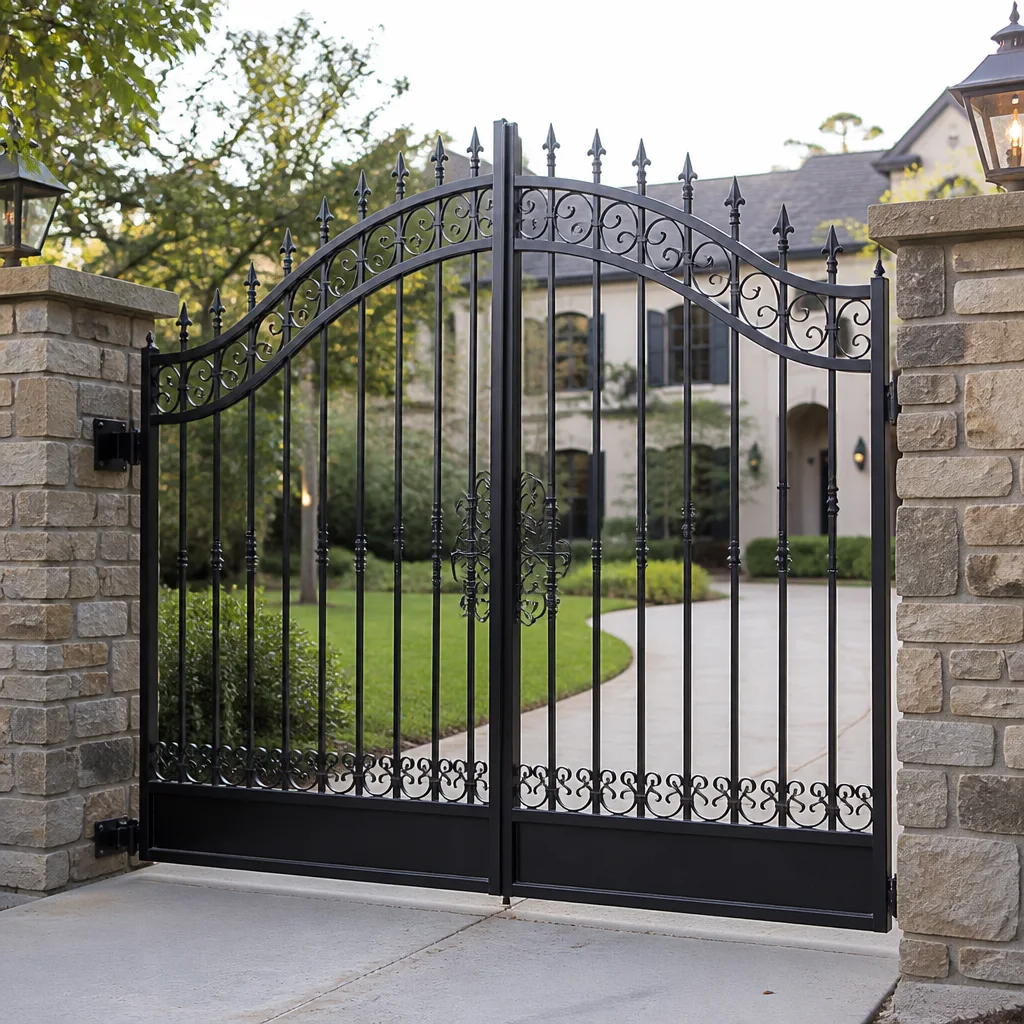 Wrought iron
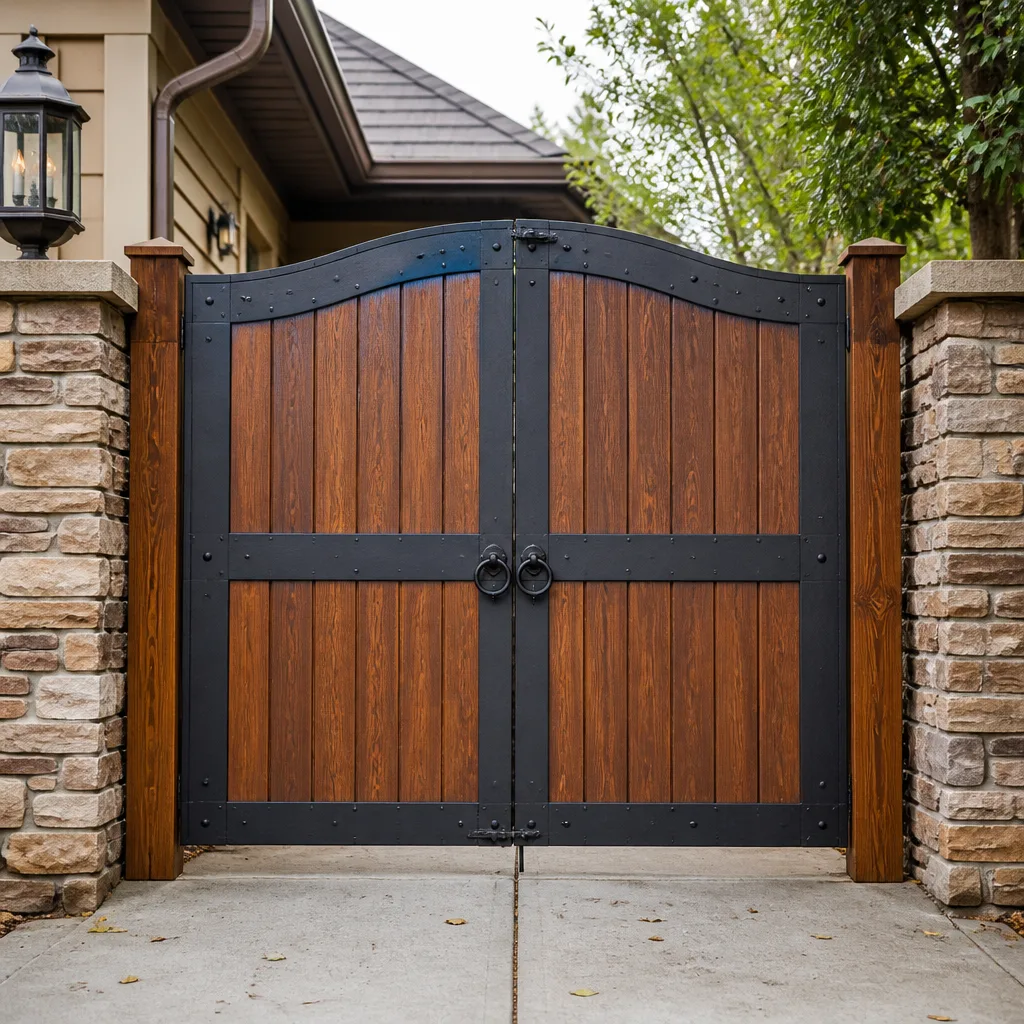 Wood & steel frame
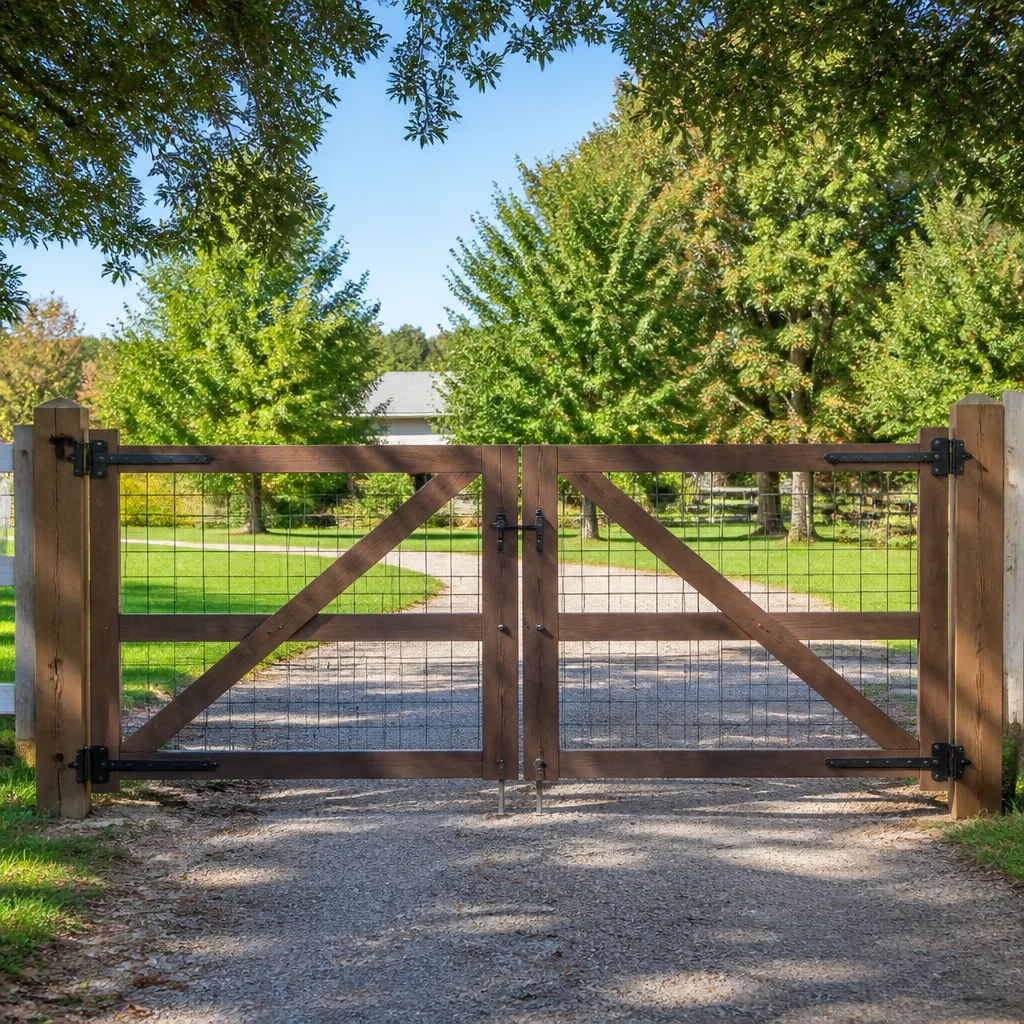 Farm & ranch
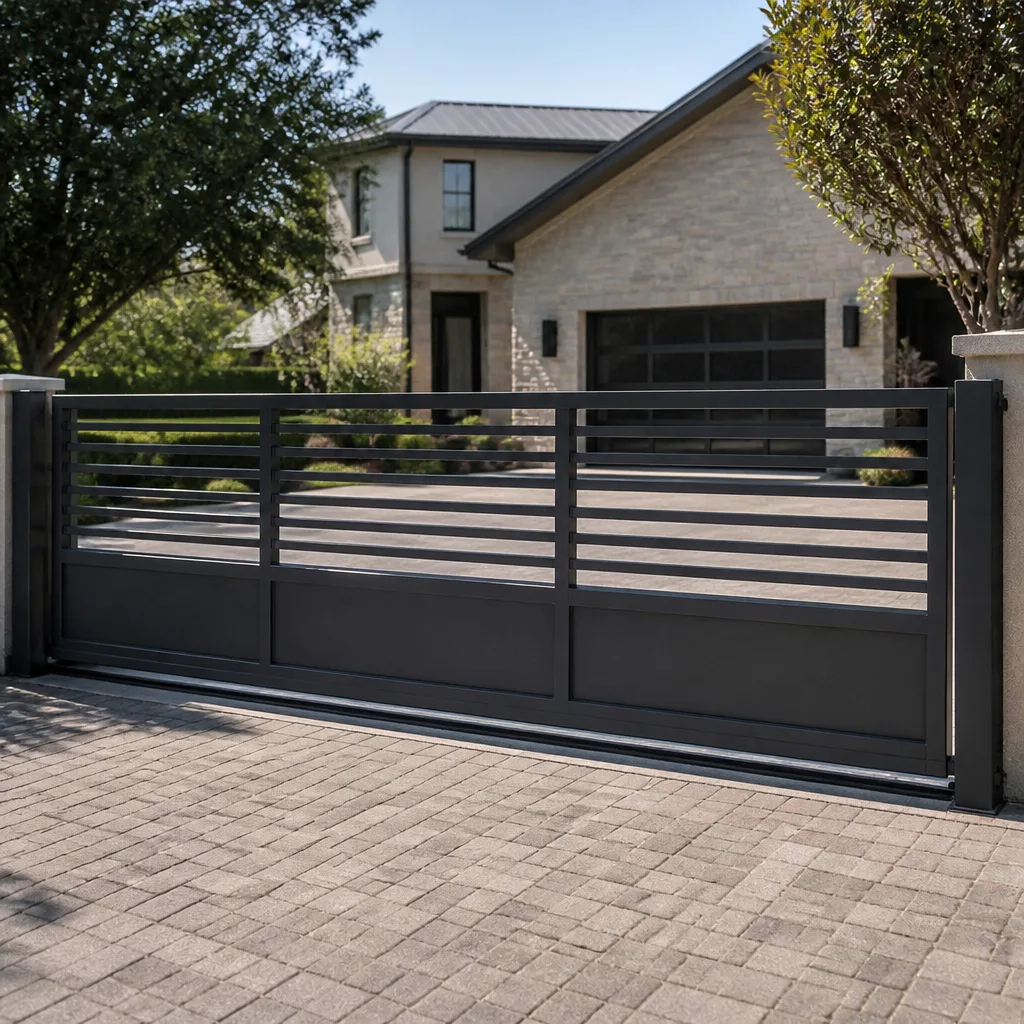 Sliding driveway gates
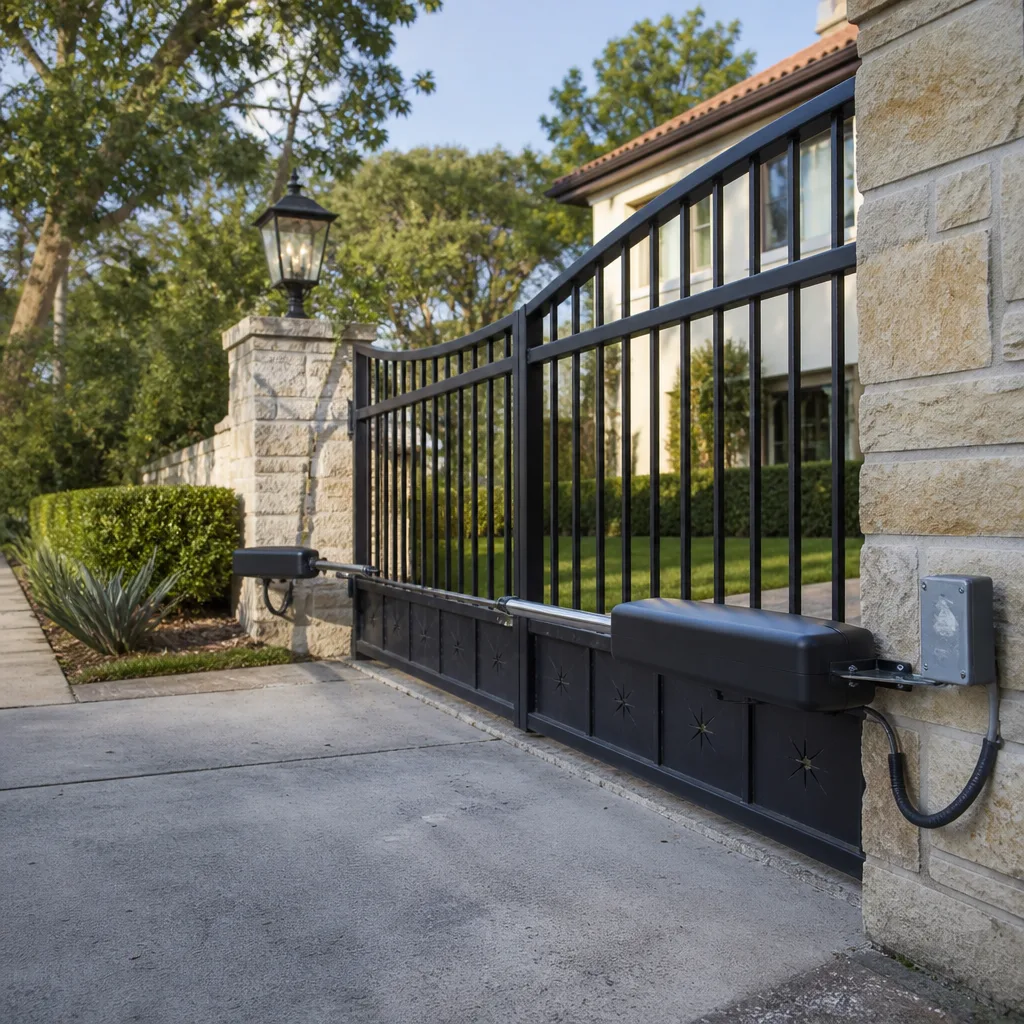 LiftMaster operators
Free on-site gate assessment - hinges, posts, and your LiftMaster or Nice gate operator checked before anything is quoted
The assessment is free and the quote is the invoice.
Get your free estimateGate Repair Warning Signs: A Mission Viejo Homeowner’s Reference Guide
Most gate failures don’t happen suddenly. A gate that finally refuses to open on a Monday morning has usually been asking for help for weeks, sometimes months. The problem is that gates speak a language of small sounds, subtle hesitations, and tiny visual changes that most Mission Viejo homeowners don’t know how to translate. Our more guides & resources teach you that language. You’ll learn what a grinding sound actually means versus a clicking sound, why an intermittent problem costs more to ignore than a complete failure, and how to read the warning signs on everything from a Mighty Mule residential operator to a commercial-grade FAAC system. By the time you finish, you’ll know which symptoms you can safely watch and which ones mean you should call a specialist before the gate damages itself further.
Styles & brands we work with
- Wrought iron
- Wood & steel frame
- Farm & ranch
- Sliding driveway gates
- LiftMaster operators
Quick Answer
The most common gate repair warning signs in Mission Viejo are: a gate that reverses direction halfway through its cycle, grinding or squealing sounds during operation, visible rust or weld cracks on iron gates, operator lights that blink in error patterns, and gates that move slower than they did a month ago. Any of these symptoms means a specific component is degrading. Call our Gate Repair services at (866) 562-1205 for a free estimate in Mission Viejo before the problem spreads from one part to the whole system.
Table of Contents
- Sound-Based Diagnosis: What Your Gate Is Telling You
- Intermittent vs. Consistent Failures: Why Inconsistent Is Worse
- Visual Warning Signs on Wrought Iron and Steel Gates
- Operator Warning Signs: Reading LiftMaster, Viking, and FAAC Error Codes
- The Monthly Safety Test Every Homeowner Should Run
- Swing Gate vs. Slide Gate: Different Symptoms, Different Causes
- How Mission Viejo’s Climate Accelerates Gate Wear
- Common Mistakes to Avoid
- When to Call a Professional
- Frequently Asked Questions
- The Bottom Line
Sound-Based Diagnosis: What Your Gate Is Telling You
A gate makes different noises depending on what’s failing. Learning to distinguish between a grinding sound, a clicking sound, a squealing sound, and a chattering sound tells you whether you’re dealing with a $40 hinge issue or a $700 motor replacement. Here’s what each sound means on both swing and slide gates in Mission Viejo.
Grinding: Metal on Metal, No Lubrication
A grinding sound means two metal surfaces are moving against each other without proper lubrication or with a physical obstruction between them. On a swing gate, this typically points to the hinge bearings. On a slide gate, it’s usually the track rollers or the chain. We’ve seen Mission Viejo slide gates where a single failed roller creates enough drag that the motor burns itself out trying to overcome the friction. The grinding sound starts weeks before the motor fails. That’s your window.
Clicking: The Operator Is Trying, the Gate Is Not Moving
A rapid clicking sound when you press the remote or keypad usually means the operator’s relay is engaging but the motor isn’t turning. On LiftMaster operators, this often indicates a failed start capacitor. On FAAC units, it can point to a seized gearbox. A single click with no movement can mean a dead control board or a tripped thermal overload. Clicking is rarely a mechanical problem. It’s electrical, and it usually lives inside the operator housing.
Squealing: Belt or Pulley Wear
A high-pitched squeal that happens when the gate starts moving, then fades, typically points to a slipping belt or a worn pulley. Belt-driven operators like many Viking and Linear residential models use a rubber belt that stretches and glazes over time. Once the belt starts slipping, the gate moves slightly slower each month. The squeal is the belt telling you it’s about to fail. On chain-driven systems, a squeal can mean the chain tensioner is worn or the chain itself needs lubrication.
Chattering: Loose Hardware or Debris
A chattering or rattling sound, especially on a slide gate, usually means something is physically loose. It could be a track roller with a worn bearing, a guide wheel that has come out of adjustment, or loose bolts on the gate frame. Chattering is common on gates that have been in service for several years in Mission Viejo because thermal expansion and contraction from our hot summers and cool evenings gradually works fasteners loose. Left alone, chattering turns into misalignment, and misalignment turns into a gate that binds mid-travel and refuses to close.
One more sound worth mentioning: a humming sound with no movement at all. That’s the motor receiving power but failing to turn. It could be a thermal overload, a seized component, or a failed capacitor. Either way, cut power to the operator and call a professional. Continuing to run a humming motor for more than a few seconds can permanently damage the windings and turn a repairable operator into a replacement job.
Intermittent vs. Consistent Failures: Why Inconsistent Is Worse
It sounds backwards, but a gate that completely stops working is often a cheaper repair than a gate that works sometimes and doesn’t work other times. Consistent failures usually mean one component has fully failed. A technician finds it, replaces it, and the gate works again. Intermittent failures mean a component is degrading, and the search for the root cause takes longer because the system works fine while it’s being tested.
Here’s the pattern we see most often with intermittent problems in Mission Viejo:
- Week 1-2: The gate fails to respond once or twice. You assume it’s the remote battery. You change the battery. The gate works.
- Week 3-4: The gate reverses direction randomly or stops halfway. You’re confused. It works when you test it again.
- Week 5-6: The failures become more frequent. You start noticing they happen more often in the morning or on hot days.
- Week 7-8: The gate fails completely. Now the original component has damaged a second component. The repair cost has doubled.
That progression is why our Seasonal Gate Repair Care for Mission Viejo: Year-Round Homeowner’s Guide recommends taking intermittent problems seriously early. Heat is often the trigger. Mission Viejo summers push temperatures into the 90s, and a control board with a hairline solder crack will work fine in the cool morning and fail when the afternoon sun hits it. A motor with a weak capacitor will start fine when cold and struggle when hot. If your gate works in the morning but not in the afternoon, that’s a diagnostic clue, not a random glitch.
Moisture is the other trigger. Mission Viejo gets morning marine layer influence even in summer, and dew can condense on exposed electrical connections overnight. A gate that works fine during the day but malfunctions after a foggy morning is telling you that water is getting somewhere it shouldn’t be. Intermittent problems are always worth a diagnostic call. The alternative is waiting until the problem becomes permanent, and by then, the secondary damage has usually already happened.
We cover the full range of these failures on our Gate Repair in Mission Viejo page. Whether it’s a one-time failure or a recurring frustration, the approach is the same: find the root cause, fix it, and verify the rest of the system isn’t about to follow.
Visual Warning Signs on Wrought Iron and Steel Gates
Wrought iron and steel gates are the most common style in Mission Viejo’s residential neighborhoods, and they telegraph their health through visual cues that most homeowners walk past every day. Learning to read those cues takes five minutes and can save you from a gate that collapses or an operator that burns out trying to move a gate that has become structurally unsound.
Surface Rust vs. Structural Rust
Surface rust is cosmetic. It appears as a light orange or brown discoloration, usually where the finish has been scratched or worn thin. You can scrub it off with a wire brush and repaint. Structural rust is different. Structural rust creates pitting, flaking, and visible thickness loss. If you can press a flathead screwdriver into the metal and it leaves a dent, the metal has lost structural integrity. On a swing gate, structural rust near the hinge mounts is particularly dangerous because the entire weight of the gate hangs on that point. A rusted hinge mount that finally fails drops the gate onto the ground, and depending on the gate’s size, that’s a safety hazard for anyone nearby.
Weld Crack Indicators
Weld cracks on iron gates are hairline fractures that appear along the weld seam where two pieces of metal meet. They’re often visible as a thin dark line against the lighter paint color. Check the welds at the hinge mounts first, then the welds where vertical pickets meet the horizontal rails. A weld crack means the structural joint is failing and the gate is flexing more than it should. That flexing transfers stress to the operator, which eventually damages the motor or control board. On slide gates, check the welds on the gate’s stiffener braces. A cracked brace allows the gate to warp, which makes it drag on the track, which makes the motor work harder, which shortens the operator’s life.
Hinge Pin Wear You Can Measure
Hinge pins wear gradually, and the wear shows up as sag. A gate that sags visibly on the latch side has worn hinge pins or a bent hinge. You can measure the wear with a caliper. Find the hinge with the most movement (usually the top hinge on a swing gate), and compare the pin diameter at the top versus where it passes through the hinge barrel. A difference of more than 1/16 inch means the pin is worn enough to affect gate alignment. An easier test: open the gate halfway and try to lift it at the latch end. If it moves more than a quarter inch vertically, the hinge pins or hinge brackets are worn. A sagging gate is a one-person lift problem and usually a same-day fix, but left alone, the sag puts uneven load on the operator and causes premature motor failure.
Scrape Marks and Track Grooves
On slide gates, look at the track. Shiny grooves, black marks, or visible scoring in the metal track indicate the gate is dragging. The cause is usually a failed track roller, a warped gate, or a gate that has shifted out of alignment. Also check the V-guide wheels that keep the gate aligned. If a V-guide is chipped or missing, the gate will veer slightly during travel, which stresses the chain and motor. On a slide gate, the track tells the truth about what’s happening above it.
The same visual inspection applies whether you’re maintaining an existing gate or considering a replacement. Our Gate Installation in Mission Viejo page explains how new installations are designed to avoid these problems from the start, with proper hinge sizing, correct gate weight distribution, and operator selection matched to the actual gate, not a guess.
Operator Warning Signs: Reading LiftMaster, Viking, and FAAC Error Codes
Automatic gate operators have diagnostic brains, and they’re constantly trying to communicate. Learning to read the signals means the difference between resetting a false alarm and catching a real failure before it becomes a total replacement. In our experience, most homeowners never open the operator cover and never see the blinking light patterns that tell them exactly what’s wrong.
LiftMaster: The Blink Code System
LiftMaster residential swing gate operators use a diagnostic LED on the control board that flashes in patterns. A continuously lit LED typically means the operator has power and is in standby mode. Two flashes usually indicates an obstruction detected by the safety reversal system. Three flashes commonly points to a force overload, meaning the gate is meeting more resistance than it should, often from a stiff hinge or a dragging wheel. Four flashes often indicates a misaligned or disconnected safety sensor. The specific code meanings vary by model, so check the manual for your unit, but the pattern itself is the important part: the operator knows something is wrong and it’s telling you in code.
Viking: Failure Detection and Status Indicators
Viking operators, especially the residential swing gate models, use a similar LED diagnostic approach. Viking’s diagnostic LEDs typically cycle through different colors depending on the fault type. A red LED often indicates an obstruction or force-related fault. A flashing amber LED usually points to a safety loop or photo-eye issue. Viking operators also have troubleshooting modes that can be entered through the control board to run the motor without safety inputs, which is useful for isolating whether a failure is mechanical or sensor-related. If you’re seeing a warning sequence you don’t recognize, photograph it before resetting. The photo becomes the starting point for diagnosis.
FAAC: The Error Code Display
FAAC hydraulic and electromechanical operators, common on larger and higher-end residential properties in Mission Viejo, often include a small digital display or a series of LEDs that show specific error numbers. FAAC error codes are model-specific, but common patterns include codes for torque failure (the gate hit an obstruction), codes for photocell activation (something broke the safety beam), and codes for battery or capacitor problems on units with backup power. FAAC systems are known for their tolerance of heavy gates and frequent cycles, but when they throw an error, it’s specific and worth recording. The display text plus your gate’s behavior is enough for a technician to order the right part before arriving.
What the Operator Is Actually Communicating
All of these systems share a common diagnostic language. The operator measures the electrical current its motor draws. When the gate moves freely, current is low. When something drags, current spikes and the operator either slows down, reverses, or shuts down and flashes a code. So when you see an error code that means “obstruction detected,” the operator is telling you that something is creating resistance. Sometimes that’s a real obstruction. More often in Mission Viejo, it’s a stiff gate, a failing roller, or a bent track. The operator doesn’t know the difference. It just knows something is pushing back. Clearing a code without fixing the underlying resistance is how small problems become motor replacements.
For electric gate diagnostics from the control board to the sensors, our Electric Gate Repair in Mission Viejo page covers what a full diagnostic visit includes. We specialize exclusively in gates, so when we arrive, the truck carries the boards, capacitors, and sensors for the brands we service, including LiftMaster, FAAC, and Linear, rather than needing a second trip for parts.
The Monthly Safety Test Every Homeowner Should Run
Automatic gates have two safety mechanisms that should be checked monthly. The test takes less than three minutes and requires no tools. Here’s how to run it, and here’s what a failure means.
Step 1: The Photo-Eye Test
- Stand outside the gate’s travel path and press the remote to open the gate.
- While the gate is moving, wave your hand across the photo-eye beam. The photo eyes are the two small units mounted on opposite sides of the gate opening, usually near the ground or at mid-height.
- The gate should immediately stop or reverse direction. If it continues moving, the photo eyes are misaligned, dirty, or disconnected.
A failed photo-eye test is a serious safety issue. The photo eye is what prevents the gate from closing on a child, a pet, or a vehicle. In Mission Viejo, dust and irrigation overspray are the two most common causes of photo-eye failure. A quick cleaning fixes most cases, but if cleaning doesn’t restore function, the alignment or wiring needs professional attention.
Step 2: The Auto-Reverse Force Test
- With the gate in the open position, place a 2×4 or similar object (a filled gallon jug also works) in the gate’s closing path.
- Press the remote to close the gate.
- When the gate contacts the object, it should reverse direction immediately, not after a pause and not after continuing to press against the object.
A gate that doesn’t reverse on contact has its force sensitivity set too high. The operator is pushing harder than it should, which means it won’t stop for an obstruction. Excessive force settings are the most common safety violation we find on residential gates in Mission Viejo, usually because a previous adjustment was made to overcome a mechanical problem instead of fixing the actual cause of the resistance. If your gate fails the force test, don’t adjust the settings yourself. Adjusting force settings without diagnosing the reason for the resistance just hides the problem behind a dangerous setting. The fix is usually a replacement hinge, track roller, or wheel, not a force-setting adjustment.
Run this test monthly. It takes three minutes. If either test fails, call a gate professional. The repair is usually straightforward, and the cost of ignoring a failed safety test is measured in something more serious than dollars.
Swing Gate vs. Slide Gate: Different Symptoms, Different Causes
Swing gates and slide gates fail in different ways because they move differently. Knowing which failure patterns belong to which gate type helps you diagnose a problem before you call a specialist, and it helps you ask the right questions when you do.
Swing Gate Failure Patterns
Swing gates pivot on hinges and are driven by an arm, a piston, or an underground operator. Their most common failure points are the hinges themselves. Worn hinge pins cause the gate to sag, which changes the gate’s center of gravity, which makes the operator work harder. A sagging swing gate is often the root cause of what looks like an operator problem. The second most common swing gate failure is the operator arm or piston. On articulated arm operators like the ones FAAC builds for residential use, the arm’s internal gears wear over time and develop play. A gate that shudders or jerks as it moves is often showing arm wear. The third pattern is the latch mechanism. A swing gate that doesn’t close fully or bounces back from the closed position usually has a latch that has come out of alignment, which affects the safety sensors and can cause the gate to reverse unexpectedly.
Slide Gate Failure Patterns
Slide gates roll along a track on rollers and are driven by a chain or belt. Their failures cluster around the rolling hardware. Track rollers wear out, often one at a time, and a gate with one failed roller will make a grinding sound and may hop slightly as it passes over the bad roller. The chain eventually stretches, which causes a rattling sound and jerky movement. Guide wheels and V-wheels wear, which allows the gate to wander slightly and bind against the track. Slide gates in Mission Viejo also accumulate debris in the track, especially in neighborhoods with mature landscaping. Leaves, dirt, and irrigation runoff wash into the track and create resistance. A slide gate that moves slowly and sounds labored is usually fighting both a mechanical issue and track fouling.
Why Distinguishing Matters
The repair path for a shuddering swing gate is completely different from the repair path for a rattling slide gate. A shutter on a swing gate points to the operator arm. A rattle on a slide gate points to the chain or the rollers. When you call a gate specialist, describing the symptoms by gate type speeds up the diagnosis and often means the technician arrives with the right parts on the first visit. We work on both types daily across Mission Viejo, and the distinction between swing and slide failure patterns is something we apply on every service call.
If you’re dealing with either type and aren’t sure whether to repair or replace, start with Gate Repair Mission Viejo home for a full overview of how we approach gate problems across the entire system, from the gate itself to the operator that drives it.
How Mission Viejo’s Climate Accelerates Gate Wear
Mission Viejo has a specific climate profile that affects how gates age and what fails first. Understanding those local factors explains why the same gate brand and model can last twenty years in a coastal city and need major service after eight years here.
Heat Cycles and Electronics
Mission Viejo regularly hits the high 80s and 90s between June and October. That heat does two things to gate electronics. First, it expands solder joints on control boards. After hundreds of heat cycles stretching across multiple summers, microscopic cracks form and expand. These cracks create the intermittent failures that plague gate owners in the hottest months, which is why September and October are usually busier for us than any other time of year. Second, heat reduces the lifespan of motor capacitors. A capacitor that functions fine year-round in a cooler climate may fail within three to five years here. When a local gate tech says the capacitor is a common failure in Mission Viejo, this is the reason.
The Marine Layer Effect
Mission Viejo sits five to six miles from the coast, close enough to receive morning marine layer influence but far enough inland that the air burns off by late morning. That daily condensation cycle creates moisture exposure on exposed metal, especially on gates with east-facing surfaces. The moisture then evaporates as temperatures climb, leaving behind whatever the humidity carried. Over years, this cycle accelerates rust formation on unprotected steel and corrosion on electrical connectors. Gates in Mission Viejo’s eastern neighborhoods, which see more direct sun and less marine influence, tend to show more heat-related failures. Gates in the western and southern neighborhoods, closer to the coast, show more moisture-related corrosion patterns.
Sandy Soil and Slide Gate Tracks
Many areas of Mission Viejo were built on soils with a noticeable sandy component. Slide gate tracks sit low to the ground and collect that sandy debris along with landscaping material and irrigation overspray. The result is a fine abrasive paste that accumulates in track rollers and accelerates roller bearing wear. Track rollers that would last a decade on a clean concrete pad in a commercial setting often need replacement after five to seven years in residential Mission Viejo installations because of the constant low-level abrasion. This is also why regular track cleaning is a higher-value maintenance task here than in many other climates.
What This Means for Your Gate
Climate isn’t a thing you can change, but it is a thing you can plan for. Setting a maintenance schedule around Mission Viejo’s seasonal patterns, checking capacitors before the summer heat peaks, cleaning photo eyes after the foggy months, clearing track debris after the landscaping season, extends the life of every component. And when a component does fail, knowing the climate context helps you understand why a part that should have lasted longer didn’t. The failure usually makes sense once you account for the local environment.
Common Mistakes to Avoid
- Lubricating the motor when you hear a grinding sound. Grinding means something is already worn or misaligned. Lubricant can quiet the symptom temporarily, but the underlying mechanical problem continues to develop. Lubricating a failing track roller or hinge just spreads the metal particles around and accelerates the wear.
- Changing the remote battery three times before calling a professional. A gate that doesn’t respond is rarely a battery problem. If you’ve changed the battery once and the problem persists, the issue is in the receiver, the control board, or the limit switches. Continuing to swap batteries delays the real diagnosis.
- Adjusting the force setting to fix a gate that reverses periodically. The reversal is the safety system working. Increasing the force to push through the resistance disables the protection and turns a mechanical repair into a safety hazard. The resistance is usually a stiff hinge or a misaligned track, not a setting issue.
- Ignoring surface rust because it’s “just cosmetic.” Surface rust that goes untreated becomes structural rust, and structural rust costs far more to repair. In Mission Viejo’s moisture cycles, rust moves from surface to structural in a few years, and a $200 repaint turns into a $1,500 weld repair or gate replacement.
- Resetting the breaker repeatedly when the gate trips it. A gate that trips a breaker is drawing too much current, usually because the motor is straining or the capacitor has failed. Resetting the breaker without diagnosing the current draw eventually damages the breaker, the motor, or both.
- Calling a generalist who does gates “on the side.” Gate systems are specific. A technician who splits their time across garage doors, fencing, and general contracting won’t know the failure patterns for a FAAC control board or a LiftMaster capacitor the way a dedicated gate specialist does. The result is usually more diagnostic time and a less certain fix.
- Waiting until the gate completely fails to schedule service. A failing component usually damages a second component before it finally gives out completely. The gate that reverses every few days will eventually stop reversing and start burning out the motor. Early service is always less expensive than late service.
When to Call a Professional
Some gate problems are safe to observe and document. Most are not worth a DIY attempt, and a few are genuinely dangerous. Call a gate specialist when the gate fails the monthly safety test, when the operator shows error codes you don’t understand, when the gate makes grinding sounds, when the gate reverses direction randomly, or when a visual inspection reveals structural rust, weld cracks, or hinge pin wear – our How to Hire a Gate Repair Contractor in Mission Viejo: A Step-by-Step Guide explains what to look for. Any of these indicates a mechanical or electrical failure in progress. Continuing to operate the gate makes it worse. Gate Repair Mission Viejo offers free estimates in Mission Viejo. Call (866) 562-1205 to schedule a diagnostic visit. We specialize exclusively in gates, which means a technician arrives with the diagnostic tools and parts for your specific brand, whether that’s a LiftMaster residential operator or a BFT commercial system.
Frequently Asked Questions
A gate that reverses halfway is either detecting an obstruction that isn’t there or encountering real mechanical resistance. Dirty or misaligned photo eyes are the most common cause of false obstruction detection. If the photo eyes are clean, the gate is likely struggling against a stiff hinge, a worn track roller, or a failing capacitor. Call (866) 562-1205 for a diagnostic visit. The fix is usually straightforward, but running the gate in this condition damages the operator over time.
Most gate repairs in Mission Viejo fall between $150 and $650 depending on the component. Replacing a track roller typically runs $150 to $300. Photo-eye replacement usually costs $200 to $400 including the parts. A new control board can run $400 to $800. Motor replacement on residential operators typically ranges from $500 to $1,200. Every job is quoted before work starts, so you’ll know the exact price before any repair begins.
Yes. Emergency gate service is a core part of what we do. If your gate is stuck open, stuck closed, or failing to respond, call (866) 562-1205 and describe the symptom. In many cases, our Mission Viejo technicians can be at your property the same day. A gate stuck open is a security issue; a gate stuck closed is an access issue. Both qualify as emergencies.
A full gate installation includes measuring the gate opening, selecting a gate and operator matched to the gate’s weight and cycle frequency, installing the gate and operator with proper clearances, wiring the control board and safety devices, and testing the complete system including photo eyes and auto-reverse. We order high-quality gates built to withstand Mission Viejo’s climate, and we quote the complete job in writing before any work begins.
Yes. The power run and safety edges are part of every automated gate installation we do. The power run is planned and installed to code, and the safety edges are wired into the control board and tested before we leave. A gate that doesn’t have working safety edges is not a finished installation, and we don’t consider a job complete until every safety system is verified.
We service nine major gate brands: LiftMaster, FAAC, BFT, Linear, Viking, Ghost Controls, DoorKing, Elite, and Mighty Mule. In Mission Viejo, we commonly see Mighty Mule and Ghost Controls on residential applications, LiftMaster and Viking on mid-range and higher-end homes, and FAAC or BFT on larger properties and estates. We’re brand-agnostic, which means we repair what’s installed rather than pushing a switch to a different manufacturer.
The Bottom Line
Gates fail gradually, and the warning signs are specific. A grinding sound points to worn hardware. A clicking sound points to an electrical problem. A blinking LED pattern on a LiftMaster or FAAC operator is a diagnostic code, not a mystery. An intermittent failure in Mission Viejo is a component degrading under heat cycles or moisture, not a random glitch. The monthly safety test catches photo-eye and force-setting problems before they put anyone at risk. The most expensive gate repair is the one that gets ignored until a small problem becomes a total failure. When you notice a symptom, don’t wait. Call Gate Repair Mission Viejo at (866) 562-1205 for a free estimate. We’ll diagnose the root cause and give you a written price before any work starts.
Written by the team at Gate Repair Mission Viejo, serving Mission Viejo since 2011.
See the difference
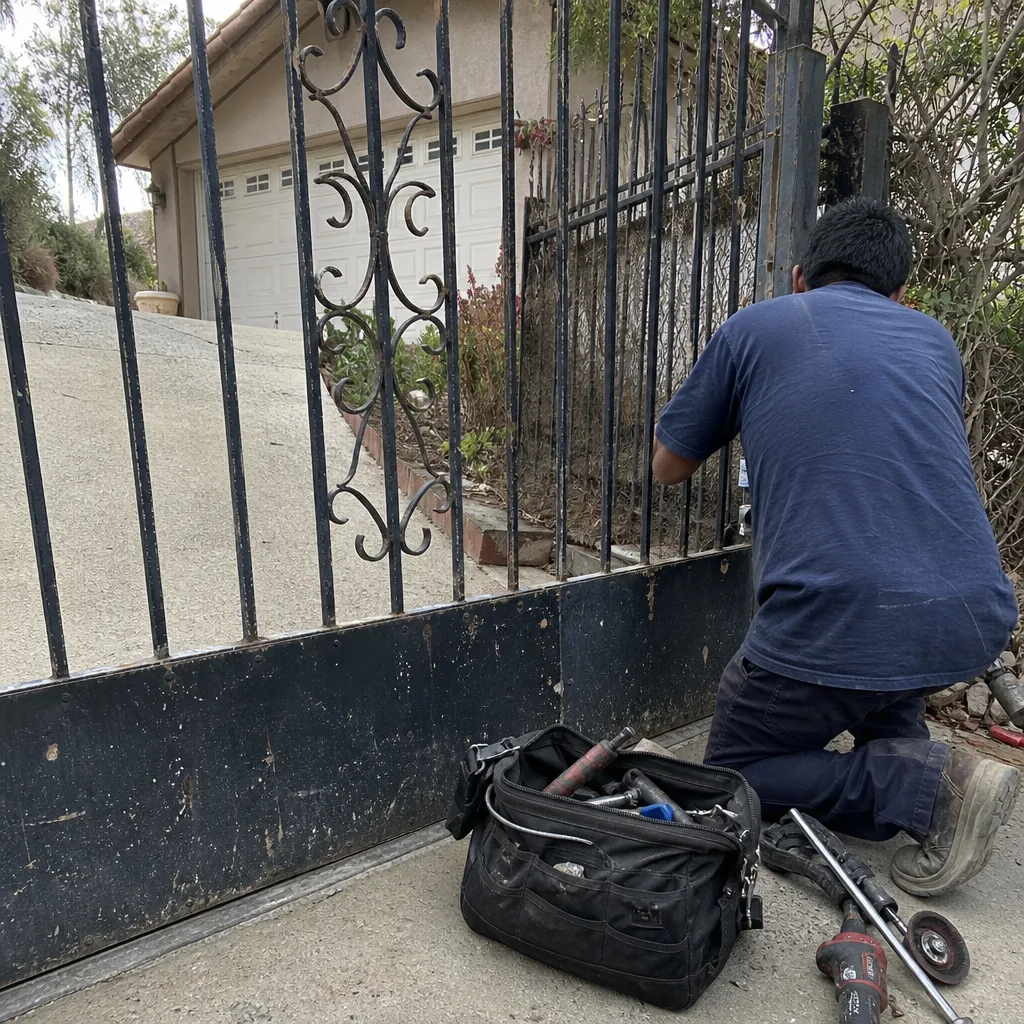 Before
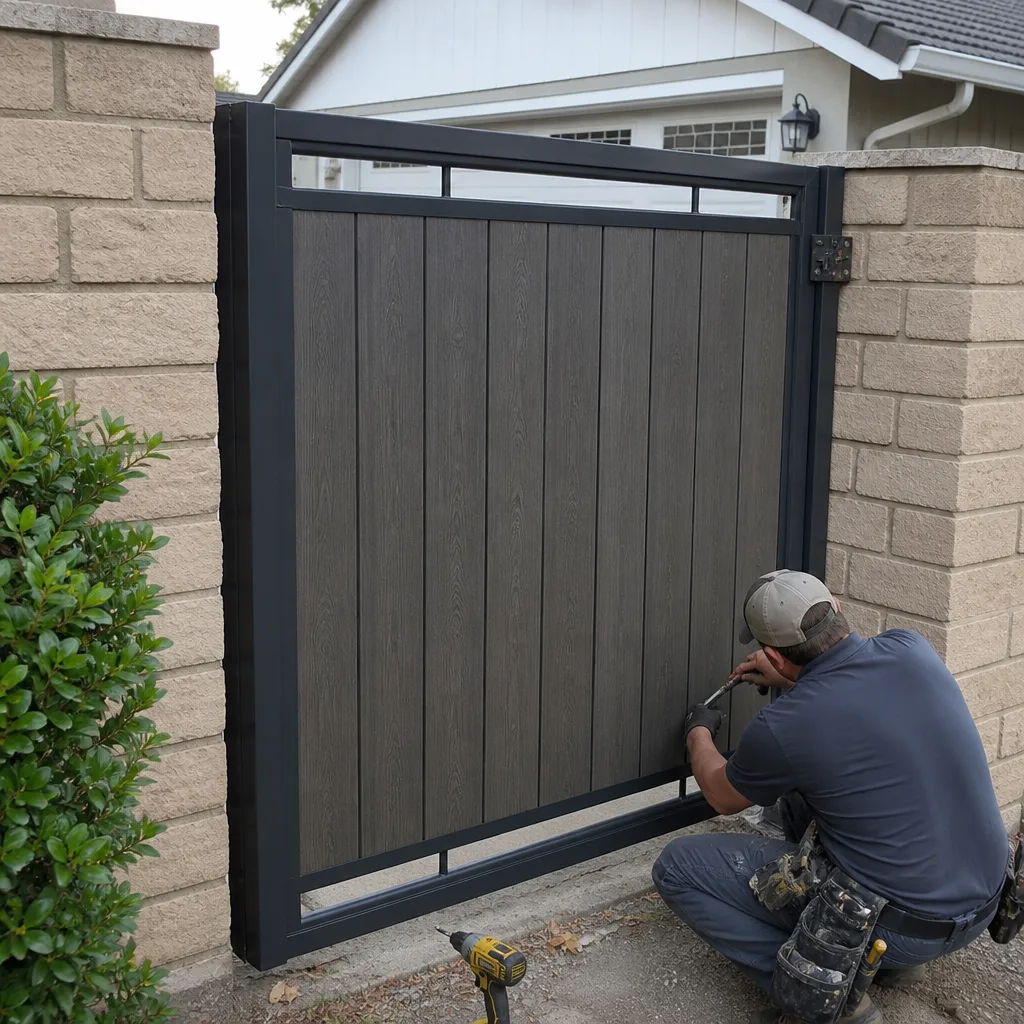 After
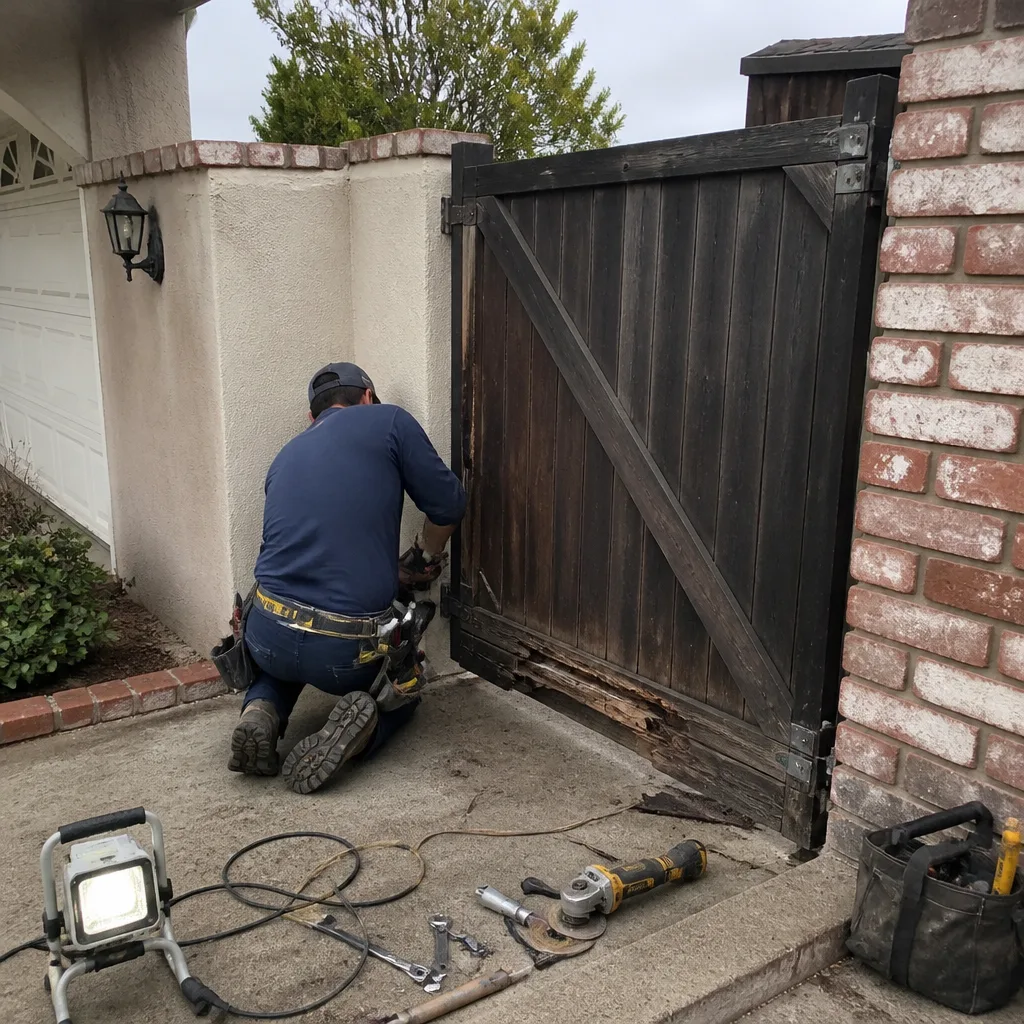 Before
 After
 Before
 After