
Last updated November 2, 2026
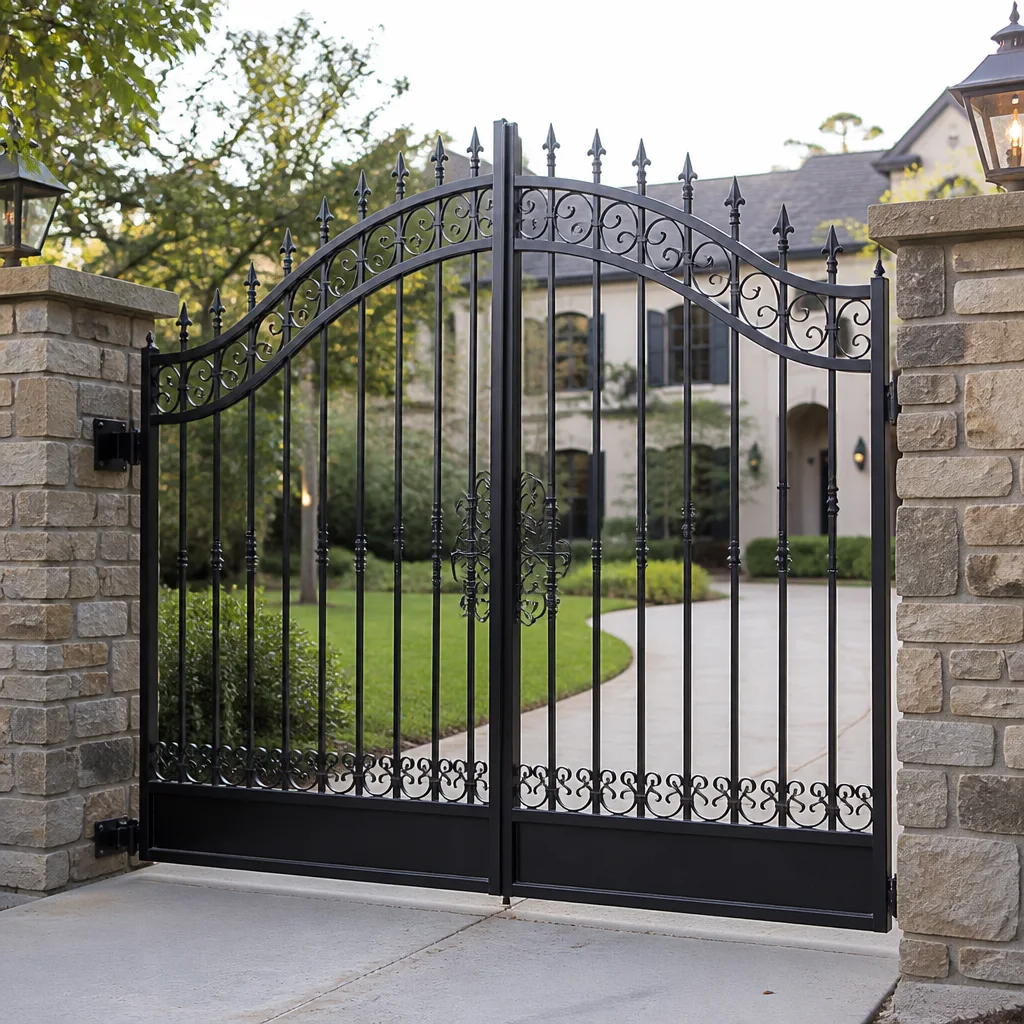 Wrought iron
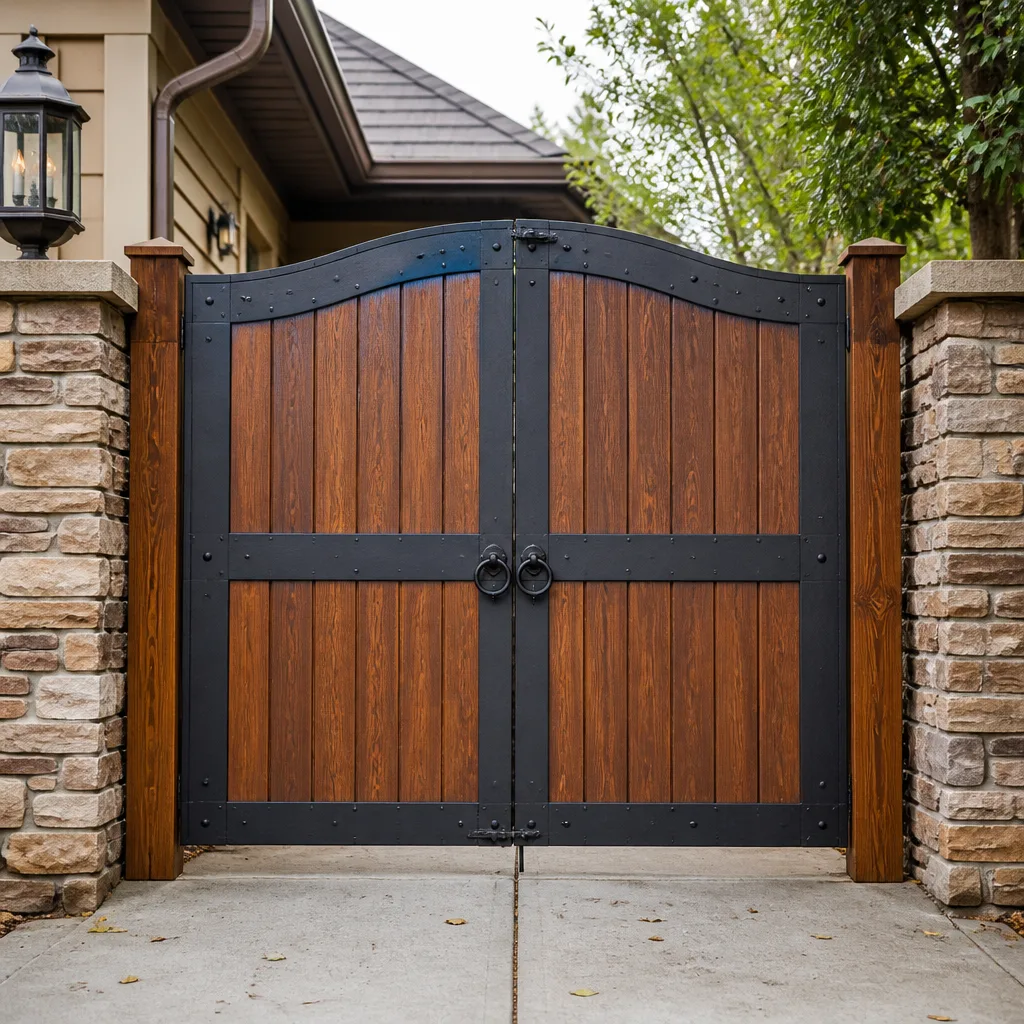 Wood & steel frame
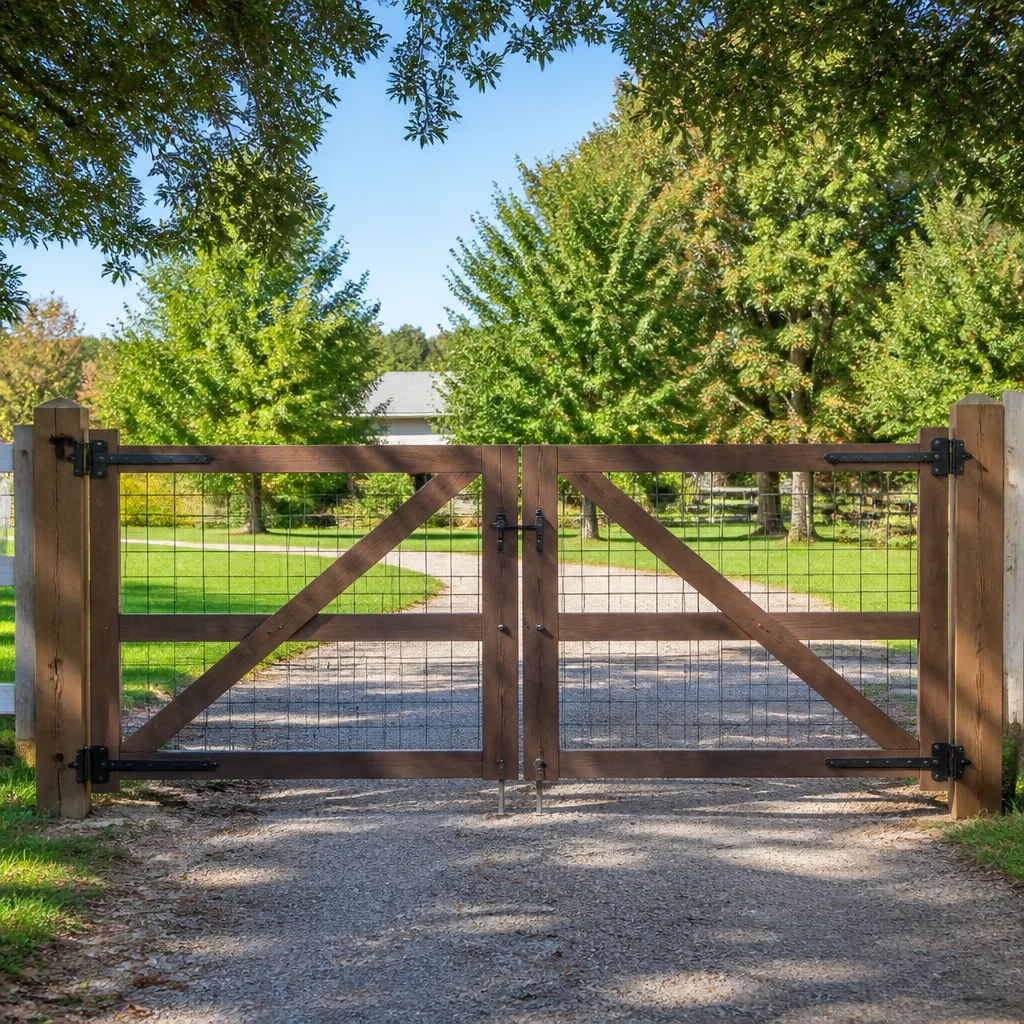 Farm & ranch
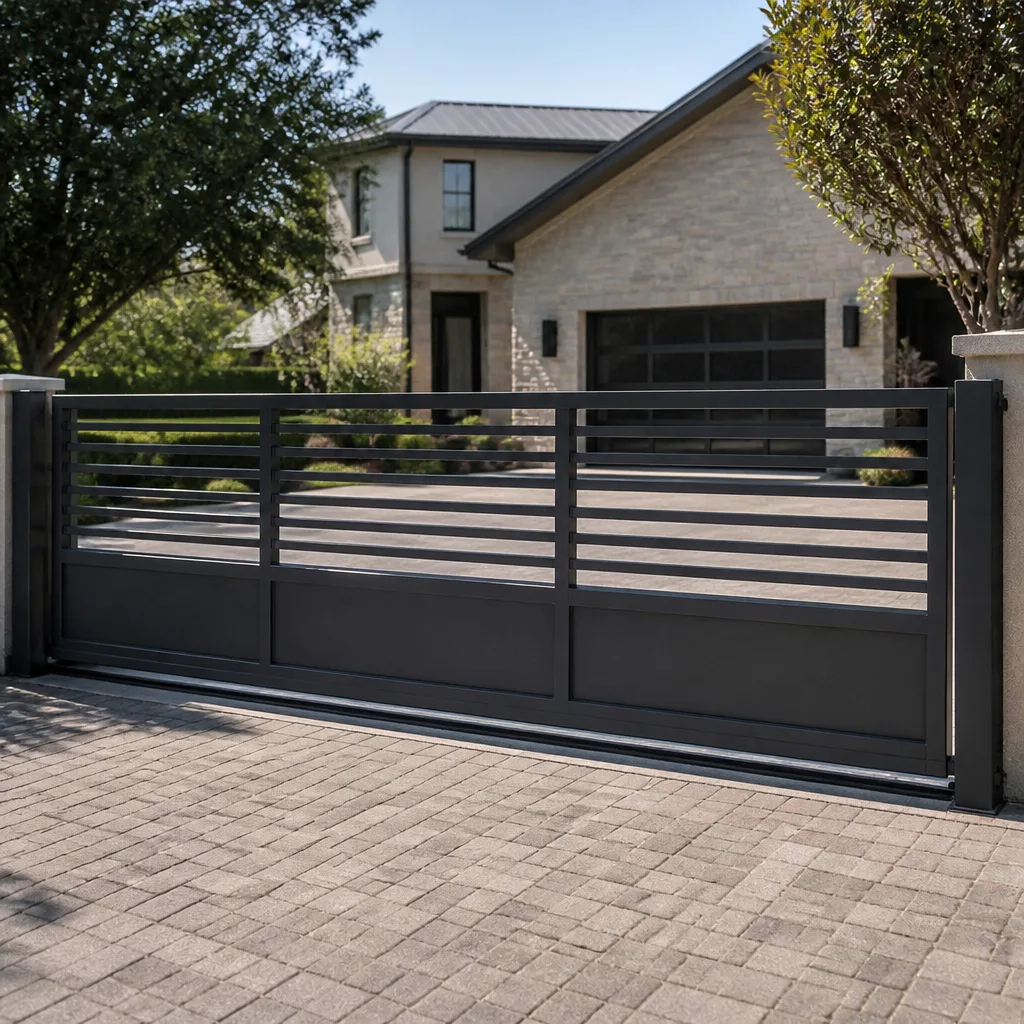 Sliding driveway gates
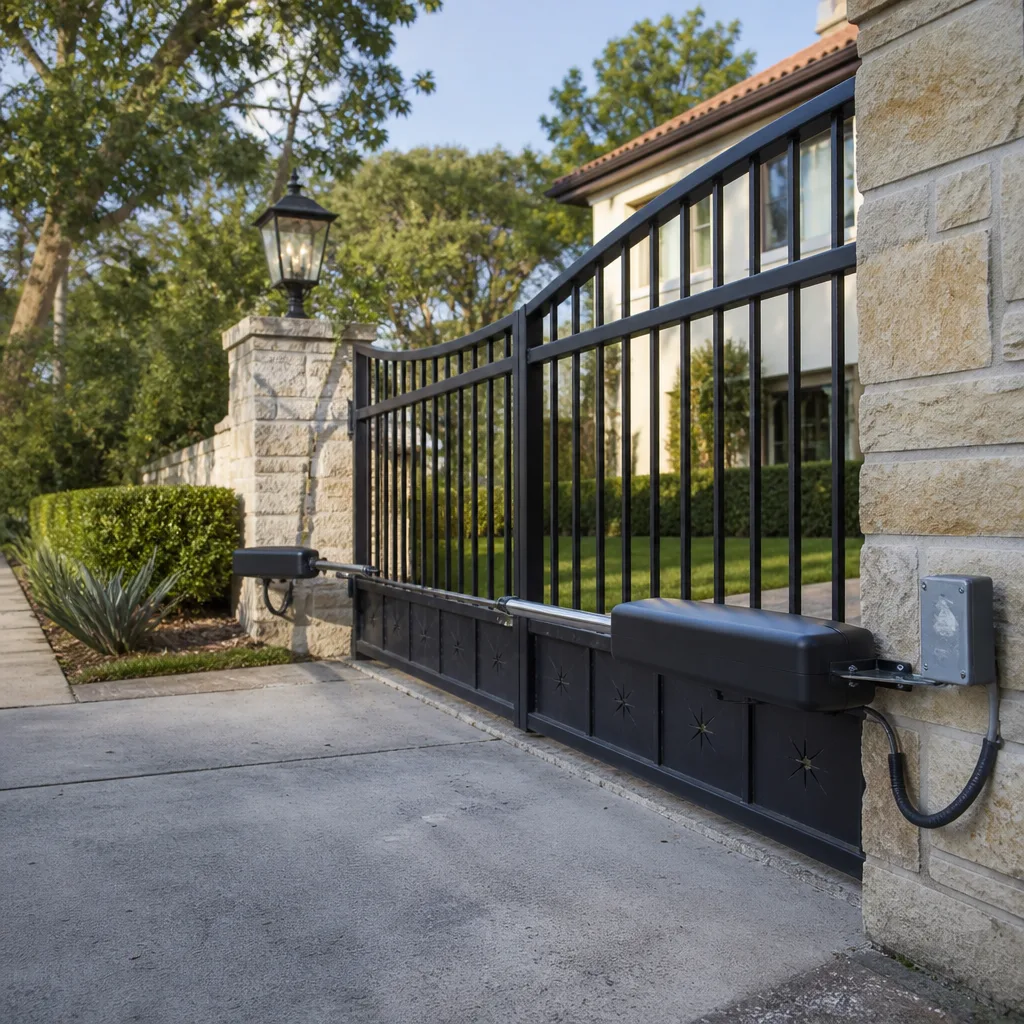 LiftMaster operators
Free on-site gate assessment - hinges, posts, and your LiftMaster or Nice gate operator checked before anything is quoted
The assessment is free and the quote is the invoice.
Get your free estimateHow to Hire a Gate Repair Contractor in Mission Viejo: A Step-by-Step Guide
The most expensive gate repair in Mission Viejo is usually the second one. We see it every month: a homeowner hires a garage-door company because their website says they “also do gates,” the technician swaps in a universal control board, the gate works for three weeks, and then the motor burns out because the limit settings were never calibrated for that specific operator. This guide walks you through exactly how to vet a Gate Repair services contractor in Mission Viejo so the repair holds, the warranty stays valid, and you don’t pay for the same problem twice.
Styles & brands we work with
- Wrought iron
- Wood & steel frame
- Farm & ranch
- Sliding driveway gates
- LiftMaster operators
Quick Answer
To hire a gate repair contractor in Mission Viejo, verify the contractor holds a California C-61/D28 limited specialty license, confirm they have hands-on experience with your specific gate brand (ask them to name the failure points on a FAAC 760 or a DoorKing 9150), require a written quote that names the exact brand and model of every replacement part, and reject any bid that substitutes generic aftermarket components for OEM parts. The right hire is a gate-only specialist, not a garage-door company running gates as a side service. For more guides & resources, see our blog.
Table of Contents
- Step 1: Verify the California License Before You Call
- Step 2: Test Brand-Specific Knowledge (Not Just General Experience)
- Step 3: Read the Quote Like a Contract, Because It Is One
- Step 4: Understand OEM vs. Aftermarket Parts Before You Sign
- Step 5: Ask About Post-Repair Documentation
- Step 6: Confirm Warranty Terms in Writing
- Step 7: Check References the Right Way
- Common Mistakes to Avoid
- When to Call a Professional
- Frequently Asked Questions
- The Bottom Line
Step 1: Verify the California License Before You Call
California regulates gate work under a specific license classification, and most homeowners never check it. Gate operators, swing arms, slide motors, and safety loops fall under the C-61/D28 limited specialty designation for “Doors, Gates, and Activating Devices.” A general building contractor without this classification can legally pull a permit for a wall or a patio cover, but automated gate systems are a different category.
Here’s the checkpoint list we recommend for every Mission Viejo homeowner before any technician arrives:
- License number check: Go to the Contractors State License Board website and enter the license number. Confirm the status reads “Active” and the classification includes D28. If the classification says only “B” (general building) or “C-10” (electrical), they are not properly classified for gate work.
- Workers’ comp verification: Any contractor with employees must carry workers’ compensation insurance in California. If a technician gets injured on your property and the contractor lacks coverage, your homeowner’s policy can become the target. Ask for the policy number and verify it with the insurer.
- General liability minimums: For gate work, $1 million in general liability is the industry floor. This matters because gate failures can cause property damage, and an uninsured contractor means your claim goes nowhere.
- Bond confirmation: California requires a $25,000 contractor’s bond. This is not optional, and it’s not the same as insurance. The bond protects you if the contractor violates the contract and you pursue a claim.
- License name matches the quote: A legitimate quote carries the same legal business name as the license. If the quote says “Mike’s Gate Service” and the license says “DBA WeFixGates LLC,” ask for the paperwork.
In Mission Viejo, where many homes sit on sloped lots with heavy automated gates on grade, the stakes are higher than flat terrain. A misinstalled slide gate on a hill puts real strain on the motor, and a contractor without proper licensing is unlikely to stand behind that work.
Step 2: Test Brand-Specific Knowledge (Not Just General Experience)
The single fastest way to separate a dedicated gate contractor from a garage-door company dabbling in gates is to ask a brand-specific diagnostic question. Every serious gate technician can answer this in two seconds:
“What’s the difference between a FAAC 402 and a FAAC 760?”
A technician who has installed or repaired FAAC units will tell you the 402 is a compact residential swing operator rated for lighter gates, while the 760 is a heavier-duty unit built for larger, more demanding applications. If they pause, pivot, or say “we can look that up,” they haven’t touched many FAAC units. That’s your cue to keep looking.
The same test applies to other brands. Our technicians work across nine distinct gate brands – LiftMaster, FAAC, BFT, Linear, Viking, Ghost Controls, DoorKing, Elite, and Mighty Mule – and the failure patterns differ for every one of them:
- Linear residential operators are known for capacitor failures and limit switch drift after a few hundred cycles. A technician who knows this shows up with the right board on the truck.
- DoorKing commercial slide operators commonly develop issue with the current sensing adjustment when gates get heavy or rough. Misdiagnosing this means replacing a motor that’s actually fine.
- Ghost Controls units, popular on residential swing gates in Mission Viejo, are sensitive to improper limit setup. A technician who doesn’t set the limits precisely will be back in a month.
- Viking operators run into relay chatter and capacitor issues. Different failure signature than a DoorKing, and the fix is different too.
You can also verify experience through manufacturer dealer locators. LiftMaster, FAAC, and Elite all maintain dealer/installer directories on their websites. A contractor who appears there has at least been vetted by the manufacturer. A contractor who doesn’t appear and can’t answer brand questions is running on generic experience.
The broader point: Gate Repair Mission Viejo home reflects a gate-only trade focus. We’re not splitting our field hours across garage doors, fencing, and whatever else the phone rings for. Every diagnosis we make happens with a specific brand in mind, and that changes what parts we stock and how we fix things.
Step 3: Read the Quote Like a Contract, Because It Is One
A gate repair quote is a legal document, not a courtesy estimate. In California, once you sign it and the contractor begins work, that quote governs the scope. Vague language in the quote equals vague protection if something goes wrong.
Here’s what a legitimate, enforceable gate repair quote includes:
- Named part numbers: “Operator parts as needed” is a red flag. The quote should say “LiftMaster LA400 control board, part number K1D8387-1CC.” If the contractor won’t name the part, they’re reserving the right to install whatever is cheapest.
- Labor broken out by task: Diagnostics, part replacement, limit adjustment, and safety testing should each appear as line items with hours attached. A single lump sum that says “repair gate: $900” tells you nothing about what was actually done.
- Explicit scope boundaries: The quote should state what is NOT included. “This quote covers motor replacement only. It does not cover hinge repair, track alignment, or new remote transmitters.” If those items appear on the invoice later, you have a written back to defend yourself.
- Payment schedule: For repairs, standard is full payment on completion after testing. For installations, a deposit of 30-50% with the balance due on turnover is normal. Anything asking for 100% upfront is not normal.
Mission Viejo homeowners on gated hillside lots should also ask about site conditions. A quote should acknowledge grade, gate weight, and existing pillar condition. If the contractor doesn’t ask about your gate weight before quoting, they aren’t doing the math that matters.
Step 4: Understand OEM vs. Aftermarket Parts Before You Sign
The lowest bidder in gate repair is often proposing a compatible aftermarket control board instead of an OEM replacement. This is the single biggest cost driver hidden in Mission Viejo gate repair quotes, and it almost never gets explained to the homeowner.
Here’s how it plays out: a DoorKing control board fails on a commercial slide gate. The OEM replacement runs $400-$600. An aftermarket universal board costs $180. The low bidder installs the universal board, and it works… for a while. But that universal board wasn’t designed to handle DoorKing motor current draw, safety loop signaling, or accessory compatibility. Within 18 months, the motor starts acting up. Within three years, the board fails again and the motor may have sustained damage from the mismatch.
An OEM board is the board the manufacturer built for that specific operator. It was tested for that motor’s current curve, that loop detector’s signaling pattern, and that remote receiver’s frequency. Aftermarket boards skip all of that engineering.
What this means for your gate’s 5-year trajectory:
- Year 1-2: Aftermarket boards often hold up fine. The savings feel real.
- Year 3: Strange behavior appears – intermittent failure to close, random open commands, sensor faults.
- Year 4-5: The board fails. The motor may have sustained wear from improper current management. Now you’re replacing both, which costs more than the OEM board would have originally.
This is not an argument for buying only premium components. It’s an argument for understanding what you’re signing. An OEM board at $500 with a five-year expected life costs $100 per year. An aftermarket board at $180 that dies in two years costs $90 per year, plus the risk to your motor, plus the second labor call. The math on the low bid is rarely the math that holds.
Ask the contractor directly: “Is this an OEM part or an aftermarket equivalent?” If they won’t answer, or if the quote doesn’t say, walk away. Our service model is brand-agnostic, which means we work on whatever system you have and recommend the part that actually fits it – not the part that makes our quote look low.
Step 5: Ask About Post-Repair Documentation
Most Mission Viejo homeowners never ask what they’ll receive after a gate repair is complete. That’s a mistake with real liability consequences.
Here’s the documentation a professional gate contractor should provide after any automated gate repair or installation:
- Programming printouts: Modern gate operators log configuration settings – force levels, limit positions, delay times, and safety sensor status. A printout or digital record of these settings is your proof that the gate was configured correctly on the day of service. If the gate later injures someone and a lawsuit asks whether the force settings were excessive, this record is your defense.
- Limit switch settings: The technician should record exactly where the open and closed limits were set. This matters because a gate that closes too hard or opens too far is a safety hazard, and settings drift over time. Knowing the baseline lets a future technician spot drift quickly.
- Force adjustment records: UL 325, which governs automated gate safety, requires gates to reverse when they encounter a specific level of obstruction force. The technician should document the force setting that was tested and that it passed the reversal test. Without this record, you have no evidence the gate met the federal safety standard.
- Sensor and loop test results: Photo eyes, edge sensors, and ground loops should all be tested after repair, with pass/fail results documented. A gate that doesn’t reverse on obstruction is a liability waiting for an incident.
If the contractor says they don’t provide records – “the gate works, what more do you need?” – that’s a signed confession that they don’t follow UL 325 testing protocol. In Mission Viejo, where automated gates front many hillside properties, a gate that fails to reverse can roll into a car, a child, or a pedestrian on the sidewalk below. Documentation isn’t bureaucracy. It’s the only thing that protects you after the fact.
Electric Gate Repair in Mission Viejo includes full post-repair documentation as standard, because we know what those records are worth in a dispute or an injury claim.
Step 6: Confirm Warranty Terms in Writing
Gate repair warranties exist on three layers, and each has different terms. If the contractor can’t articulate all three, their warranty is verbal and worthless.
- Manufacturer warranty on parts: OEM components carry manufacturer warranties that range from 1 year to 5 years depending on the part and brand. The contractor should tell you the warranty term for every part they install, in writing, with the serial number recorded.
- Contractor workmanship warranty: This covers the installation and configuration labor, separate from the part itself. Industry standard for gate repair labor is 90 days to 1 year. Anything shorter than 90 days is a red flag. Anything longer should be confirmed in writing, because “lifetime labor warranty” from a two-year-old company is not a warranty it’s a marketing line.
- Warranty exclusions: Every warranty has them, and honest contractors state them upfront. Typical exclusions: damage from vehicle impact, damage from power surges, wear items like hinges and wheels, and adjustments made by other contractors after the repair. If the quote doesn’t list exclusions, ask.
Be especially careful with warranty language around aftermarket parts. Many aftermarket board manufacturers offer a “warranty” that covers the board only, not the labor to replace it, and not the motor if the board’s failure damages it. An OEM board typically comes with stronger coverage from a company that still exists in five years.
Step 7: Check References the Right Way
Every contractor can produce three happy customers. The question is whether those customers exist and whether they’re talking about the same kind of work you need.
Here’s the right way to check references for gate work in Mission Viejo:
- Ask for a reference with your same brand: If you have a Ghost Controls operator, ask for a reference who had Ghost Controls work done. A contractor with ten happy DoorKing clients has not proven they can handle your system.
- Call, don’t email: A written reference reads like marketing. A phone call surfaces the details that matter: Was the quote accurate? Did the technician show up when scheduled? Did the repair require a follow-up visit? Ten minutes on the phone is worth an hour of reading reviews.
- Ask about the diagnosis process: “How long did it take the technician to find the problem?” A contractor who solves it in 20 minutes on the first visit is doing real diagnostics. One who needs two return trips and three part swaps is guessing.
- Ask about post-repair communication: Did the contractor explain what was wrong in plain language? Did they leave documentation? Did they follow up a week later to confirm the gate was still working?
- Drive by a recent installation: If you’re hiring for a gate installation, ask to see a completed job. A gate that sags, drags, or shows gap alignment problems six months after install tells you everything about the contractor’s standards.
Mission Viejo’s gate market spans a wide range – from compact residential operators on condos near Lake Mission Viejo to heavy commercial slide gates on business parks off the 5. A contractor who’s only done one type hasn’t proven they can handle the other.
We regularly get calls from homeowners who already got a quote from a general contractor, a fence company, or a garage door outfit. The stories are consistent: wrong diagnosis, universal parts, no documentation, and a gate that works for a month. This guide exists because we’ve seen the pattern enough times to know the warning signs before the bill arrives.
Common Mistakes to Avoid
- Assuming gate repair and garage door repair are the same trade: They aren’t. Different operators, different safety standards (UL 325 vs. UL 325/UL 294), different license classifications, different failure modes. A garage door technician may be great at garage doors and still know almost nothing about gate automation.
- Signing a quote with vague part descriptions: “Operator parts as needed” means you’ve written a blank check. If the quote doesn’t name the brand, model, and part number of every component, don’t sign it.
- Choosing the lowest bid without asking why it’s low: Low bids in gate repair usually come from aftermarket parts, skipped diagnostics, or no documentation. The low bid is often the most expensive gate repair you’ll buy in Mission Viejo, because you’ll pay for it twice.
- Skipping the license check: A D28 classification exists for a reason. Unlicensed gate work is uninsured gate work, and when the gate fails or injures someone, you’re on your own.
- Accepting verbal warranty promises: “I’ll take care of you if anything goes wrong” is not a warranty. Get the parts warranty, the labor warranty, and the exclusions in writing.
- Not asking about post-repair documentation: If the contractor doesn’t record force settings, limit positions, and safety test results, you have no proof the gate was safe when they left. In a liability claim, that absence is damaging.
- Hiring a contractor who doesn’t know your brand: A contractor who has never opened a Viking control panel is going to learn on your gate, at your hourly rate, with your parts budget.
When to Call a Professional
Some gate problems are safe to inspect yourself – a misaligned remote, a dirty photo eye, a tripped breaker. But here’s when you should stop and call someone who does this every day: the gate is grinding or jolting during operation, the motor runs but the gate doesn’t move, the gate reverses unexpectedly, the control board shows error codes, or you smell burning near the motor. Any of these signals a problem that gets worse, and more expensive, the longer it runs.
Automatic gate systems carry high torque, heavy loads, and live electrical components. A spring under tension or a motor capacitor can cause serious injury if handled incorrectly. We recommend leaving automated repair to technicians who work on these systems daily and carry the right safety procedures.
Gate Repair in Mission Viejo covers every type of gate problem, and Gate Installation in Mission Viejo handles full replacements when repair no longer makes sense. Gate Repair Mission Viejo offers free estimates in Mission Viejo – call (866) 562-1205 and we’ll diagnose the problem and quote the exact price before any work begins.
Frequently Asked Questions
Gate repair in Mission Viejo typically costs between $150 and $450 for common fixes like sensor realignment, limit switch adjustment, or remote programming, while motor replacement or control board replacement usually runs $500 to $1,200 depending on the brand and model. The quote should be stated before work begins and should name the exact part being installed. Call (866) 562-1205 for a firm written estimate – quotes are always free.
Check the contractor’s license number on the California Contractors State License Board website and confirm the status is “Active” with a C-61/D28 classification for gates and activating devices. If the license is missing, expired, or classified differently, don’t proceed with the hire.
Generally no. Gate automation and garage door automation are separate trades with different license classifications, different safety standards, and different failure patterns. A garage door company may do fine work on garage doors and still lack the specific knowledge to properly diagnose and repair your gate operator.
OEM parts are built by the original equipment manufacturer – the company that made your gate operator – and are tested to work with that exact system. Aftermarket parts are universal replacements built by third parties that may not handle your motor’s current draw, signaling, or safety features properly, often leading to premature failure.
For most common repairs – sensor issues, limit settings, remote programming, hinge tightening – yes, same-day or next-day service is typically available. Motor replacement or control board diagnosis may require a parts order depending on the brand and model. Call (866) 562-1205 with your gate brand and we’ll tell you what’s realistic.
In Mission Viejo’s coastal-influenced climate, with its dry heat and relatively low humidity, a properly maintained gate motor typically lasts 8 to 12 years. Our Seasonal Gate Repair Care for Mission Viejo: Year-Round Homeowner’s Guide covers maintenance schedules that protect that lifespan. The bigger factors in motor lifespan are gate weight, balance, and proper limit settings – not weather. A misadjusted gate can kill a motor in three years.
We service nine specific brands: LiftMaster, FAAC, BFT, Linear, Viking, Ghost Controls, DoorKing, Elite, and Mighty Mule. We don’t claim to work on everything, because no honest contractor does. If your gate is one of these systems, we know the failure patterns and stock the parts.
The Bottom Line
Hiring a gate repair contractor in Mission Viejo comes down to five checks: confirm the D28 license, test brand-specific knowledge with a diagnostic question, reject any quote that doesn’t name parts by brand and model, insist on OEM components unless you’ve knowingly approved an alternative, and ask for post-repair documentation that proves the gate met UL 325 safety standards. Skip any of these and you’re rolling the dice on the repair.
The contractor you hire should be a gate specialist, not a generalist running gates on the side. Gate Repair Mission Viejo home reflects that focus: gate repair, electric gate repair, and gate installation are the only services we offer, and that’s the whole point. Questions start the process – call (866) 562-1205 for a free estimate, and we’ll tell you exactly what’s wrong and what it costs before any work starts.
Written by the team at Gate Repair Mission Viejo, serving Mission Viejo since 2011.
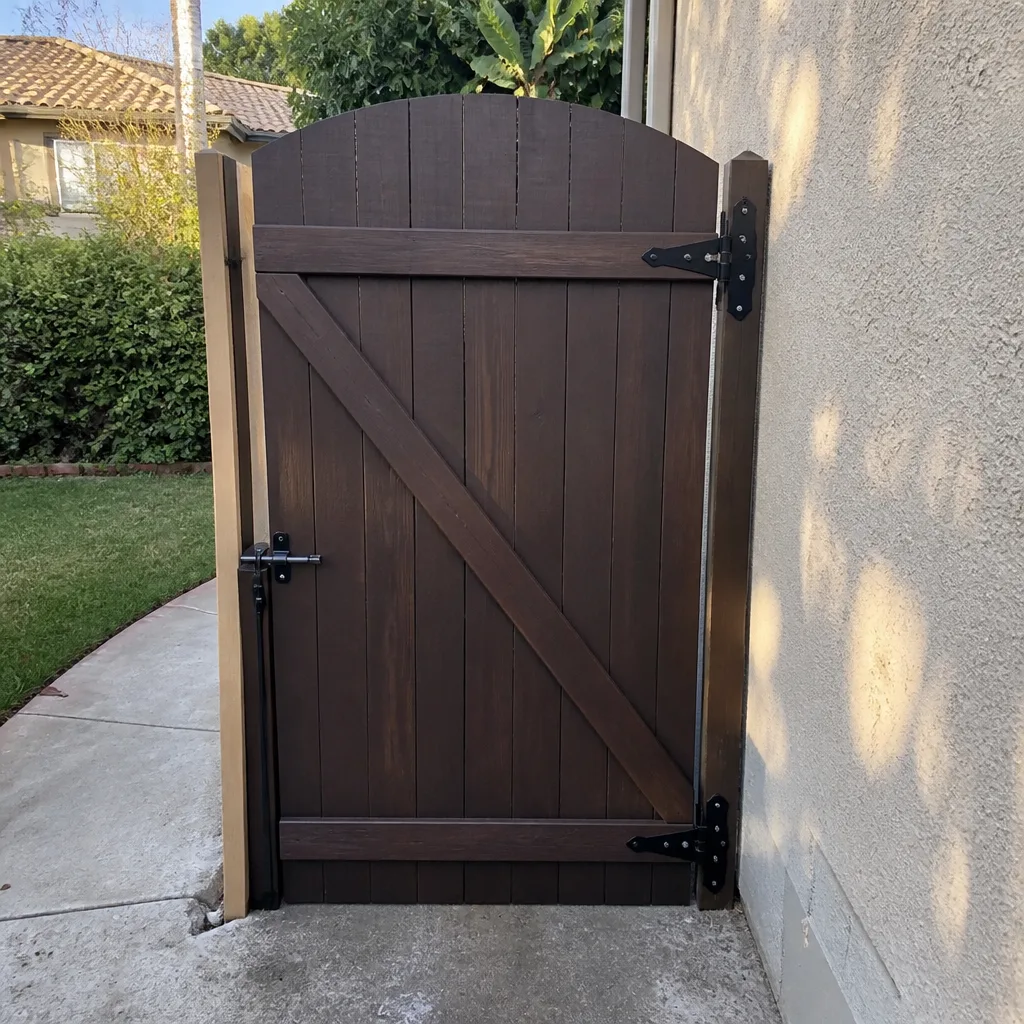
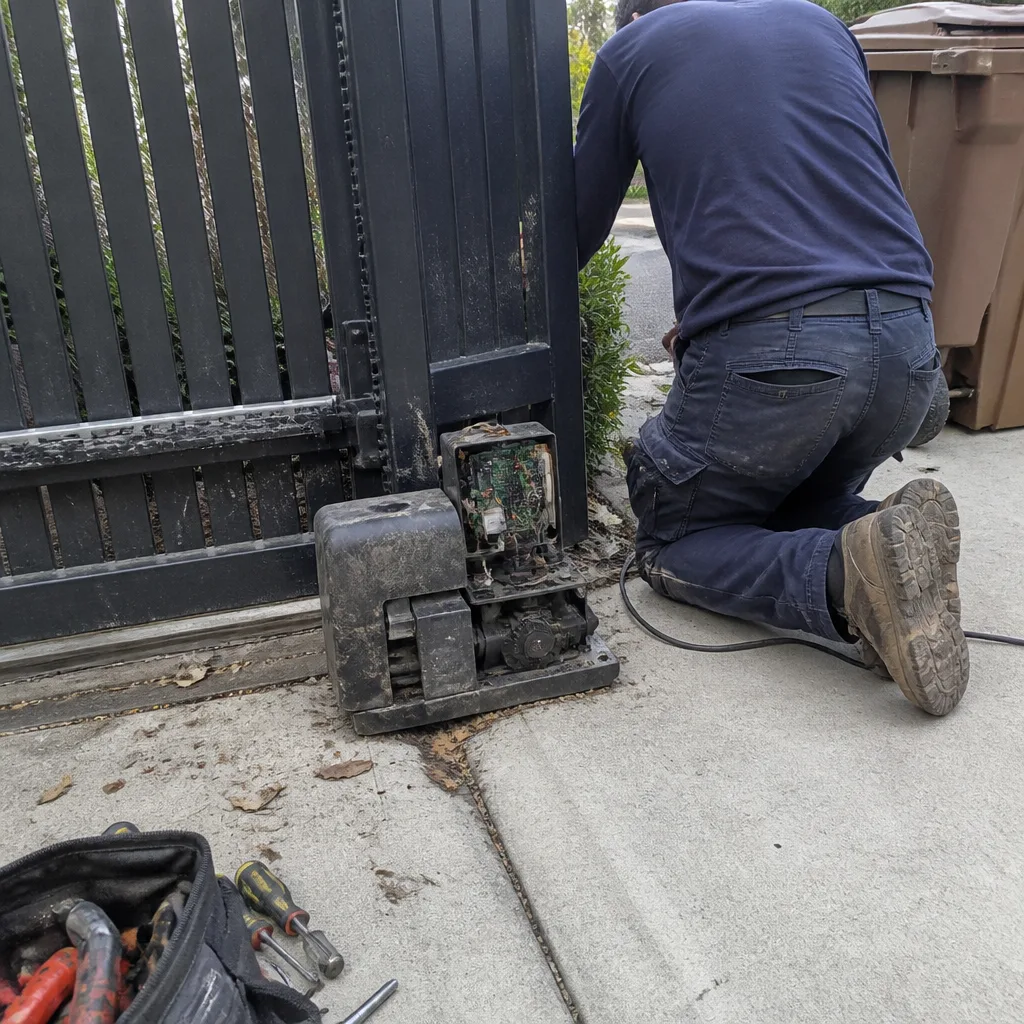
See the difference
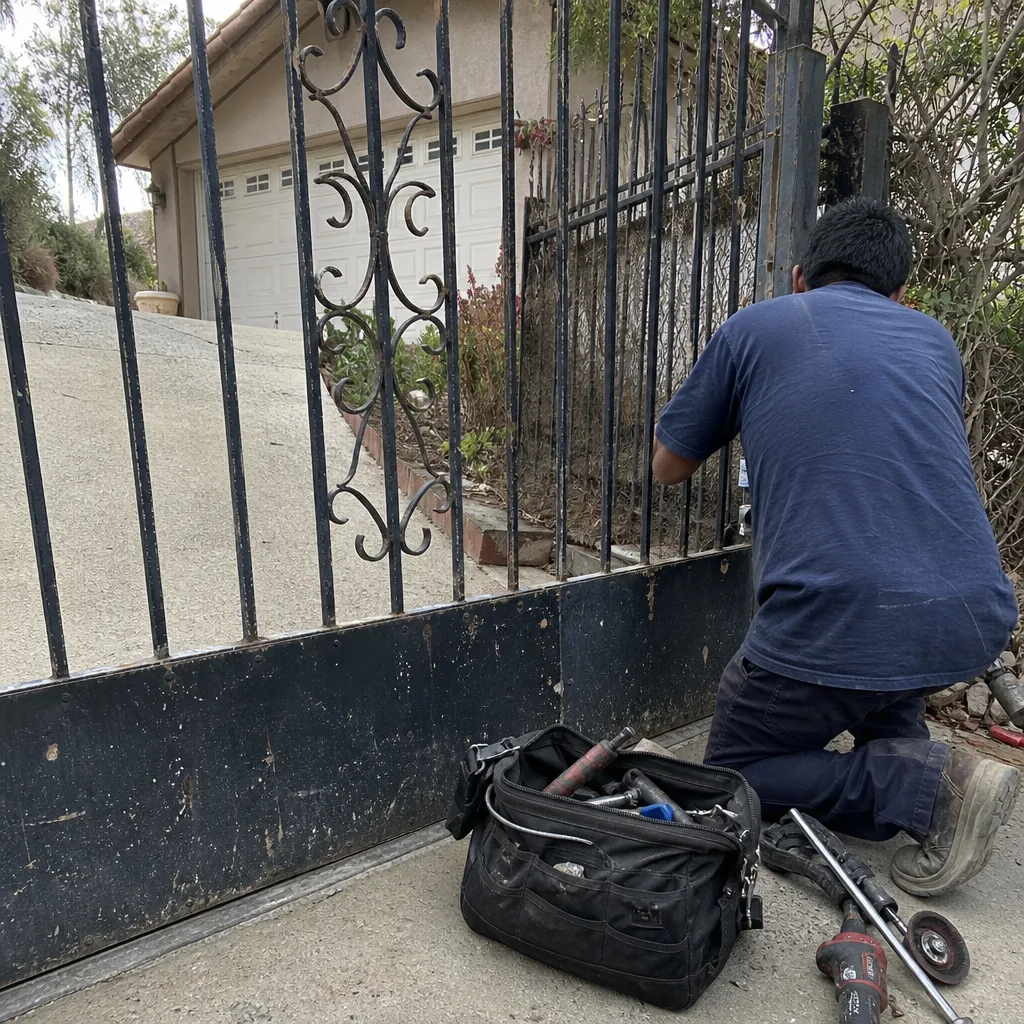 Before
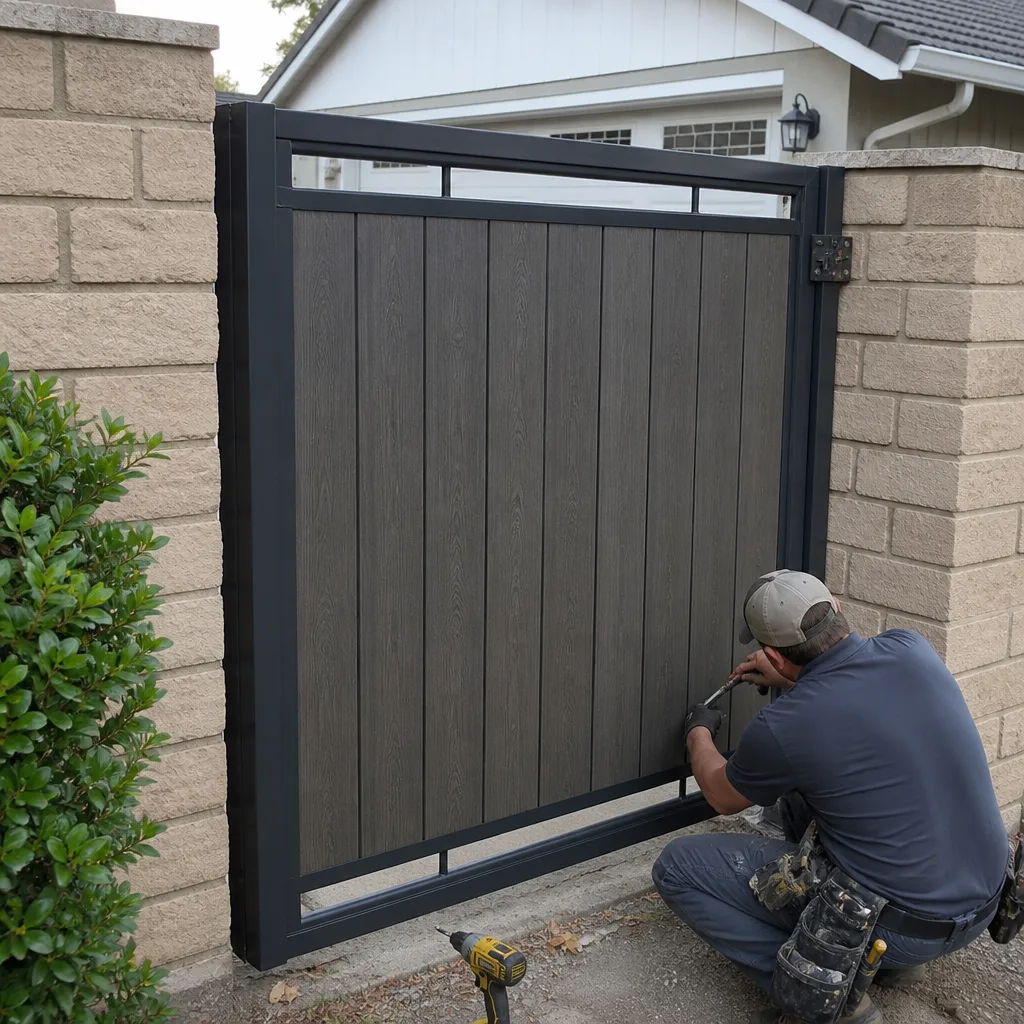 After
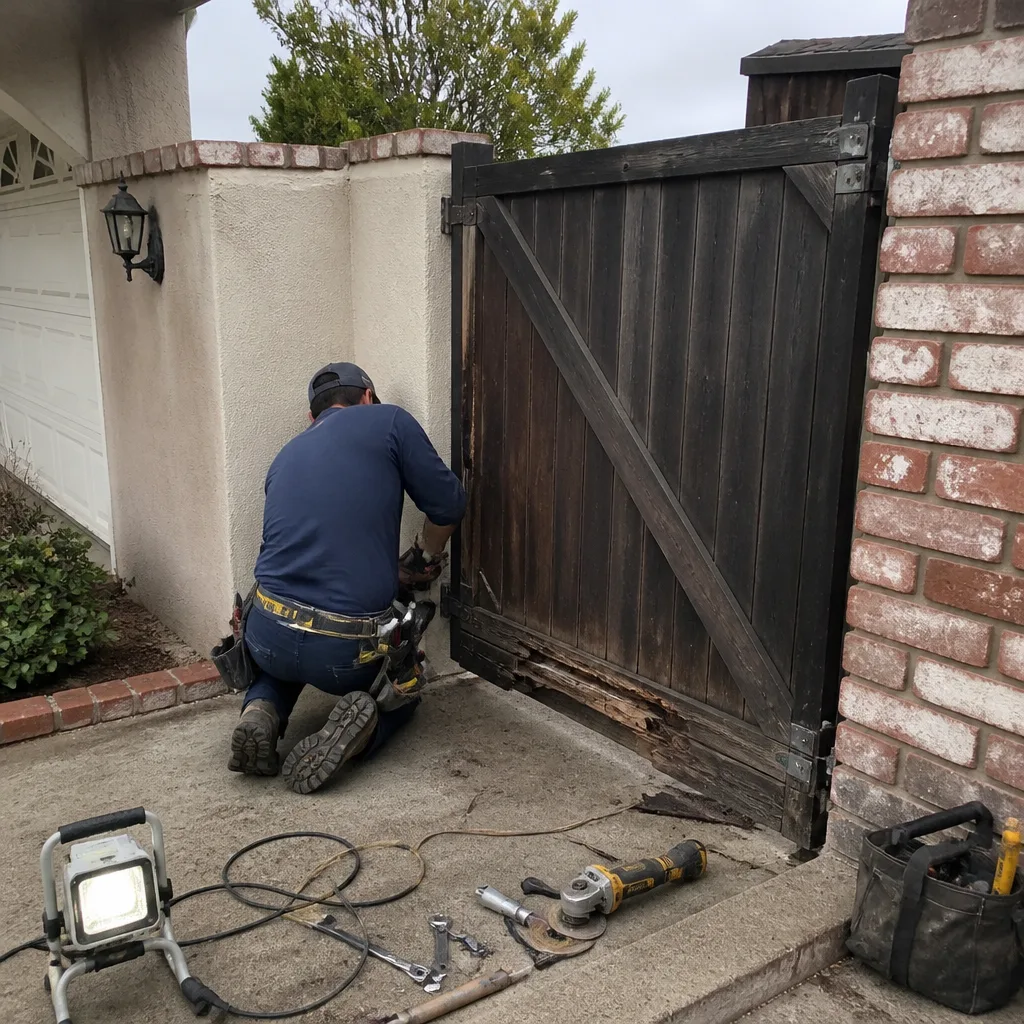 Before
 After
 Before
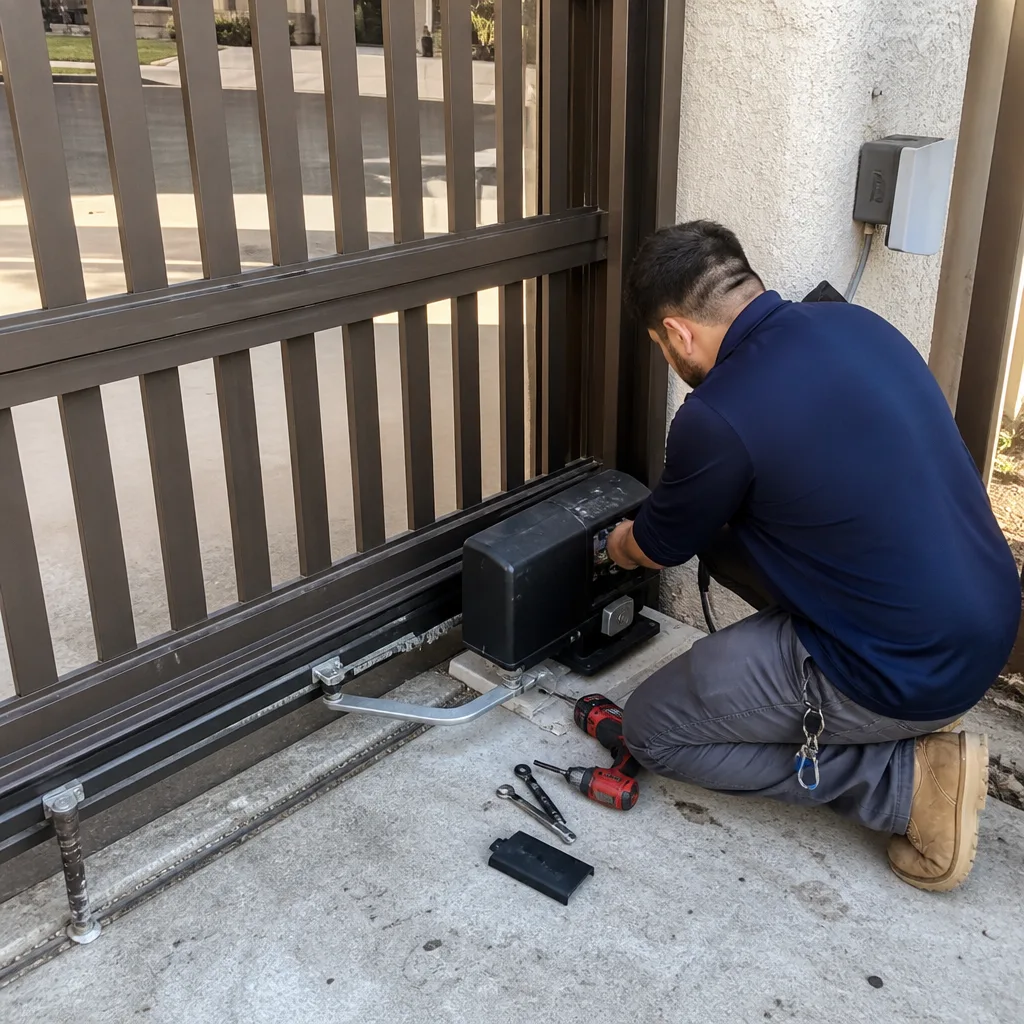 After